
No visit to St Petersburg would be complete without an excursion to the Faberge Museum, which is located at the Shuvalov Palace. This museum is dedicated to the preservation and promotion of Russia’s cultural heritage. Situated on the banks of the beautiful Fontanka River, the Shuvalov Palace was renowned in past times for the lavish balls attended by the Local nobility, including the Russian Imperial family. The Faberge Museum, today housed in the Shuvalov Palace, is home to the world’s largest collection of Faberge, at over four thousand pieces. Born into a family of jewellers, Peter Carl Faberge trained across Europe to become St Petersburg’s premier jeweller. In 1885, he was named jewel provider of the Imperial Court, and in 1890 was given full access to the Imperial Collections. The most famous of Faberge creations were the Imperial Eggs. Between 1885 and 1917, these jewelled eggs were created by Peter Carl Faberge for the Tsars Alexander III and Nicholas II, as Easter gifts for their wives and mothers. (Easter is the Russian Orthodox Church’s most important holiday). The first Faberge egg was created for Empress Maria Federovna in 1885; known as the Hen Egg, it was crafted from gold, with an opaque white enamel shell which opened to reveal three “surprises”: a matte yellow egg yolk opened to reveal a gold hen; this in turn opened to reveal a miniature diamond and ruby replica of the imperial crown. Approximately sixty-five known eggs in total were made by the House of Faberge; only fifty seven have survived. (Some were commissioned by nobility after the Imperial eggs became renowned). Two more were planned for Easter in 1918, but due to the Russian Revolution they were never delivered. Egg designs were ever more elaborate, and each contained a surprise. The Faberge Museum in St Petersburg opened in November 2013. It houses the Link of Times Cultural Historical Foundation Collection, owned by Russian entrepreneur Viktor Vekselberg. This man’s intention was to repatriate the works of great Russian masters to the nation, and for the enjoyment of the public. Many of the pieces had been sold by the Bolsheviks during the 1920s and the 1930s. Included in the collection are the Imperial Coronation Egg (1897), nine other Imperial Eggs (acquired for over $100 million), dozens of Faberge cigarette cases, and hundreds of other exquisite Faberge pieces. Additionally, works by other Russian masters are exhibited as well. A private collection of paintings by Renoir is another highlight. Aside from being a cultural and artistic delight, a visit to the Faberge Museum is a once in a lifetime opportunity to see Imperial Eggs up close and in person for oneself. Make sure you add a visit to your St Petersburg agenda – we guarantee you’ll be enchanted!

Where to Stay in Lapland: Rovaniemi, Saariselkä, Inari or Kemi
“Going to Lapland” sounds like a finished plan. It isn’t — it’s barely half a decision, and not the more important half. Lapland is a

Husky, Reindeer or Snowmobile? Lapland Winter Activities Compared
One traveller is standing on the runners behind a team of huskies, and the barking has just dropped into total silence. Another is moving at
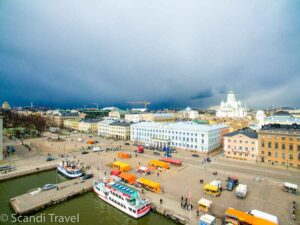
What a Premium Nordic Tour Operator Actually Does for You
We’re Scandi Travel, a premium Nordic tour operator based in Helsinki. We live up here all year — we don’t fly in for the season

Glass Igloos in Lapland: A Winter Guide for 2026–2027
It is 3 a.m. On the other side of the glass above your bed it reads −24 °C, dry snow skating across the fell somewhere

Norway in Summer: Fjords, Midnight Sun, and the Best Time to Go
It’s almost midnight on the Aurlandsfjord, the engine has been cut, and the water sits so still it holds the mountains upside down. The sun