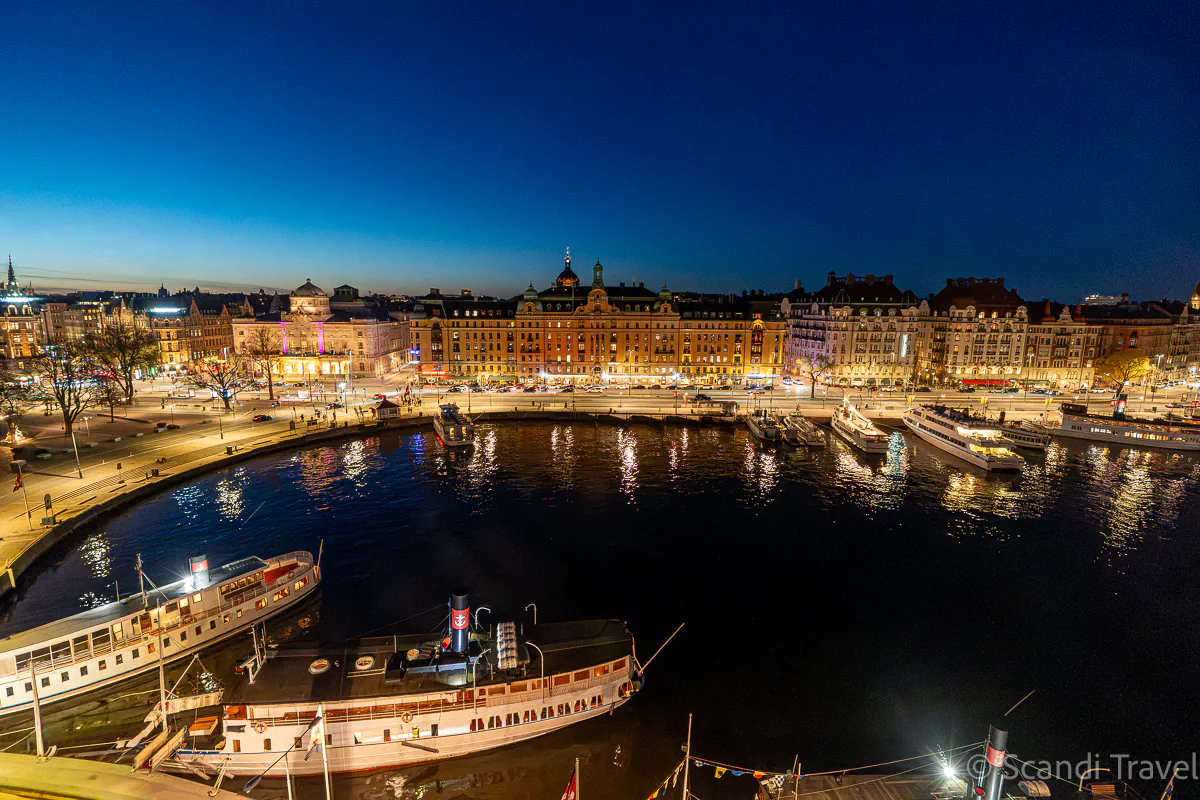
Eight in the evening, and the ship eases away from the quay in Stockholm. What slides past the railing isn’t open water but islands — cottages and red boathouses first, then bare granite, then nothing but rock and pine. Thousands of them. The Swedes call this the skärgård; the Finns, the saaristo. You stand on deck with a glass in your hand, the wind smells of salt and spruce, and a Baltic capitals cruise like this one carries you to Finland overnight — a plane would do it in fifty minutes, but hurrying is not the point.
This is how you see four northern capitals and one medieval city without once setting foot in an airport. Stockholm, Turku, Helsinki, Tallinn and Riga — Sweden, Finland, Estonia, Latvia — are strung together on short sea crossings, and the journeys between them stop being transit and become part of the trip. Below, we walk the route port by port, tell you when to come and what’s included, and pass on the things the brochures leave out. The team at Scandi Travel lives in Finland and has been sailing these waters for years, so we’ll keep it straight. 🌊
Why a Baltic Capitals Cruise Beats Five Flights
You could string the same cities together with flights and trains. On paper it’s cheaper; in practice it costs you in nerves — five check-ins, five security lines, five hotels parked next to railway stations.
The sea route works differently. Distances on the Baltic are short and the ferries are enormous, so the overnight crossing turns into its own pleasure. You get a private cabin, a restaurant laid out with a Nordic buffet, a sauna looking out over the water, bars, and a deck where the archipelago drifts past at golden hour. You wake up in a different country. Nothing wasted.
There’s a catch, and we’ll be honest about it. If you’re seasick in a flat calm, or you can’t stand a big ship with a crowd aboard, this format isn’t for you. But the Baltic is an enclosed sea, the crossings are short, and in season there’s barely any swell.
The numbers help. Helsinki to Tallinn is about two hours by ferry. Stockholm to Finland is a single night. This is not a transatlantic voyage — it’s closer to a floating night train, only with a sauna. ⚓
The Overnight Crossing Is Half the Trip
On a Baltic capitals cruise the ferry is not a means to an end — it’s one of the best evenings of the week. The Stockholm and Turku ships are floating small towns: several decks of cabins, restaurants, bars, a spa, shops, and on some sailings even a cinema. The lines you’ll likely sail are Silja Line and Viking Line, both of which have run these waters for generations.
Dinner is the Nordic smörgåsbord — herring in mustard, dill and sherry, cold- and warm-smoked salmon, prawns, roast meats, cheeses and a long wall of desserts, sparkling wine often included in the seafood sitting. Afterwards: a sauna with the dark sea sliding past the window, a nightcap on the top deck under a June sky that never quite goes black, and a cabin that rocks you to sleep. By breakfast the skyline outside has changed countries. It is, quietly, one of the most civilised ways to travel anywhere in Europe.
Your Baltic Capitals Cruise, Port by Port
Five stops, four borders, one continuous thread of water. Here’s what each one gives you.
Stockholm — A City on Fourteen Islands 🇸🇪
Start in the Swedish capital, on the cobbles of Gamla Stan, the old town that sits on its own island where the lanes narrow to shoulder width and the ochre façades have held their colour since the seventeenth century. Stockholm is laid out across fourteen islands stitched together by bridges, so half of getting around here happens on or over the water.
Leave time for fika — not “coffee and a bun” but an institution, the pause when Swedes actually stop. Cinnamon, cardamom, an hour of doing nothing. And get out into the archipelago for at least half a day while you’re still on land; after this, you’ll be watching it from the deck. In the evening you board the overnight ferry and slide out through the skerries toward Finland.
Turku — Where Finland’s Story Began 🇫🇮
The ferry docks in Turku at dawn, and it’s the right first stop in Finland, because this is where the country began. Turku is Finland’s oldest city and its former capital, set on the River Aura, whose banks fill each summer with floating restaurant-barges.
Two anchors pull everything else into orbit: Turku Castle, founded in the thirteenth century and standing right by the harbour, and the Cathedral, the mother church of Finnish Lutheranism. An hour’s unhurried walk along the water connects them.
Turku is also the gateway to the largest archipelago in the Baltic. With a spare day, the Saariston Rengastie — the Archipelago Ring Road — links tiny islands by small ferries, with smoked fish straight off the jetty and a sauna by the water. From here it’s a two-hour train to Helsinki.
Helsinki — Design, Sea and Steam 🇫🇮
The Finnish capital doesn’t shout; it opens slowly. Begin at the Market Square, the Kauppatori, on the harbour’s edge: stalls of cloudberries and smoked Baltic herring, gulls with ambitions, ferries leaving for the islands.
One of those islands is Suomenlinna, a sea fortress spread across six islets and a UNESCO site; fifteen minutes by ferry and you’re among ramparts and cannon from the eighteenth century. And in the evening comes the thing you can’t understand Finland without — the public sauna. At Löyly, on the seafront, people climb out of the heat and drop straight into the Baltic, even when the water bites. The word for what your body feels afterwards doesn’t translate.
From Helsinki, Tallinn is just two hours across the gulf.
Tallinn — The Best Medieval Old Town in Northern Europe 🇪🇪
The Estonian capital lands the first punch with its old town — one of the best-preserved medieval centres in Europe, another UNESCO site. This isn’t reconstruction; it’s the real thing: city walls with their towers, the Town Hall Square (Raekoja plats), narrow cobbled descents, a pharmacy that has been trading since the fifteenth century.
Climb to the viewing platforms on Toompea, the upper town — red tiled roofs, spires and the sea behind them arrange themselves into a postcard that somehow refuses to look like a cliché. The square sells marzipan and mulled wine; carry off a bottle of Vana Tallinn liqueur as a souvenir.
The contrast cuts both ways. Beyond the walls lies Telliskivi, a creative quarter of street art, third-wave coffee and design studios. One city, two centuries, ten minutes apart on foot.
Riga — The Capital of Art Nouveau 🇱🇻
The journey ends in Riga, and it’s a strong note to finish on. The Latvian capital holds more Jugendstil — Art Nouveau — buildings than any other city in Europe: whole streets of façades crowded with masks, caryatids and flowing lines. A walk down Alberta iela is a lecture in the style all by itself.
The old town is compact and Hanseatic, with the Dome Cathedral and the House of the Blackheads. And the Central Market, housed in cavernous former Zeppelin hangars, is where the real Riga shows itself: smoked eel, black rye bread, Riga Black Balsam, conversations in three languages.
Riga is the logical place to exhale. Four capitals and one medieval city behind you, every one of them reached by sea, without a single airport. 🌅
When to Take a Baltic Cruise 📅
The Baltic is a seasonal pleasure, and its window is easy to read.
- May–June. Long light, parks in bloom, no crowds yet. The water is cool, but the archipelago is at its freshest green. The best stretch for anyone who dislikes heat and queues.
- July–August. Peak. Warm, white nights toward the northern end of the route, every ferry and terrace open. Cabins and hotels need booking well ahead.
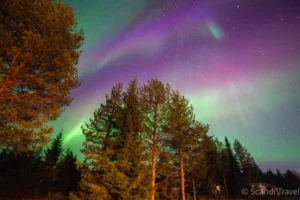
- September. The underrated month: soft gold, lower prices, quieter decks — and on a strong, clear night this far north you might even catch a faint aurora over the gulf.
The route runs in winter too, but that’s a different trip — short days, ice in the skerries, Christmas markets in Tallinn and Riga. We cover that one separately.
What’s Included in Our Baltic Capitals Cruise
Assembling this yourself means five ferry bookings with connecting times that actually connect, hotels in four countries, and the transfers between them. We’ve already done that part.
Our 6-day Baltic capitals cruise follows the Stockholm–Turku–Helsinki–Tallinn–Riga route across Sweden, Finland, Estonia and Latvia. The package covers the overnight ferry crossings with cabins, partner hotels (Strawberry, Scandic, Sokos, Clarion) in the centre of each city, all transfers, and English-speaking coordinators with you the whole way.
You can see every date and variation under our Baltic cruises, and the longer cross-border routes under Nordic multi-country tours.
What to Pack and What to Know
A few things that make the difference between a smooth trip and a fiddly one.
- Currencies differ. Sweden uses the krona (SEK), and cards work almost everywhere — you may not need cash at all. Finland, Estonia and Latvia are all on the euro (EUR). One wallet won’t cover the whole route, so keep that in mind.
- One Schengen zone. All four countries are in Schengen, so you won’t be showing your passport between them — though you’ll of course need it to enter.
- Layers, not a single coat. Even in July the sea breeze on deck has an edge after dark. A windproof shell and a warm jumper settle the question.
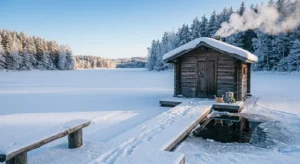
- Don’t skip the ferry sauna. It’s free or close to it, and a sea view through the steam shows up more often on this route than you’d expect.
- Comfortable shoes. Every old town here is cobbled, and the best views — Toompea, the lanes of Gamla Stan — are reached on foot and uphill.
Frequently Asked Questions
Is a Baltic cruise suitable for older travellers?
Yes — it’s one of the most comfortable formats for the 50-plus traveller. No long-haul flights or connections, short crossings, lifts and a doctor on board, and compact cities whose old centres you can cover on foot in a couple of hours.
How rough is the Baltic Sea?
In season, barely at all. The Baltic is enclosed and shallow, the ferries are large and steady, and the route hugs coasts and threads through archipelagos where there’s no swell to speak of. Anyone sensitive to motion tends to have a harder time on the open ocean than here.
How many days does the route need?
Six is the comfortable minimum for all five stops at this pace, with a night on the ferry counting as travel and sightseeing at once. Add a day in the Turku archipelago or an extra night in any capital and the trip stretches naturally — we build both versions.
Do I need to speak the local languages?
No. English is widely spoken across all five cities, and your Scandi Travel coordinators handle the logistics in every port.
Ready to Sail the Baltic? 🛳️
A Baltic capitals cruise isn’t a tick-box march of city, city, city. It’s slow travel, where the crossing between capitals is as much the experience as the capitals themselves: sunset skerries, sauna steam over the sea, dawn over Turku. Four countries, not one airport. And if you’d rather not stitch together the ferries, the hotels and the arrival times yourself, we’ve been doing exactly that for years — so all that’s left for you is to stand on deck.
And if no fixed itinerary lines up with your dates or your wishes, we’re always glad to build a private trip around your request. Add a day in the skerries, swap the order of the cities, extend the journey into the Norwegian fjords — tell us what you’re after and we’ll plan the route from scratch, just for you.