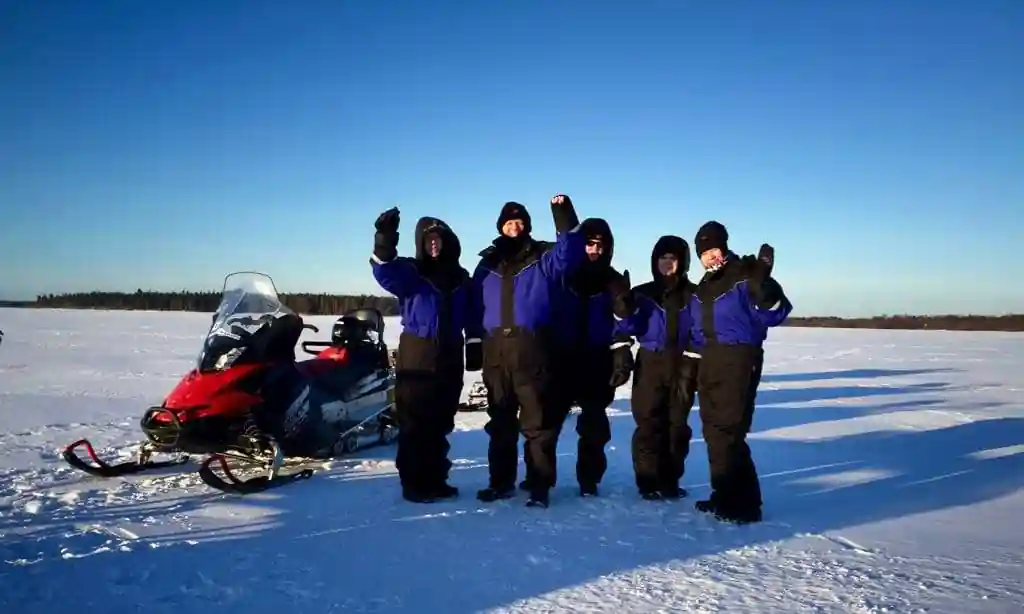
Most Lapland packing lists online are recycled ski-holiday advice — warm socks, a winter coat, done. But Lapland in winter isn’t a resort with a heated chalet fifty metres from the slope. It’s Arctic cold that holds for hours at a stretch, often at night, often while you’re standing completely still. Get the layers wrong and the trip turns into a fight against your own discomfort instead of a night spent watching the sky. Get them right, and the cold stops being something you have to survive. Over more than a decade, the Scandi Travel team has kitted out thousands of guests for husky safaris, snowmobile tours, and aurora hunts across Finnish Lapland — this is the packing list we actually hand people, not a rewritten template.
Why Ordinary “It’s Cold” Advice Doesn’t Work Here
The gap between “cold” and genuinely Arctic cold isn’t just a number on a thermometer. In Rovaniemi or Saariselkä, −20 °C with no wind on a clear day feels almost comfortable if you’re dressed right. That same −20 °C with a 20 km/h wind — completely normal on open fjäll and frozen lakes — turns into an effective −30 °C or worse. Wind is the variable first-timers forget most, and it’s the one that wrecks the “I have a warm coat, so I’ll be fine” plan.
The second thing people underestimate is duration. A ski day means short lift queues and a heated lodge every hour. A husky safari, a snowmobile safari, or a night hunting the Northern Lights means two to four hours continuously outdoors, often standing still while a guide points at the sky. Standing still in the cold is a different challenge entirely from moving through it — your body simply generates far less heat of its own.
And third: dryness. Lapland’s winter air is dry, which helps in some ways, but it also dehydrates skin faster than you’d expect, and any sweat on your body freezes rather than evaporating. That’s the entire logic behind the layering system below — move sweat away from skin, trap warm air close to the body, and block the wind before it reaches either.
The Three-Layer System, Explained Properly 🧊
Every genuinely warm Arctic outfit follows the same three-part logic, whether you’re a local guide or a first-time visitor from Sydney.
Layer 1 — Base: moves sweat away from skin
This layer sits against your body, and it’s where people get it wrong most often by reaching for cotton. Cotton absorbs sweat and holds it there, turning cold and clammy the moment you stop moving. Merino wool or a synthetic thermal base layer does the opposite — it wicks moisture away and stays warm even when slightly damp. Top and bottom, plus a liner sock in a similar fabric.
Layer 2 — Mid: traps warm air
Fleece, a thin down layer, or a wool sweater — thick enough to trap warm air, but not so bulky it gets in the way when you climb onto a snowmobile. Two thinner mid-layers usually beat one very thick one, since you can add or shed them as your activity level changes.
Layer 3 — Outer: blocks wind and wet
A genuinely windproof, waterproof shell — or, for full-day activities, an insulated snowmobile-style oversuit. This layer decides whether the wind chill reaches you at all. A stylish city parka with a few gaps at the wrists or waist will let cold air straight through to exactly where you’ll feel it most.
On top of all three: a hat that fully covers your ears, a neck gaiter or balaclava, mittens (warmer than gloves, since fingers share heat), and insulated, waterproof winter boots rated for at least −30 °C. Hands and feet lose heat first — this isn’t the place to cut corners.
What Scandi Travel Provides vs. What You Actually Need to Bring
The practical side of this is simpler than most people expect. On every winter activity — husky safari, reindeer sleigh, snowmobile safari, aurora hunt — Scandi Travel provides the heavy outer gear: a full thermal oversuit, insulated boots, mittens, and a balaclava, all fitted to size at our office in Rovaniemi and at other locations across Lapland before you head out. You don’t need to buy or pack Arctic-grade gear just to join a day tour.
What’s on you is everything underneath, plus normal everyday clothing for town and the hotel. Here’s the honest split:
- Provided by us on activity days. Thermal oversuit, winter boots, mittens or gloves, balaclava, and a helmet where relevant (snowmobile safaris).
- You bring for activity days. Thermal base layer top and bottom, warm socks, a fleece or wool mid-layer, and a hat.
- You bring for everything else. Regular warm outdoor clothing for walking around Rovaniemi or your resort — a proper winter coat, insulated trousers, and everyday boots with decent grip.
If you’re staying in a glass igloo, pack something warm and quick to throw on for the short walk from your igloo to the main lodge at 3 a.m., when the aurora alert wakes you.
The Full Packing List, Head to Toe
Head and neck
- Warm hat. Wool or fleece, fully covering the ears — not a thin fashion beanie.
- Neck gaiter. Doubles as a face cover in wind.
- Sunglasses. Snow glare on a bright day is intense even in winter.
Torso
- 2–3 thermal base layer tops. Merino wool or synthetic, never cotton.
- 1–2 fleece or wool mid-layers. Zip-up is easier to regulate than pullover.
- Insulated winter coat. For town and transfers, not needed on activities where we supply the oversuit.
Hands
- Thin liner gloves. For handling a camera or phone without exposing bare skin.
- Warm mittens. For town use; we hand out heavier ones for activities.
Legs and feet
- Thermal leggings. Worn under trousers, top and bottom base layer together.
- Wool hiking socks. 2–3 pairs, thick, never cotton sports socks.
- Waterproof winter boots. Rated for at least −20 °C, with good tread for icy pavements in town.
Extras worth the suitcase space 📸
- Hand and toe warmers. Cheap, disposable, genuinely useful during long stationary aurora watches.
- A headlamp. Kaamos, the polar night, can feel like midnight by 2 p.m.
- Camera with spare, warm batteries. Cold drains charge fast — keep spares in an inside pocket, close to your body.
- Lip balm and moisturiser. Dry Arctic air is harder on skin than most people expect.
Mistakes We See Every Season
The most common one: a fashionable city coat instead of a genuine winter one. It looks fine in downtown Helsinki, and then it doesn’t hold up during three hours on a frozen lake at night. The second: cotton socks. Fine on the walk to the airport, cold within twenty minutes outdoors.
A more subtle mistake is over-layering the torso while under-layering the legs. Guests often arrive in three sweaters and thin jeans, when legs lose heat just as fast as the chest — thermal leggings under trousers matter as much as a warm coat on top.
And the fourth: assuming snowmobile boots are needed for the whole trip, including city days. Rovaniemi and Helsinki keep their pavements gritted and clear — regular warm boots with decent grip are fine in town. Save the heavy gear, mentally, for the days in the wilderness. Nobody wears a thermal oversuit to dinner.
Frequently Asked Questions
Do I need to buy my own Arctic snowsuit before the trip?
No. Scandi Travel provides the full thermal oversuit, boots, mittens, and balaclava for every winter activity, fitted to size on location. You only need your own base and mid-layers, plus regular winter clothing for town.
What temperature should I actually pack for?
Pack for −25 °C to −30 °C even if the forecast looks milder. Wind chill on open fjäll and frozen lakes regularly drops the effective temperature well below the air reading, and extra layers are easy to shed if it turns out warmer than expected.
Is it too cold for children?
With the right layers, no — children handle Arctic cold well in short bursts. We recommend shorter outdoor stretches and extra hand or toe warmers for younger kids, especially on evening aurora hunts.
A well-packed suitcase is the difference between two comfortable hours watching the aurora unfold and cutting the night short because your feet went numb after twenty minutes. Layer properly, trust the gear we hand out on activity days, and the cold becomes part of the experience rather than something to survive. For the full logistics — including exactly what’s provided on each tour — our complete guide to Lapland in winter is the natural next stop.