
New Year’s Eve in Lapland, Helsinki and Stockholm is really three different holidays that happen to fall on the same date. In Lapland, midnight arrives under open sky, in near-total quiet, with an outside chance of catching the Northern Lights right after the fireworks fade. In Helsinki, it means a crowded harbourfront, music, and a city working itself up to full volume. In Stockholm, it means a century-old ritual: a reading of Tennyson’s “Ring Out, Wild Bells” on national radio exactly one minute before midnight, followed by fireworks over the water.
Every autumn, our guests ask us the same question: where should we actually spend New Year’s Eve in Lapland, Helsinki, or Stockholm? This guide breaks down the atmosphere, the weather, the crowds, and who each destination genuinely suits — without pretending one of them is the correct answer.
Scandi Travel books guests into all three destinations every New Year, and our team hears three completely different trip reports every January. All of them happy. 🎆
Why the Destination Decides the Whole Night
This isn’t just a question of where to fly. New Year’s Eve feels physically different in each of these three places. The temperature gap alone runs to 25 degrees, from around −20 °C in Lapland to roughly 0 °C in Stockholm, and the crowd size ranges from near-total solitude to tens of thousands of people packed along a waterfront.
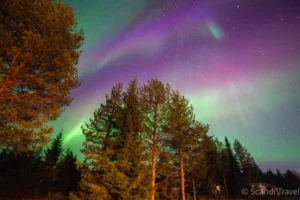
None of the three destinations guarantees the Northern Lights. That only happens in Lapland, and not every night even there. Early January does fall in the darkest, often clearest stretch of the season, so the odds are genuinely better than at any other point in this comparison — just never certain.
What actually decides the right choice is what you want from the night itself: complete quiet and a natural spectacle, city energy and a proper party, or a family tradition with a fixed ritual at its centre. Here’s what each one delivers.
New Year’s Eve in Lapland ❄️
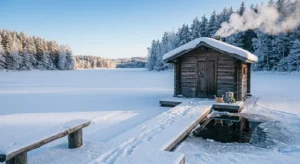
New Year’s Eve in Lapland is close to the opposite of a city celebration. Hotels often run their own fireworks directly over the snow-covered fells, and guests count down outside in thermal layers with a cup of glögi in hand, not packed into a town square.
The real draw is the chance to pair the countdown with the Northern Lights. Early January sits in the darkest, usually clearest window of the season, and many guests book a midnight aurora safari straight after the fireworks — a combination that simply isn’t possible in Helsinki or Stockholm.
The atmosphere stays small and quiet: candlelit dinners in a log cabin or partner hotel, not a citywide event. For anyone who wants to actually be present in the moment rather than celebrate in a crowd, this is probably the strongest option of the three.
The trade-off is obvious. −15 to −25 °C at midnight is serious cold, and it demands the right gear. Logistics are harder too — fewer direct flights, a longer journey, and usually a transfer out of Rovaniemi.
New Year’s Eve in Helsinki 🎇
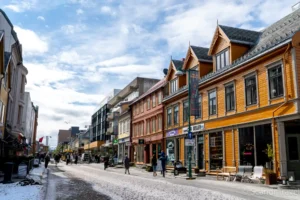
Helsinki offers the opposite experience entirely — urban, loud, current. The main draw is Senate Square and the Esplanadi waterfront, where tens of thousands gather, music plays, and the sky over the harbour lights up at midnight.
Temperatures here run noticeably milder than in Lapland, typically −5 to −10 °C, which makes standing outside at midnight genuinely comfortable rather than an endurance test. Logistics are simpler too: Helsinki is a capital city with direct flights from most major hubs in the UK, US and Australia.
This is the right call for guests who want restaurants, nightlife, and easy logistics, but still a real Scandinavian winter — snow on the ground is close to guaranteed, just without Lapland’s Arctic bite.
The catch: no aurora here, and the celebration itself is a city party rather than a natural spectacle. If quiet is what you’re after, Helsinki isn’t it.
New Year’s Eve in Stockholm 🇸🇪
Stockholm is the most culturally rooted of the three. New Year’s here centers on a ritual: exactly one minute before midnight, national radio and television broadcast a reading of Tennyson’s “Ring Out, Wild Bells” — the Nyårsklockan — accompanied by bell-ringing at the open-air Skansen museum, a tradition running for more than a century that many Swedish families still watch together before heading outside.
The waterfront and Gamla Stan, Stockholm’s Old Town, put on one of the most striking city scenes in Scandinavia on New Year’s Eve — fireworks reflected across the water between the islands, with the medieval streets of the Old Town giving the night a far cosier feel than Helsinki’s open Senate Square.
The climate here is the mildest of the three, often hovering around 0 °C and sometimes rain instead of snow, which some travelers find less like a proper Nordic winter. Stockholm also connects naturally to a Baltic route — many guests continue on by ferry to Helsinki or Tallinn once January begins.
Lapland vs. Helsinki vs. Stockholm, Side by Side
- Atmosphere. Lapland is quiet and natural; Helsinki is urban and high-energy; Stockholm is traditional and ceremonial.
- Temperature. Lapland runs −15 to −25 °C; Helsinki −5 to −10 °C; Stockholm around 0 °C.
- Crowds. Lapland has almost none; Helsinki and Stockholm draw tens of thousands to the waterfront.
- Northern Lights odds. Lapland only, and never guaranteed.
- Logistics. Helsinki and Stockholm have direct flights from most major cities; Lapland needs an extra transfer.
- Best for. Lapland suits couples and quiet-seekers; Helsinki suits guests who want a city and a party; Stockholm suits travelers who value tradition and want to continue on by Baltic ferry.
How the Scandi Travel Team Matches Guests to a Destination 🤝
Couples who want quiet and a shot at the Northern Lights at midnight almost always choose Lapland — and rarely regret it, even when the aurora doesn’t show.
Families with children more often choose Helsinki or Stockholm. The climate is milder, the logistics simpler, and both cities offer enough family-friendly activity before and after midnight that nobody is standing in the cold all night waiting.
Travelers combining several countries in one trip frequently build their route around the Baltic — celebrating in Stockholm, say, then taking the ferry to Helsinki or Tallinn a day or two later. That’s exactly the logic behind our Nordic multi-country tours, and if you would rather not choose just one destination, we run plenty of routes that combine several of these stops in a single trip.
What to Know Before You Book
- Book early. New Year’s dates sell out faster than almost any other date on the calendar, especially hotels with a New Year’s dinner and a view of the fireworks.
- Lapland demands real winter gear, even for an event billed as “heated” — you’ll spend more time outside than you expect.
- Don’t buy or set off your own fireworks. Finland and Sweden both restrict where and when private fireworks are allowed — leave it to the organized show.
- Book a waterfront spot early in Helsinki and Stockholm — the best fireworks viewpoints fill up hours before midnight.
- If you want to combine two destinations, ask your advisor whether the route fits the holiday ferry schedule between Stockholm and Helsinki — it runs differently than usual over New Year’s.
Frequently Asked Questions
Where are the odds best for seeing the Northern Lights on New Year’s Eve?
Only in Lapland. Early January falls in a dark, often clear stretch of the season, but as with any night of the year, nobody can guarantee it.
Is New Year’s Eve in Lapland suitable for young children?
It can be tough, given the cold and a late midnight. Most families with young kids feel more comfortable in Helsinki or Stockholm, where the night is milder and logistics are simpler.
Can I celebrate in one city and be somewhere else the next day?
Yes — this is a common pattern. Ferry connections between Stockholm and Helsinki make it easy to continue the trip right after the celebration.
How far ahead should I book a New Year’s tour?
Given that most guests plan trips 3 to 12 months out, the best hotels and restaurants for New Year’s dates are usually gone by autumn of the same year.
What should I wear for New Year’s Eve in Lapland?
Full winter gear — thermal base layers, an insulated coat, and waterproof boots. Most of the celebration happens outdoors.
Ready to Choose Where You’ll Ring In 2027?
The quiet of Lapland, the energy of Helsinki, or the tradition of Stockholm — there’s no wrong choice here, only the one that fits your particular group. The team at Scandi Travel books all three destinations every year and can help you pick the one that actually matches how you want to spend the countdown. And if you’d rather not choose just one, we run plenty of routes that combine several of these destinations into a single trip. 🥂