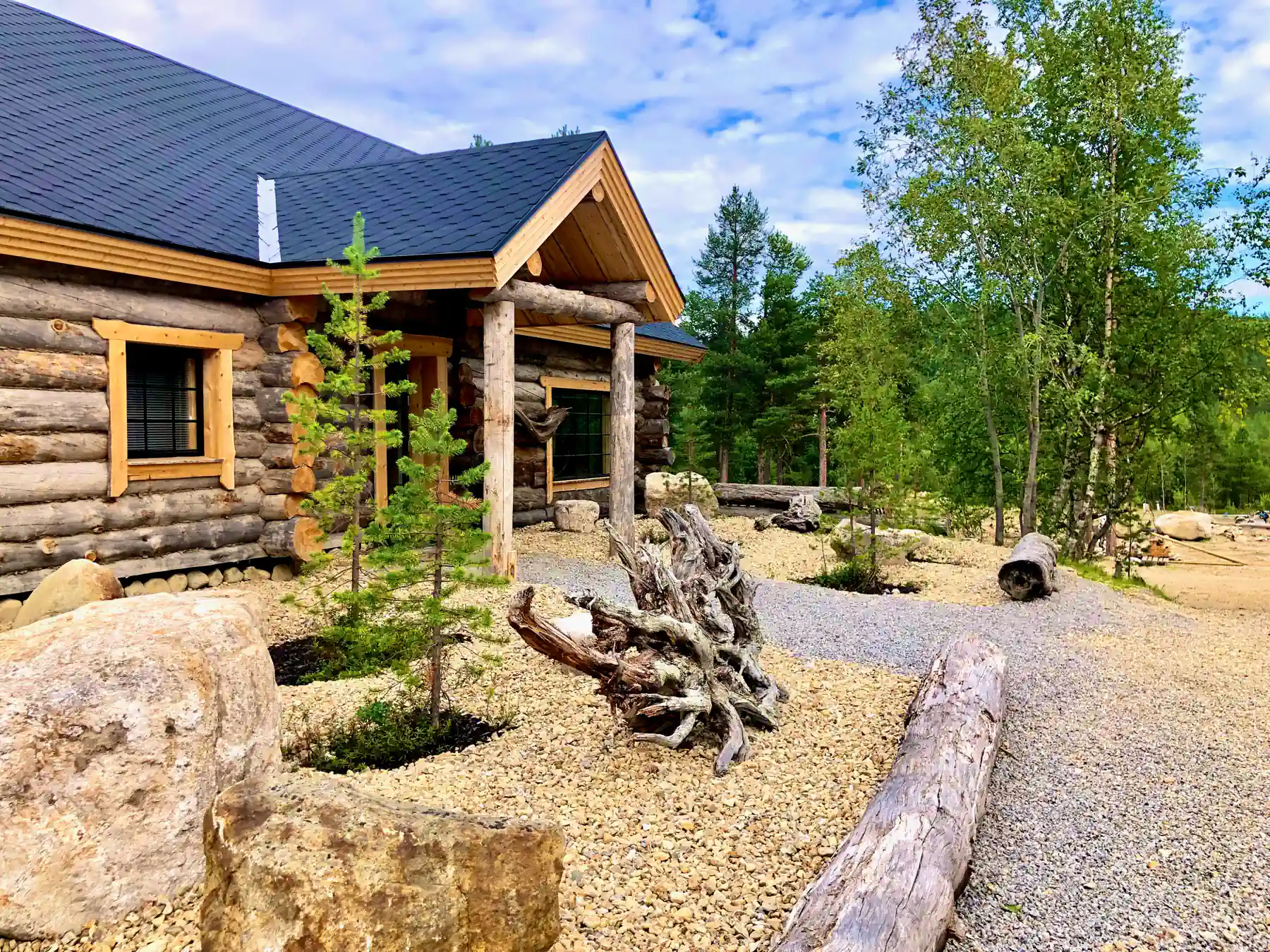
At 2 a.m. in Saariselkä, one guest is lying under a curved glass ceiling, wide awake, waiting. Fifty metres away, in a low timber cabin with the fire burned down to embers, another guest is fast asleep, boots drying by the door and skis leaning against the porch. Both of them are having the trip of a lifetime. They are just having very different ones.
Nearly every Lapland winter itinerary eventually asks travelers the same question: glass igloo or log cabin? It sounds like a simple accommodation choice, but it quietly decides how warm you will be, how much privacy you will have, how much you will pay, and — more than the marketing photos tend to admit — whether you will actually sleep. In this guide, we will walk through what each stay really delivers, who tends to regret which one, and how our guides help guests combine both without overspending.
Scandi Travel has been booking both formats across Lapland, and our guides hear roughly the same debrief every February: igloo guests talk about the ceiling, cabin guests talk about how well they slept. Neither group is wrong. 🌌
Why This Isn’t Just a Room-Type Decision
On paper, this looks like a hotel-booking detail. In practice, it shapes the whole trip. A glass igloo and a log cabin differ in temperature, privacy, price, and how much of your night is spent actively watching the sky rather than resting after a day outdoors.
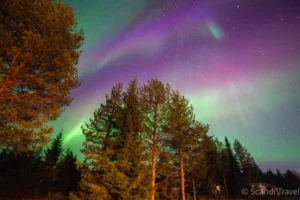
Neither option guarantees the revontulet — the Finnish word for Northern Lights, literally “fox fires” — will actually appear. Aurora activity depends on solar weather that no glass roof can influence.
What each option does control is everything else: how rested you are the next morning, how much you spend on a single night versus the rest of the trip, and whether the experience suits a couple, a family, or a group. Our own 12-day multi-country winter route builds in exactly one igloo night for this reason — it treats the glass ceiling as a highlight, not the whole holiday, and lets a log cabin or city hotel absorb the rest of the itinerary.
Inside a Glass Igloo Night ✨
A glass igloo is a small dome or cabin with a frost-resistant glass ceiling, sometimes the full upper half of the structure, built specifically so guests can watch the sky without leaving bed. Glass igloo resorts keep interiors heated to a comfortable +18 to +20 °C, though guests near the glass itself often notice a cooler edge to the air by 3 a.m.
Several resorts fit a thermal-imaging camera outside that tracks solar activity and can trigger a wake-up call or a light alert inside the room if the aurora appears while you are asleep — a detail that sounds like overkill until it saves your one clear night of the trip. Most igloos also include switchable or curtained privacy glass, transparent after dark for the view, opaque or covered by day, though the level of privacy varies noticeably by resort and is worth asking about directly.
The trade-off is cost. Glass igloo stays typically run well above a standard hotel room or cabin night, and exact pricing depends on the resort, the dates, and which partner property you book through, so always confirm current rates before you commit. Most guests book one or two nights, not a full week.
One of our guides in Saariselkä puts it bluntly: “Half our igloo guests do not really sleep the first night. They are not supposed to — that is the point.”
Inside a Traditional Log Cabin 🌲
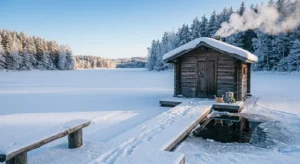
A log cabin — timber-built, usually with its own fireplace, kitchen, and often a private sauna — is the format most Finnish families actually use for their own winter holidays. It trades the glass ceiling for space, warmth, and the kind of quiet that comes from four solid walls between you and −20 °C.
The sensory register is completely different: birch smoke from the fire, the crunch of snow on the porch steps, a kettle rather than a thermal camera. Many cabins are built with large picture windows facing the open fell, so a partial sky view is often possible without ever leaving the sofa — just not the uninterrupted glass roof of an igloo.
Seeing the aurora from a cabin usually means stepping onto the porch for a few minutes, or joining one of our dedicated Northern Lights safaris, which run independently of where you are sleeping. What guests gain in exchange is a genuinely restorative night, more space for a family or group, and a price that is typically a fraction of an equivalent igloo stay.
Glass Igloo vs. Log Cabin, Side by Side
- Warmth. Cabins run warmer and steadier; igloos stay comfortable but feel cooler near the glass after midnight.
- Privacy. Cabins offer full privacy by design; igloos rely on switchable or curtained glass that varies by resort.
- Price per night. Igloos sit well above cabins — often several times the cost for a comparable date, so confirm current partner rates before booking.
- Best for. Igloos suit couples and bucket-list travelers; cabins suit families, groups, and anyone prioritizing sleep.
- Typical length of stay. One or two igloo nights is standard; cabins are often booked for the bulk of the trip.
- Aurora view. Igloos offer a ceiling view without leaving bed; cabins usually mean a short walk outside or a scheduled safari.
How the Scandi Travel Team Matches Guests to a Stay 🤝
Three patterns come up again and again when our team plans a Lapland winter trip.
Couples on a romantic trip or honeymoon tend to book one or two igloo nights as the centerpiece of the holiday, then spend the rest of the itinerary in a standard hotel or a shared cabin to recover the cost — and the sleep.
Families with children almost always default to a log cabin, usually with its own sauna, paired with a separate Northern Lights safari after dinner. Kids sleep better in a solid-walled room, and parents get an actual night’s rest rather than a half-awake vigil under glass.
Bucket-list travelers combining several countries in one long-haul trip — the profile our 12-Day Northern Lights & Scandinavia Tour is built around — tend to want both: a single igloo night as the trip’s emotional peak, with cabins or city hotels carrying the rest of the route through Sweden, Estonia and Finland.
What to Ask Before You Book
A few questions save most of the disappointment we hear about after the fact.
- Ask about privacy glass. Not every igloo offers full curtain coverage — some resorts use a switchable film, others rely on distance between units.
- Ask about the wake-up policy. Some igloo resorts will alert you if the aurora appears overnight; others leave it entirely to chance.
- For cabins, ask about sauna access. Some cabins include a private sauna, others share one with neighboring units.
- Ask how far the aurora safari pickup point is from your cabin — this matters more in outlying properties around Saariselkä and Inari.
- Confirm current rates directly with your Scandi Travel advisor, since igloo pricing shifts by resort, season and demand more than standard hotel rooms do.
Frequently Asked Questions
Is a glass igloo worth the extra cost?
For most couples and photographers, yes — for one or two nights. Booking a full week in a glass igloo is rarely worth it even for enthusiasts; the value is in the novelty and the view, not in extended comfort.
Can you actually see the Northern Lights from inside a log cabin?
Sometimes, through a large window facing open sky, but not reliably. Most cabin guests step outside for a few minutes or join a scheduled aurora safari rather than relying on the view from bed.
Are glass igloos suitable for children?
They can be, but most families prefer a log cabin instead — more space, a private bathroom, and a room designed for a full night’s sleep rather than an aurora vigil.
How many nights should I book in a glass igloo?
One or two is the pattern our guides see most often. It is enough to catch a clear night without paying igloo rates for a stay better suited to a cabin.
Is there a middle-ground option?
Some cabins include large panoramic windows facing the fell, which offer a partial sky view without the full glass roof — worth asking your advisor about if you want a compromise between the two.
Ready to Choose Your Lapland Winter Stay?
There is no wrong answer here — only the wrong answer for your particular trip. A glass igloo gives you one unforgettable, slightly sleepless night under the sky; a log cabin gives you the rest of the holiday to actually enjoy it. The team at Scandi Travel books both every winter and can help you split your nights the way our guides would split their own. 🤝