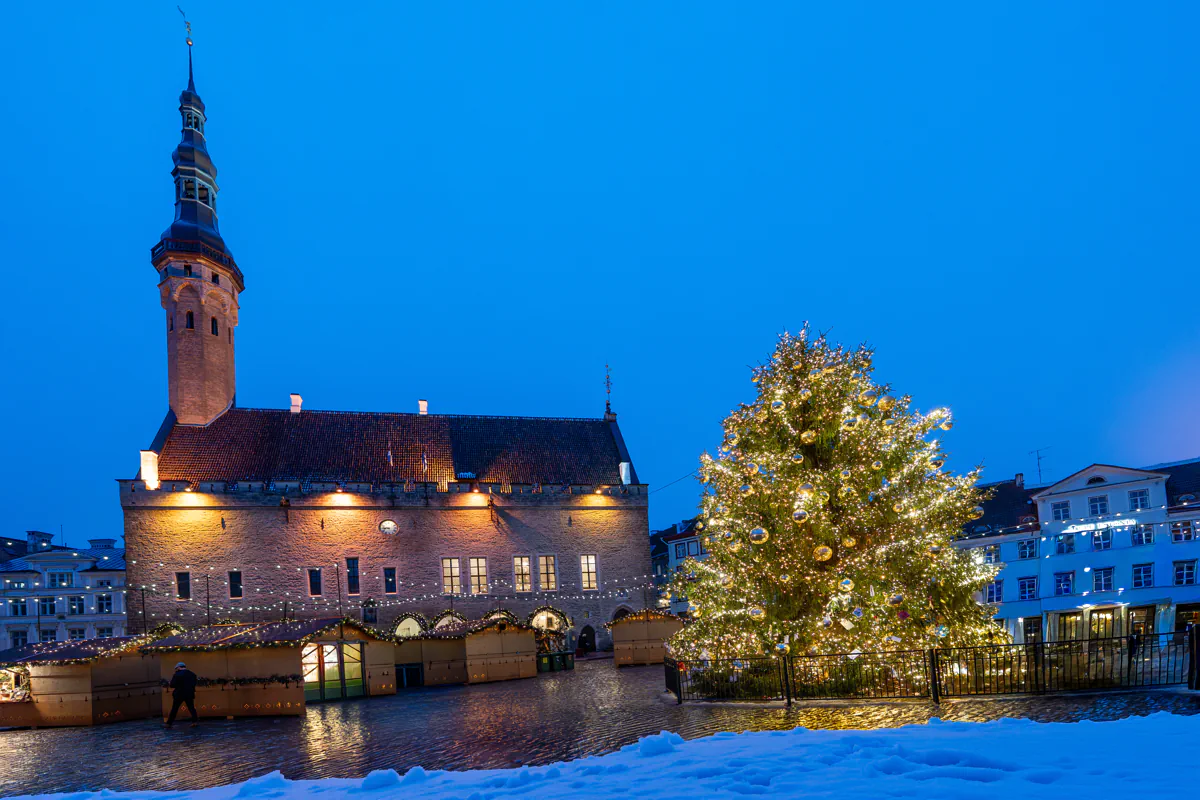
Someone flips a switch on Raekoja plats and roughly six centuries of tradition light up at once. The Christmas tree in the square — by legend the first public Christmas tree ever displayed in Europe, put up by the Brotherhood of Blackheads back in 1441 — still stands in the same spot it did then, just taller and better wired. Around it, wooden stalls sell mulled wine in flavors no German market has ever heard of. This guide covers exactly when to come, what’s worth your time at the Tallinn Christmas Market 2026, and why the Scandi Travel team keeps sending winter travelers here on their way north.
Why Tallinn Beats Stockholm and Copenhagen for a Winter Break
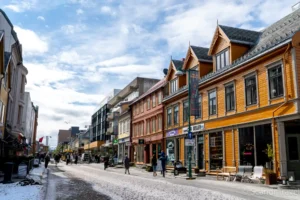
Tallinn’s Old Town is compact enough to walk end to end in fifteen minutes, which changes how a winter city break actually feels. You’re not commuting between neighborhoods in the cold — you step out of a café and you’re already at the market.
The market itself is smaller than Vienna’s or Nuremberg’s, and it’s worth saying plainly: some visitors expect a sprawling festival and find a few dozen stalls instead. What Tallinn trades in size, it makes up in setting. There’s no plywood backdrop here — the Raekoja plats Christmas market sits inside a genuinely medieval square, in front of a 700-year-old Town Hall, inside a district that’s been a UNESCO World Heritage Site since 1997.
Daylight is short but not brutal. The sun sets around 4 p.m. in December, which sounds harsh until you realize it means the market’s lights are doing their job by mid-afternoon, not waiting for a “proper” evening.
The 2026 Calendar: When to Come 📅
The market’s dates for this season are confirmed: 20 November 2026 through 6 January 2027. Stalls generally run 10 a.m. to 8 p.m., with the mulled wine counters staying open later — until 10 p.m. Sunday through Thursday, and 11 p.m. on Fridays and Saturdays.
- Late November. Opening week. Lights switch on, the crowds are still thin, and hotel prices haven’t peaked yet.
- Early to mid-December. Peak atmosphere — and peak Old Town hotel rates. Book this window months ahead if you want to stay inside the walls.
- 24–26 December. Part of the market stays open through Christmas itself, which is rarer in Europe than you’d think.
- 27 December – 6 January. Quieter, still fully lit, often the best value if crowds aren’t your thing.
For comparison: temperatures in Tallinn in December typically sit between −2 °C and 0 °C — genuinely mild next to Finnish Lapland’s −20 °C, which makes this an easier entry point into a Nordic winter for travelers who aren’t sure how much cold they actually want.
What to Actually Do at the Market (and Around It)
Work through the glögi menu
The mulled wine selection here is genuinely deep — cranberry-cherry, a raspberry-blackcurrant version from the Setomaa region, even a pumpkin variety, all served with and without alcohol. New this season: hippocras, a spiced wine made to a medieval recipe.
Eat like it’s actually Christmas
Sauerkraut, blood sausage, reindeer sausage, duck confit, gingerbread — the food stalls lean traditional rather than photogenic, which is exactly the point.
Climb the Town Hall
The 700-year-old Tallinn Town Hall opens its upper floor to visitors, giving you a view straight down onto the market and the tree.
Skate at Harju Street
The Uisupark ice rink sits a five-minute walk from the square — technically separate from the market, but easy to fold into the same evening.
Walk up to Toompea after dark
Climb the hill above the Old Town and the market becomes a small pool of light below you, with the rest of the medieval skyline dark and quiet around it.
Getting There: The Winter Ferry from Helsinki
Tallink and Viking Line both run the Helsinki–Tallinn crossing in around 2 to 2.5 hours, with several sailings a day even in winter. A single day is enough to see the market properly, but two nights lets you catch the lights at both the quiet late-afternoon hour and the busier evening peak without rushing either.
Where to stay matters more here than in most cities. Inside the Old Town walls puts you five minutes from the square, with the market noise as part of the package. A few streets further out — toward Rotermann — buys you quiet evenings and often better rates for the same December week.
Practical Tips for a Cold Old Town
- Footwear first. The cobblestones get icy under the market lights. Bring boots with real grip, not fashion ones.
- Currency. Estonia uses the euro — a small but useful detail if you’re combining this trip with Sweden, Norway, or Denmark on the same itinerary.
- Entry is free. You only pay for food, drink, and whatever you take home from the stalls.
- Dogs are welcome on a lead, if you’re traveling with one.
Frequently Asked Questions
Is the Tallinn Christmas Market open on Christmas Day?
Yes — part of the market stays open through 24–26 December, which is unusual among European Christmas markets.
How many days do I need?
One full day covers the market and the closest sights. Two nights gives you time for Toompea, the Town Hall climb, and an evening without checking the clock.
Is it as cold as Lapland?
No. December in Tallinn averages around 0 °C, compared to −15 °C to −25 °C in Finnish Lapland during the same month. It’s a gentler way to start a Nordic winter trip.
Is the market crowded?
It draws around 200,000 visitors across its full run — busy in mid-December evenings, noticeably calmer in the opening and closing weeks.
Pair It With a Lapland Winter Tour ❄️
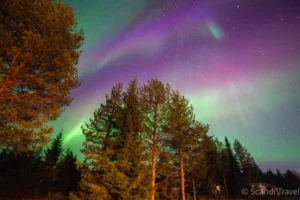
Tallinn doesn’t have to stand alone. The ferry back to Helsinki takes under three hours, and from there, Scandi Travel can take you the rest of the way north — toward the Northern Lights, glass igloos, and Rovaniemi’s snow. A good number of our winter guests now build one trip out of both: a few fairy-tale days in Tallinn’s Old Town, then the deep quiet of Finnish Lapland. The contrast is the whole point — a 600-year-old market square, followed by a landscape that doesn’t have a square mile of it.
A December trip to Tallinn is small in scale and large in atmosphere — a market that hasn’t needed to grow to stay worth visiting. And if you’d rather not plan the Helsinki connection and the Lapland leg on your own, Scandi Travel has been building exactly these routes for over a decade. 🤝