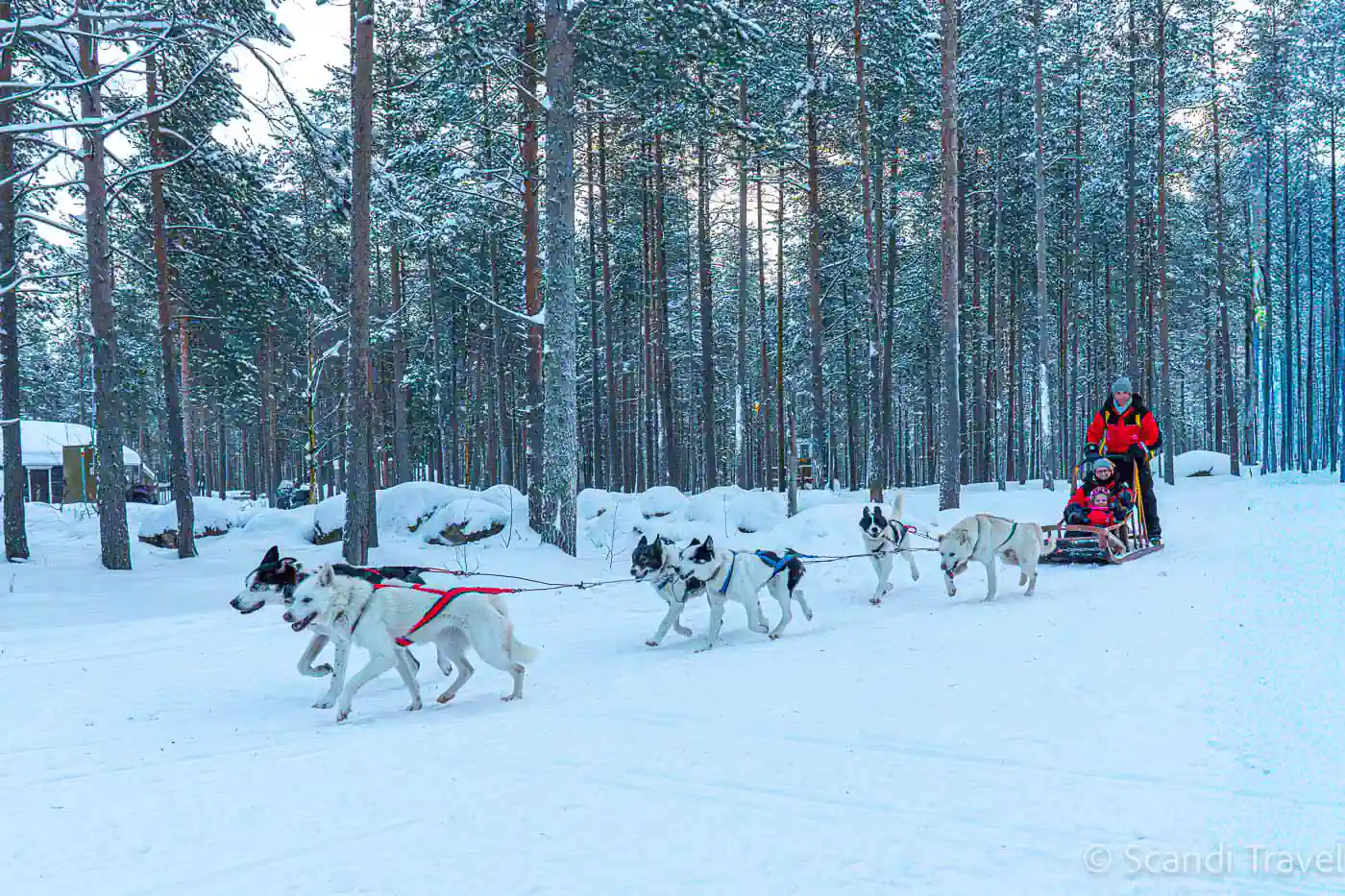
Sixty lovely dogs erupt at once, and it’s easily the loudest moment of any Lapland trip. Not barking exactly — something between a howl and an ecstatic yelp, as if every last one of them can’t stand the wait a second longer, until the final harness clicks into place and the whole team is finally let loose. Then, roughly thirty seconds into the run, the silence arrives so completely you can hear snow creaking under the runners — the very same dogs that were just about to shake the yard apart with joy, now moving in perfect, quiet rhythm.
Here’s what most brochures leave out: a husky safari starts as joyful chaos and turns into one of the gentlest experiences of the whole trip. These charming dogs aren’t a photo prop or a thrill ride. Each one has a personality, a habit, a particular way of nudging its nose into your palm while you wait for the run to start. In this guide, we’re not selling you speed or adrenaline. We’re introducing you to the dogs first — properly, by name and by temperament — because that’s the order our guides at Scandi Travel insist on too.
By the end, you’ll know what a good kennel actually looks like, when to go, what a first-timer’s morning really involves, and — hopefully — why our guides talk about some of these sweet-natured animals the way other people talk about old friends. 🐕
Why the Dogs Come First
Most tour listings describe a husky safari the way they’d describe a rollercoaster — speed, thrill, adrenaline. That framing misses the point, and it misses the dogs entirely.
A working husky in Finnish Lapland isn’t a ride. It’s an athlete with opinions. Some dogs pull because they were born to. Others pull because the dog next to them is pulling and they refuse to be shown up. A good musher — the person who drives the sled — spends years learning which two dogs can’t be harnessed next to each other, and which pair, put together, will run themselves into the ground with joy.
This matters for you as a visitor for a simple reason: the safaris worth booking are run by people who know every dog by temperament, not just by number. Ask your kennel how many dogs they keep and how they rotate rest days. If nobody can answer quickly, that’s information too.
It also explains why the best husky safari experiences in Lapland don’t feel rushed. You arrive early, meet these adorable dogs properly, and only then get on the sled — usually forty minutes to an hour after you’ve stepped off the minibus. That hour is the part our guides say most guests remember longest.
When to Go: A Season-by-Season Guide 📅
Husky safaris run from roughly late November through early April, and the experience changes considerably across those months.
- Late November – mid-December. Snow is fresh but sometimes thin on the ground; trails are quieter and prices are at their lowest. Daylight is short — by mid-December you’re running through kaamos, the polar twilight, for much of the tour.
- Christmas to early January. Peak season. Trails are packed hard, dogs are in full winter condition, but kennels book out weeks ahead — this is when family Christmas trips overlap heavily with Santa Claus Village visits in Rovaniemi.
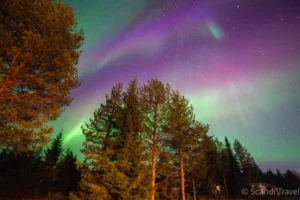
- February – March. The sweet spot most locals recommend. Daylight returns fast, temperatures stabilise around −10 to −20 °C, and the snow is deep and forgiving. This is also prime Northern Lights season, so many guests pair an evening safari with an aurora hunt the same night.
- Late March – early April. Longer light, softer snow, and a different mood entirely — the dogs run in near-daylight, and you’ll often see the trail glowing pink at 6 pm instead of pitch black.
If forced to pick one month, our guides say February. Cold enough to be real, bright enough to see everything, and the dogs — like most of Lapland — are at their most alert.
Meet the Team: Six Dogs You Might Run Into on the Trail
No two kennels have the same roster, obviously — but almost every working team of endearing dogs in Lapland has these same personality types. Our guides have nicknames for them, and so will yours by the end of your safari.
The Lead Dog Who Refuses to Be Wrong
Every team has a lead dog, and every lead dog is stubborn about it. Lead dogs steer by voice command alone — gee for right, haw for left — and the good ones will occasionally overrule the musher if the trail looks wrong to them. More than once, a lead dog has been right.
The Screamer
Every kennel has one dog whose entire personality is volume. Usually smaller, usually near the front, and utterly silent the moment the sled starts moving. The contrast is the whole joke of the morning.
The Veteran
Seven or eight years old, greying slightly around the muzzle, and still pulling harder than half the young dogs around it. Veterans are often placed near the front specifically because their pace never wavers — panic or excitement doesn’t move them.
The Reluctant Athlete
Not every husky loves running, and good kennels don’t force the ones who don’t. This gentle dog might spend most of its life as a “yard dog,” greeting guests instead of pulling — just as valued, just built for a different job. Often it’s the first to come say hello while the rest of the team waits for the start.
The Escape Artist
Usually young, usually clever, and usually the reason kennel fences get an extra foot of height. Ask any musher for their escape-artist story — they all have one, and it’s rarely short.
The One Who Remembers You
Somewhat unscientifically, mushers swear certain dogs recognise repeat guests season after season. Whether or not that’s literally true, it’s the story guests tell most — and it’s a big part of why people come back to the same kennel year after year.
Where to Base Yourself: Kennels and Routes
Location shapes the whole experience more than most guests expect.
- Rovaniemi. The most accessible base, close to the airport and Santa Claus Village — good for families combining a husky safari with other Arctic Circle activities in a short window. Trails here tend to be shorter, 1–2 hours, and well-suited to first-timers and children.
- Levi. Fell country. Trails climb into more open terrain with wide views over the tunturi (fell) landscape — worth it if you want the sled to feel like it’s crossing wilderness, not just forest.
- Saariselkä / Inari. The quietest of the three, and the most remote. Multi-day husky expeditions with overnight cabin stays are common here, for guests who want the full mushing experience rather than a single afternoon run.
If you’re combining a husky safari with a broader Lapland itinerary, our 6-Day Finnish Fairy Tale tour builds it in alongside Santa Claus Village and reindeer time — a solid choice for families. Guests chasing both dogs and aurora in one trip often look at the 8-Day Lapland Northern Lights tour, which pairs daytime husky runs with dedicated evening aurora hunts.
What to Expect on Your First Husky Safari
The cold is the first thing people ask about, and honestly, it’s the least of your problems if you dress properly.
- Layer, don’t bundle. Thermal base layer, insulating mid-layer, windproof outer shell. Kennels almost always provide the full snowsuit, boots, and mittens on top of what you’re wearing — you rarely need to buy specialist gear yourself.
- You’ll drive part of it yourself. Most safaris let each guest take a turn standing on the runners and steering, with a guide or partner riding in the sled basket. It’s less physical than it looks — the dogs do the work, you mostly balance and brake.
- The noise-to-silence ratio is extreme. Expect joyful, ear-splitting chaos in the yard, and then — the second the brake releases — near-total silence, broken only by paws on snow and the sled runners hissing.
- You’ll get dog time, guaranteed. Every reputable kennel builds in time before or after the run to sit with these gentle dogs, feed treats, and take photos. If a tour doesn’t include this, ask why.
- Bring a proper camera strap. Phones die fast at −20 °C. A dedicated camera with a wrist strap survives the cold better and won’t slip out of thick mittens. 📸
Frequently Asked Questions
Is husky sledding cruel or unethical?
Not when it’s run properly, and it’s fair to ask before booking. Reputable Lapland kennels rotate dogs so no animal runs every single day, keep vets on retainer, and retire dogs to a slower life on-site rather than passing them on once they stop racing. Watch how the dogs behave in the yard before departure — genuinely well-kept, cheerful dogs are loud with excitement, not fearful or withdrawn.
Is a husky safari safe for young children?
Yes, with the right setup. Most family-oriented kennels seat children in the sled basket rather than having them steer, and shorter routes (1–2 hours) suit younger attention spans better than multi-day expeditions. Our family Lapland tours are built around exactly this kind of pacing.
How cold is too cold for the dogs?
Considerably colder than it is for you. Huskies carry a double coat built for exactly this climate and are genuinely more comfortable at −20 °C than most guests are. Kennels do postpone runs in extreme cold snaps or storms — for the guests’ sake as much as the dogs’.
Can I do a husky safari without visiting in winter?
Some kennels run summer “dry-land” carting using wheeled rigs instead of sleds, though it’s a different, dustier experience. The classic husky safari — sled, snow, silence — is a winter-only activity, generally late November through early April.
Ready to Meet the Team? 🐾
A husky safari sounds, on paper, like a box to tick on a Lapland trip. It rarely stays that way. Most guests leave talking less about the speed of the sled and more about one particular sweet-natured dog — the escape artist, the veteran, the one who leaned its head against their leg during the quiet minutes before departure. That’s the part worth planning your trip around.
If you’d rather not sort kennels and routes on your own, the team at Scandi Travel works directly with trusted mushers in Lapland, and can match the right safari to your family, your fitness, and your patience for the cold. 🤝