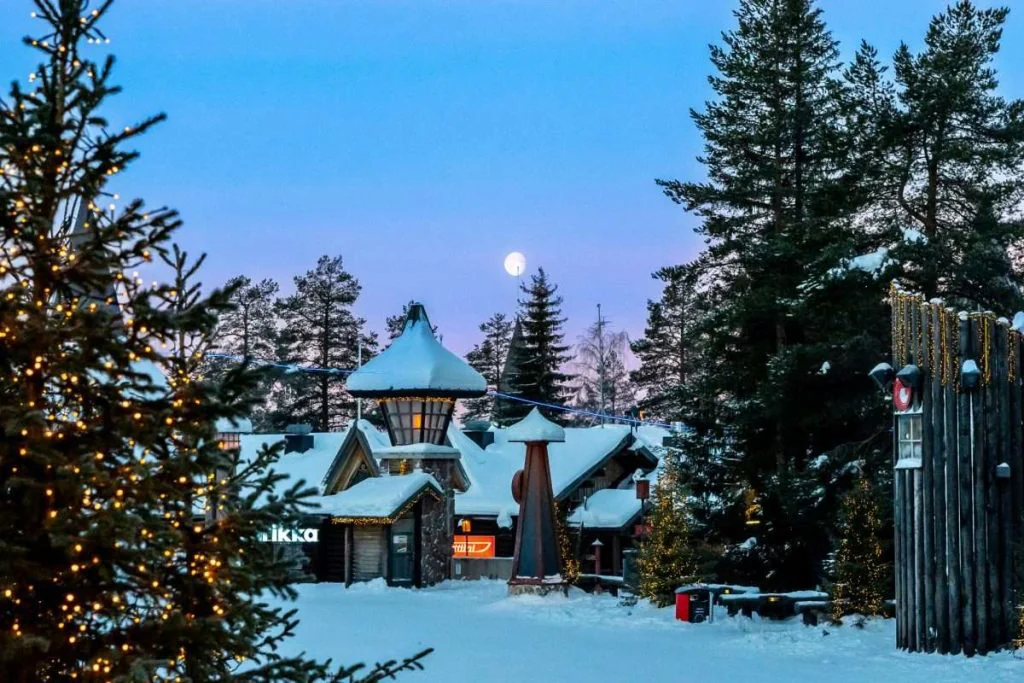
Fireworks over a frozen river sound different than they do at home — flatter, closer, as if the ice underneath is soaking up half the noise. That’s how Rovaniemi marks the last seconds of the old year: the Kemijoki turned into an amphitheatre, ice underfoot, and champagne passed hand to hand in gloves.
This is New Year’s Eve in Lapland — colder than Christmas week, louder in some places and near-silent in others, and built for travelers who’d rather welcome the year under real stars than in a hotel ballroom. In this guide, we’ll walk through when it actually happens, where to base yourself, what the night looks like hour by hour, and the handful of experiences the team at Scandi Travel keeps sending guests back to, season after season.
Most travel guides skip straight from Santa’s grotto to spring skiing, as if the calendar quietly turns over while nobody’s watching. It doesn’t. The week between Christmas and New Year has its own weather, its own crowd, and — for anyone who has already done a family Christmas at home — its own very good reason to book a second trip north.
Why New Year’s Eve in Lapland Doesn’t Feel Like Christmas Week
Christmas in Lapland is a family holiday — Santa’s queue, reindeer, kids counting down to 24 December. The New Year’s crowd is largely different: couples marking an anniversary, groups of friends who did Christmas at home and want one more week north, retirees ticking a long-held bucket-list night off the list. But not only that — some families deliberately choose this week over Christmas itself, for reasons we’ll get to in the FAQ below.
The atmosphere shifts along with the crowd. 21–27 December is the loudest stretch of the entire Lapland winter calendar — the actual holiday, Santa’s full programme, the highest prices of the season. By 28 December, something changes. The queues at Santa Claus Village thin out. Hotels quietly swap the Christmas menu for something more adult: a proper multi-course dinner, better wine, and — depending where you are — a live band or a DJ counting down to midnight.
It isn’t uniformly quieter, though. Rovaniemi gets genuinely loud on 31 December — fireworks over the river, restaurants packed, hotel bars that don’t bother closing. Further north and east, in Saariselkä and Inari, it’s closer to the opposite: a small crowd, a darker sky, and a midnight more likely to be spent outside watching for aurora than inside a bar with a live band. Neither version is more “authentic” than the other — they’re just different nights, and it’s worth deciding which one you actually want before you book.
When It Actually Happens: The New Year Window, Day by Day 📅
“New Year in Lapland” isn’t a single night. It’s a window that runs roughly from 28 December to 2 or 3 January, and each part of it has a different feel.
- 28–30 December. The Christmas crowd has mostly gone home. Snow is deep and settled — full winter, with temperatures typically −15 °C to −25 °C. Aurora odds are decent on clear nights, and hotels are noticeably calmer than either side of this window.
- 31 December. The night itself. Fireworks over the Kemijoki in Rovaniemi from around 11:30 p.m., a New Year’s set menu at hotels across the region, glögi passed hand to hand in outdoor countdown crowds, and — if the sky cooperates — a real chance the Northern Lights show up mid-celebration.
- 1 January. A slow, quiet day almost everywhere — restaurants open later than usual, the streets are close to empty, and the fresh snow from the night before hasn’t been touched yet. A good day for a late breakfast, a short snowshoe walk, or simply a slow morning after a long night.
- 2–3 January. The region empties out again, just before the January aurora season properly gets going.
What There Actually Is to Do 🎆
Trade the Fireworks for an Aurora Vigil
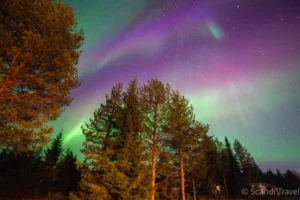
Saariselkä and Inari offer a different experience away from the crowds — dark skies, minimal light pollution, and guides who’ll take you out specifically at midnight, on the theory that a clear New Year’s sky is one of the more memorable backdrops a person could ask for. The 2026–2027 season overlaps with the solar maximum, so the odds this particular New Year are better than they’ll be again until roughly 2036. 🌌
Sleep Under Glass
A glass igloo solves the dilemma of choosing between the party and the sky — you get a shot at both from the same bed. Several properties around Rovaniemi and Saariselkä run an “aurora alarm” service: if the lights appear at 2 a.m., the front desk calls your room. Waking up for the Northern Lights on the first morning of a new year is, by most accounts from returning guests, worth the disrupted sleep.
Try the Local Traditions
Finns have their own way of marking the turn of the year, separate from any organised fireworks. 🇫🇮 Uudenvuodentina — New Year’s tin-casting — involves melting a small horseshoe-shaped piece of tin over a candle and pouring it into cold water; the shape it hardens into is supposed to hint at what’s coming. A ship means travel. A ring means a wedding. Most shapes, honestly, just look like tin. It’s less about accuracy and more about doing something together as midnight approaches, and most Lapland hotels will arrange it for guests who ask.
Have the Dinner Instead of the Party
Not everyone wants a countdown crowd. Hotel New Year’s dinners across the region tend to run long — reindeer, salmon, local cheeses, a proper wine list — and finish with everyone stepping outside together right before midnight, then straight back in from the cold. It’s a smaller, calmer version of the same night, and it suits couples especially well.
Where to Base Yourself: Rovaniemi or Saariselkä and Inari 🏔️
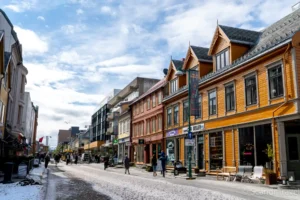
Rovaniemi is the easiest choice logistically — direct flights, the widest hotel selection, and the region’s main fireworks display right in the city centre. It suits travelers who want a lively, social New Year’s Eve without a long transfer, and it’s the base for most of Scandi Travel’s own crafted itineraries, including the glass igloo escape below.
Saariselkä and Inari sit at the other end of the spectrum — smaller, darker, and considerably better for aurora odds. If the New Year’s Eve you’re picturing involves silence and a sky full of green light rather than a countdown crowd, this is where our guides send people.
For the fuller comparison of both bases, including hotels and transfer times, see our guide to where to stay in Lapland.
Practical Notes: Booking and What to Bring ❄️
New Year’s week runs close behind Christmas in demand, though it’s slightly easier to find availability if you book by early autumn rather than waiting until December. We run several lengths for this window, from a short glass igloo escape to a fuller week with Helsinki, Rovaniemi, and dedicated aurora nights around Inari — our guide to Lapland winter tour packages compares all of them.
Pack for genuine Arctic cold — −15 °C to −25 °C is normal for this window, colder inland. A proper layering system matters more than any single item: a moisture-wicking base layer, a fleece or light down mid layer, and a windproof, waterproof outer shell. Most Scandi Travel tours provide a full thermal overall for outdoor activities, so check what’s included before over-packing.
Frequently Asked Questions
Is New Year’s Eve busier than Christmas in Lapland?
Close, but not identical. Christmas week (21–27 December) is louder and more family-driven. New Year’s (28 December–2 January) draws a slightly smaller, more adult crowd — except in Rovaniemi, where 31 December is arguably the single loudest night of the entire winter season.
Will I actually see the Northern Lights on New Year’s Eve?
Nobody can promise that on any single night — it depends on clear skies and solar activity. What we can say is that the 2026–2027 season coincides with the solar maximum, giving this particular New Year’s better statistical odds than most years this decade.
Is Lapland suitable for children over New Year’s?
Yes, though it’s a different trip from Christmas week. Many families deliberately choose New Year’s over Christmas — shorter queues at Santa Claus Village, a calmer overall pace. The Rovaniemi fireworks and earlier hotel dinners work well for most children; if a midnight crowd on the riverfront isn’t the plan, Saariselkä’s quieter pace and earlier evenings tend to suit younger kids better.
How far ahead should I book?
Nine to twelve months for glass igloos or the better hotels in Rovaniemi over 31 December. Festive-season bookings require a non-refundable deposit, so treat this date range with the same urgency as Christmas week itself.
Ready to Book Your New Year’s Eve in Lapland?
There’s a specific kind of New Year’s Eve that only exists this far north — champagne in the cold, a sky that might do something no fireworks display can match, and a year changing over in near silence apart from the crunch of snow underfoot. If you’d rather not assemble the logistics yourself, the team at Scandi Travel has been building these journeys from Finland for over a decade. 🥂