Picture the scene: you’ve just landed after twenty-some hours in the air, and instead of collapsing into one hotel room for a week, you’re boarding an overnight ferry toward Tallinn’s medieval spires, then a sleeper train bound for the Arctic Circle. That’s not a scheduling headache — it’s the itinerary. A Lapland winter tour built for people who didn’t fly this far to see only one country.
In this guide, we’ll walk through when to go, what a proper multi-country Nordic winter looks like day by day, and why our 12-Day Northern Lights & Scandinavia Tour keeps filling up with travelers from Australia, the US, and Asia who refuse to waste a long-haul flight on a single destination.
Scandi Travel has spent many years putting together journeys across the Nordic north, and this is the route we point long-haul guests toward first. It threads Stockholm, Tallinn, Helsinki, Turku, and — at its heart — Finnish Lapland into twelve unhurried days, without asking you to repack for six separate flights.
Why a Lapland Winter Tour Should Cover More Than One Country
Here’s the maths nobody puts on the tour brochure. From Sydney or Auckland, reaching Scandinavia is the better part of a day of flying. From Singapore, Tokyo, or Los Angeles, it’s a red-eye plus at least one layover. Once you’ve paid that price in jet lag, spending the whole trip in a single Finnish town — however good the aurora odds — starts to feel like leaving money on the table. 🧳
We built this route after hearing the same regret from guests, year after year. They’d done a short trip to Rovaniemi, gone home happy, and then spent the next winter wondering what Stockholm or Tallinn would have added. Quite a lot, it turns out. And you don’t need a second long-haul flight to find out.
The 12-Day Northern Lights & Scandinavia Tour loops through Stockholm’s Gamla Stan, Tallinn’s Old Town and Kadriorg Palace, Helsinki’s Senate Square, the Arctic Circle around Rovaniemi, and the medieval streets of Turku — before a Baltic ferry brings you back to Stockholm for departure. Three countries end to end: Sweden, Estonia, and Finland, with Lapland as the centre of gravity rather than the whole trip.
You sleep in hand-picked 4-star hotels in the city center at every stop, with partners including Strawberry, Clarion, Lapland Hotels, Scandic, Sokos, Santa’s Hotels, and Thon. The tour currently holds 4.5 stars on TripAdvisor, and it’s built for the traveler who thinks: if I’m already on the other side of the planet, I want the ferries, the medieval towns, and the aurora — not just one of them.
It also solves a quieter problem: pacing. Lapland in winter is intense — cold, dark, sensory. Bookending it with Stockholm, Tallinn and Helsinki gives your body somewhere to land before and after the Arctic stretch.
Multi-Country Lapland Winter Tour vs. a Single-Country Trip
We run shorter, single-country routes too — the 8-Day Best Place to See Northern Lights in Lapland tour and the 6-Day Finnish Fairy Tale to Rovaniemi among them. For guests based in Germany or the Netherlands, a short flight and a focused four or five days in Lapland makes complete sense. The sums change once the flight itself eats a full day in each direction.
For someone flying from Perth or Singapore, a 6-day single-country trip means roughly a third of it is spent purely getting there and back. Stretch that same flight across twelve days and three countries and the ratio flips in your favour. You pay for the flight once, instead of spreading it across several short Nordic trips over several years.
There’s no single right answer. If the Northern Lights are the one thing on your list and you’d rather spend every day of a shorter trip deep in the Arctic, our single-country tours are built for exactly that. If you’re the kind of traveler who thinks “as long as I’m out here” — this route is yours.
We hear the same line from long-haul guests nearly every season: they didn’t want to explain to friends back home why they flew eighteen hours and saw one town. Stockholm’s waterfront, Tallinn’s spires, Helsinki’s harbour and Lapland’s dark skies in one trip, rather than four separate ones spread across years you may never get round to booking.
When to Take a Lapland Winter Tour: The Seasonal Calendar 📅
This Lapland winter tour runs in November, December, January, February, and March — the window when Lapland actually looks like Lapland. Outside those months you’re chasing green forests and long daylight, not snow and aurora, so the calendar isn’t arbitrary.
- November. The quietest month, lowest light pollution, snow arriving in the north but not always settled in Rovaniemi yet. Fewer crowds, fewer guarantees.
- December. Full kaamos approaching in the far north — the polar night, when the sun barely clears the horizon. Christmas markets in Stockholm and Helsinki, Santa Claus Village at its most theatrical.
- January. Deep winter. Consistently cold, consistently white, and — locals will tell you — often the clearest skies of the season for aurora hunting.
- February. The classic aurora month: cold enough for stable snow, nights still long, but enough daylight has returned that you’re not living in the dark around the clock.
- March. Brighter days, milder cold, snow still reliable — a gentler entry point if −25 °C in December sounds like a hard no.
A word on solar activity, since we get asked constantly. Solar Cycle 25 peaked in October 2024 and is now in its declining phase, so 2026 and 2027 won’t match the fireworks of that peak. But the physics of aurora watching in Lapland — high latitude, long dark nights, almost no light pollution — doesn’t depend on the sun behaving perfectly. Strong individual flares still happen well after a solar peak. Our guides say the same thing every season: nobody can promise you the sky, but nowhere improves your odds like the Arctic Circle. 🌌
Inside the Tour: Where Winter Lapland Fits Into Twelve Days
The Lapland stretch is the spine of this trip, but it’s only three or four days out of twelve — and that’s the point. You get the Arctic without living in it for twelve days straight. Here’s what those days look like.
The Sleeper Train North
After Helsinki you board the Santa Claus Express, an overnight sleeper that puts you to bed in the capital and wakes you above the Arctic Circle. No domestic flight, no 3 a.m. airport transfer. You cross into the north in your sleep. 🚂
Reindeer, Sleighs, and the Arctic Circle Line
A working reindeer farm, a sleigh ride, and a formal crossing of the Arctic Circle with a certificate to prove it. It’s a family-friendly morning that also lands harder than you’d expect — you actually feel the temperature drop as you cross the line. 🦌
Glass Igloo, One Night Only
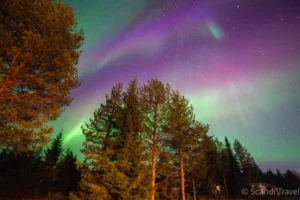
This is what most people book the whole trip around: a night under a transparent, frost-resistant dome, lying in bed while the aurora — if it shows — moves directly above you. It isn’t for everyone. If the idea of the sky watching you keeps you awake, or you only sleep behind blackout curtains, know that going in. Everyone else calls it the best night of the trip. ✨
Husky Safari
A pack of huskies pulling your sled through silent, snow-laden spruce forest — loud, chaotic start, eerie quiet in the middle, a lot of dog cuddles at the end. Warm clothing is provided, so no need to buy an Arctic wardrobe for one afternoon. What surprises most guests is the dogs themselves: sled dogs live for this, and you can see it the second the harnesses come out. 🐕
Santa Claus Village and the Aurora Safari
Santa Claus Village on the Arctic Circle is unapologetically festive, and it works best if you arrive expecting exactly that rather than untouched wilderness. Kids love it without irony; adults love it once they stop pretending they’re too old for it. The Northern Lights safari afterwards — campfire, hot drinks, a lot of waiting on the sky — brings the quiet back.
Turku by Overnight Train, Then Home by Sea
From Rovaniemi another overnight train carries you south to Turku, Finland’s former capital, with its castle and medieval old town. Then a Baltic ferry returns you to Stockholm for departure. The route is built so you’re rarely burning a whole day on transit — you’re usually asleep for the long stretches.
What the Cities Actually Add 🏛️
It’s easy to treat the non-Arctic half of a Lapland winter tour as filler — the bit you tolerate to get to the good part. That’s not how guests describe it afterwards.
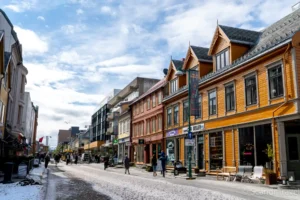
Stockholm in winter is the city at its most Swedish: short blue afternoons, candles in every café window, and Gamla Stan’s ochre facades looking better under grey sky than they ever do in July. You’ll walk the old town and the Royal Palace with a guide, and get out to Drottningholm — the royal family’s actual home, on an island, with a baroque theatre that still works.
Tallinn is the surprise for most people. Twenty minutes from the ferry terminal you’re inside a walled medieval town that survived the twentieth century largely intact — cobbles, guild houses, city walls you can climb. Kadriorg Palace, built by Peter the Great for Catherine, sits in a park just outside the centre and is worth the tram ride on its own.
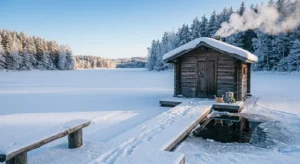
Helsinki gets one guided morning — the Cathedral, Senate Square, the covered Market Hall down by the water — and then leaves you alone until the evening train. Locals will tell you the best thing to do with that gap is a public sauna. They’re right. ☕
Turku sits at the mouth of the river, Finland’s capital until 1812, with a genuinely medieval castle and a cathedral that’s been the country’s national shrine for seven hundred years. It’s a small, quiet, slightly overlooked city — which after Lapland is exactly the right temperature to come back to.
Four cities, three countries, one flight. That’s the whole proposition.
Where You’ll Sleep: From City Center Hotels to a Glass Ceiling
Accommodation alternates between two very different registers, and the contrast is half the appeal. In Stockholm, Tallinn, Helsinki and Turku you’re in hand-picked 4-star hotels in the city center — walkable, comfortable, unremarkable in the best way. On the ferries you get comfortable sea-view cabins rather than the budget interior berths many crossings default to.
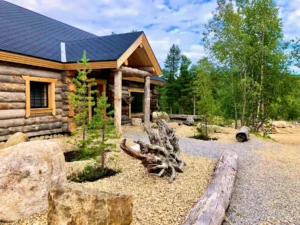
Then Lapland flips the script entirely: a night in a glass igloo with the aurora as your ceiling, plus hotel stays in Rovaniemi with partners who specialize in exactly this kind of Arctic stay. The overnight trains — Helsinki to Rovaniemi, Rovaniemi to Turku — use sleeping cabins, so even the transit nights are proper beds rather than a reclined airline seat.
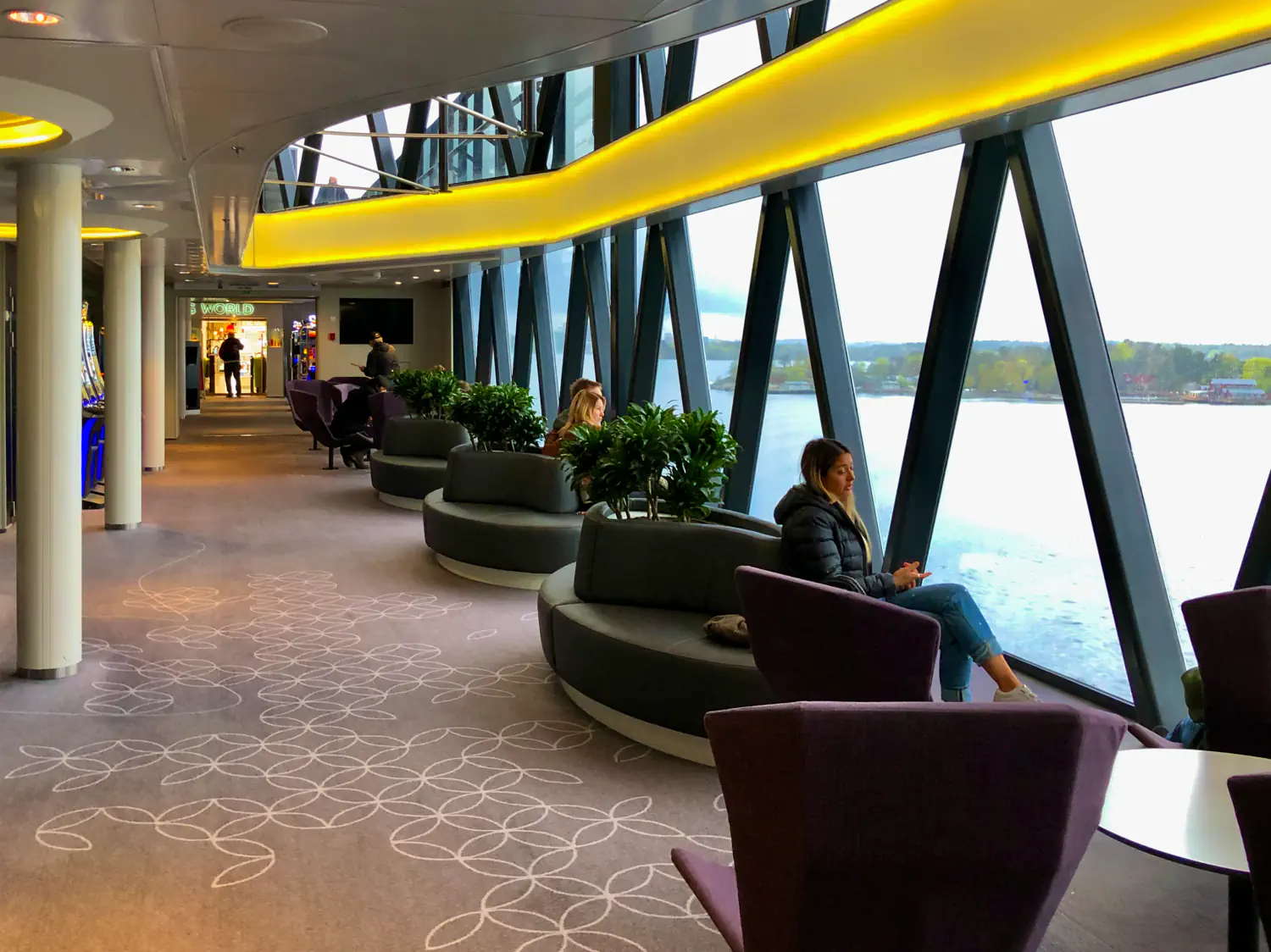
The Baltic crossings deserve their own mention. These aren’t budget ferries with fluorescent lighting and vinyl seating. The Stockholm–Tallinn and Turku–Stockholm legs run on large cruise ships with restaurants, comfortable cabins with sea views, and enough deck space to watch the archipelago slide past at dusk. You board in the evening, have dinner, sleep properly, and wake up in another country. For a lot of guests these end up being the most relaxing nights of the whole trip.
What to Pack for −25 °C (And What Not to Worry About)
Temperatures on this route usually sit between −5 °C in November and −25 °C in the depths of January, so packing matters more than it would for a normal European city break. The good news: warm outerwear for every outdoor activity — husky safari, reindeer sleigh, aurora safaris — is provided, so you’re not buying a full Arctic kit for one trip.
- Thermal base layers. Merino wool or synthetic, top and bottom, under everything else. Cotton holds sweat and goes cold fast — leave it at home.
- A proper winter coat. Down or heavily insulated, ideally rated to at least −20 °C, for the city stretches where activity gear isn’t provided.
- Waterproof, insulated boots. Snow gets into everything. Boots made for real cold, not fashion snow boots, are worth the suitcase space.
- Wool socks and glove liners. Pack more pairs than seems reasonable. Wet hands and feet end an outdoor day faster than the cold itself.
- A hat that covers your ears, and a neck gaiter. Most of the heat you lose on an aurora safari goes through your head and neck, not your torso.
- Layers for the cities. Stockholm, Tallinn, Helsinki and Turku are milder than Lapland, so bring things you can add and shed rather than one fixed cold-weather outfit.
One practical note from our guides: bring a power bank. Cold kills phone batteries fast, and nobody wants a dead phone on the one night the sky finally performs. 📸
Frequently Asked Questions
Is a 12-day trip worth it if I’m flying from the other side of the world?
For most long-haul guests, yes — that’s the case this route makes. Splitting the cost and the jet lag of one long flight across three countries and an Arctic region works out better per travel day than repeating that flight for several single-country trips.
Are the Northern Lights guaranteed?
No honest operator promises that, and we won’t either. What the itinerary does guarantee is several dedicated Northern Lights safaris plus a full night under a glass igloo roof, which improves your odds considerably over a single-night stop.
Is this tour suitable for families with children?
Yes. The reindeer farm, sleigh ride, Santa Claus Village and husky safari are all built with families in mind, and the rhythm — sleeper trains and ferries rather than early-morning flights — tends to suit kids well.
Do I need a visa to visit Sweden, Estonia and Finland?
All three are in the Schengen area, so requirements depend on your passport and current Schengen rules, which do change. Check the rules for your nationality with an official government or embassy source before booking flights.
How is this different from a normal Lapland winter tour?
Most Lapland itineraries fly you into Rovaniemi and out again — efficient, but Sweden, Estonia and the rest of Finland stay untouched. Here Lapland is the heart of a larger Nordic loop rather than the entire trip. See the rest of the range in our Nordic multi-country tours.
Ready to Plan Your Winter Lapland Trip?
A route like this isn’t about saving time. It’s an argument that one long-haul flight deserves more than a single dot on the map. Sweden’s palaces, Tallinn’s Old Town, Helsinki’s harbour and Lapland’s silence under a glass roof belong in the same trip, not three separate ones. And if you’d rather not stitch together sleeper trains, ferries and Arctic Circle logistics yourself, the team at Scandi Travel has been building exactly this kind of journey for years. 🤝