Written by Mikko Lintunen
In a nutshell
The Northern Lights season runs from late August to early April. The three best months across all Scandinavian destinations are January, February, and March: long nights, stable skies, and peak solar activity right now thanks to the current solar maximum. If you can only go once, February in Finnish Lapland or northern Sweden is where I’d send you. Aim for a minimum of three nights at a dark-sky location, ideally five or more. Here’s a quick summary:
| Month | Overall rating | Best country |
| February | ⭐⭐⭐⭐⭐ | Finland / Sweden |
| January | ⭐⭐⭐⭐⭐ | Finland / Norway |
| March | ⭐⭐⭐⭐⭐ | All four |
| November | ⭐⭐⭐⭐ | Finland / Sweden |
| December | ⭐⭐⭐⭐ | Finland / Norway |
| September | ⭐⭐⭐ | Sweden / Iceland |
| October | ⭐⭐⭐ | Finland / Sweden |
| August | ⭐⭐ | Iceland |
| April | ⭐⭐ | Norway / Iceland |
For a complete guide, visit our Northern Lights Travel Guide.
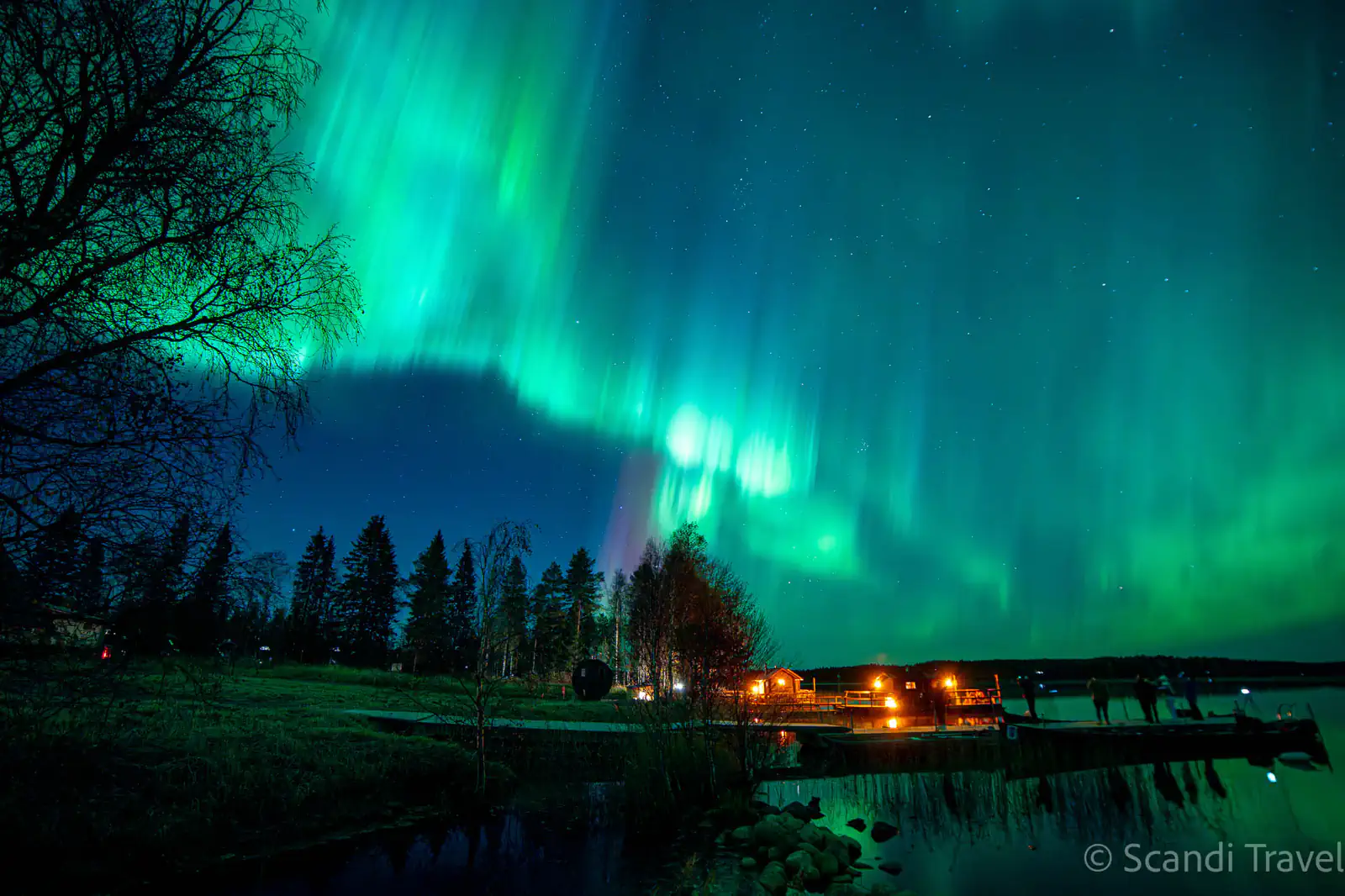
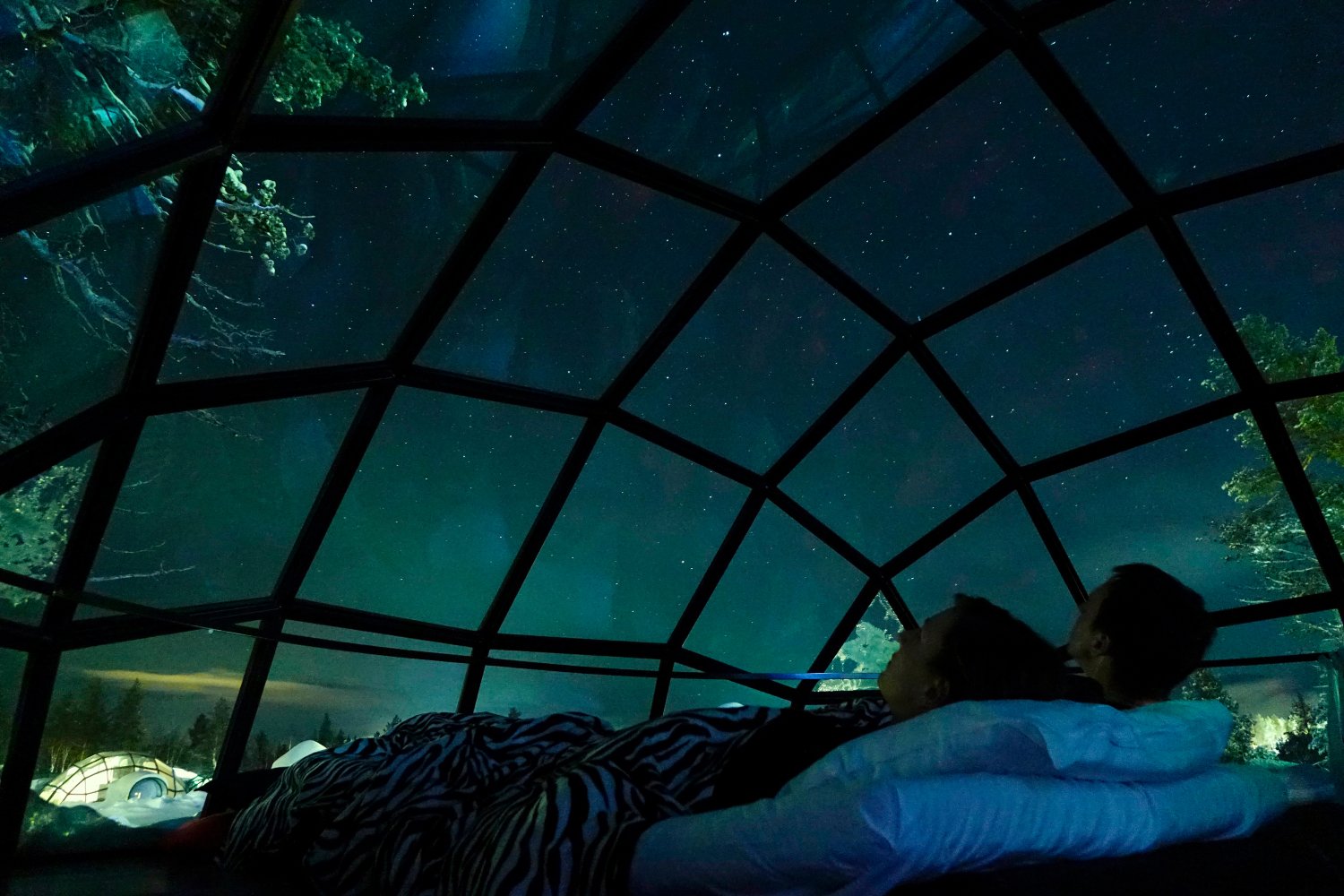
I’ve watched the Northern Lights from a reindeer farm in Finnish Lapland, from the deck of a ferry crossing the Baltic, and once, unforgettably, from a glass igloo at 2am when the sky turned a shade of green I still can’t quite describe. In every case, timing was everything.
I’ve been running Northern Lights tours across Scandinavia since 2010, and timing is still the question I get asked most.
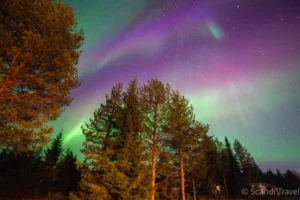
In Finnish, we call them revontulet. It means fox fires. The old folk story says a great arctic fox races across the fells at night, its tail sweeping against the snow and the trees, sending sparks up into the sky. That is what you are seeing.
I have told this to guests many times. Something changes. The lights stop being a weather event and start being something else entirely.
People ask me constantly: when is the best time to see the Northern Lights? The honest answer is that it depends on what kind of experience you’re after. But there are clear patterns. Months that consistently deliver, months that require patience, and one or two factors right now that make the timing better than it has been in over a decade.
This guide covers the full aurora season month by month, across all four of the Scandinavian countries where we run tours: Finland, Norway, Iceland, and Sweden. If you want the full overview (including where to go, what causes the lights and how to photograph them) see our Northern Lights Travel Guide.
The aurora season: late August to early April
The Northern Lights require darkness. That simple fact defines the season entirely.
During the Scandinavian summer, the sun barely sets. The Midnight Sun phenomenon that makes June and July so magical in Lapland also makes aurora viewing impossible. As the nights lengthen from late August onwards, conditions begin to develop. By mid-September you have enough dark sky to make a serious attempt. The season runs through to early April, when the nights start shortening again.
That gives you roughly seven and a half months of aurora season. But they are not all equal.
Why this is an unusually good window
We are currently at or very near solar maximum, the peak of the sun’s approximately eleven-year activity cycle. At solar maximum, the sun produces more solar flares and coronal mass ejections: the events that supercharge the aurora. They increase both the frequency of displays and their intensity, pushing the aurora further south and making it visible on nights when it might otherwise have stayed hidden.
The last solar maximum, around 2013 to 2014, produced some of the most dramatic aurora events in recent memory. We are in that window right now. Dr Pål Brekke, solar physicist at the Norwegian Space Agency, has said we can expect the most frequent and intense Northern Lights displays of the current cycle from 2024 through to 2026.
There won’t be a better time to see the Northern Lights until the next solar maximum arrives in the mid-2030s. If you have been thinking about a Northern Lights trip and keep putting it off, this is the moment to stop putting it off.
Month by month: what to expect
August: Early season, occasional surprises
Aurora likelihood: Low to moderate
Technically within the aurora season from around mid-August, though the nights are still short and the sky rarely gets fully dark before midnight. At solar maximum, strong geomagnetic events can produce visible displays even in a near-twilight sky, but I wouldn’t plan a trip around August aurora. If you’re already in Scandinavia for other reasons, watch the KP index and be pleasantly surprised. There is something about that first properly dark night after the midnight sun. Even after fifteen years, I still notice it.
Finland and Lapland: Midnight sun is fading but nights are still brief. Better for other summer experiences right now.
Norway: Brief windows of darkness, occasional early activity.
Iceland: Faint aurora possible from mid-August on clear nights.
Sweden: Northern Sweden (Abisko, Kiruna) begins to offer short dark windows.
September: The equinox effect kicks in
Aurora likelihood: Moderate to good
September is one of the most underrated months in the aurora calendar. The autumnal equinox (around 22 to 23 September) consistently produces heightened geomagnetic activity, a well-documented pattern that aurora chasers know well. September tends to punch well above its weight. Honestly, it is one of the best kept secrets in aurora travel.
Nights are lengthening quickly, the autumn colors in Lapland are stunning, and crowds are lower than the peak winter months. It’s also still warm enough to spend time outdoors comfortably.
Finland and Lapland: Excellent for combining early aurora with autumn color. Rovaniemi is a good base.
Norway: Tromsø starts its aurora season properly in September, with good activity and fewer visitors than January or February.
Iceland: Strong potential around the equinox when skies are clear.
Sweden: Abisko’s famously stable microclimate makes it one of the most reliable spots in Europe during September.
October: Reliable darkness, unpredictable skies
Aurora likelihood: Good
October is firmly within the aurora season. Nights are long and the solar activity window is fully open. The challenge is cloud cover, particularly in coastal Norway and Iceland, where autumn weather systems move through frequently. October is the month that taught me why a guide with a car and local knowledge is worth more than any forecast app. When clouds close in, you need to be able to move, which is exactly why guided aurora safaris with transport make such a difference over self-drive.
The Sami people, who have lived beneath these lights for thousands of years, believed you should never point at them or speak too loudly while they danced overhead. Disrespect them and you would bring bad luck. I am not superstitious. But I do tell guests to be quiet when the lights appear. Something about it feels right.
- Finland and Lapland: High chance of clear skies in the interior. Rovaniemi and Saariselkä are strong choices.
- Norway: Inland Norway (Alta, Tromsø’s eastern plateau) outperforms the coast in October.
- Iceland: The north (Akureyri region) tends to be more reliable than the cloudier south coast.
- Sweden: Abisko’s rain shadow effect, known as the Blue Hole, delivers around 70% clear skies on nights when surrounding areas are overcast, according to Aurora Forecast, making it one of the most reliably clear locations in northern Europe.
November: The aurora season hits its stride
Aurora likelihood: Very good
November is when I tell most first-time visitors to go. Long nights, strong solar activity, and you’re ahead of the Christmas rush. The landscape is transitioning into full winter, with snow arriving in Lapland, temperatures dropping, and the atmosphere turning properly Arctic. The glass igloo season is fully open, the husky farms are running, and the Christmas markets are starting across the Scandinavian cities.
- Finland and Lapland: Excellent. Long nights, snow on the ground, glass igloo season open.
- Norway: Tromsø well into its aurora season. Northern fjords offer dramatic backdrops.
- Iceland: Strong potential, particularly in the north.
- Sweden: Very good. Abisko in November is outstanding.
December: The deepest dark
Aurora likelihood: Very good
December means the longest nights. In northern Lapland you’re approaching polar night, where the sun barely rises or doesn’t rise at all. In Finnish we call this kaamos. There is no direct translation. It is not just darkness. It is a specific quality of winter light, or the absence of it, that Finns have a whole emotional relationship with. Maximum darkness means maximum aurora opportunity, at least in theory. The trade-off is that December is the busiest month in Lapland. Santa Claus Village in Rovaniemi draws families from across the world and accommodation books up months in advance.

The reward is that this is when the full Lapland experience comes together most completely: reindeer, huskies, Santa, glass igloos, and the Northern Lights, all in one trip. I’ve done it dozens of times and I still find December in Lapland slightly unreal. Most people don’t know that Joulupukki, the Finnish Father Christmas, literally means Christmas goat. The original figure arrived by goat, not reindeer. Finland has quietly rewritten that story for the world. Perhaps that is why Santa is the greatest of all time. Ha!
Our 12-Day Northern Lights and Scandinavia Tour runs in December for exactly this reason.
- Finland and Lapland: Peak season. Book well ahead. The experience is unbeatable if you plan early.
- Norway: Excellent conditions. Alta and the Lyngen Alps offer more remote options than busy Tromsø.
- Iceland: Popular for Christmas and New Year, so book early. Aurora viewing is strong but weather is variable.
- Sweden: Kiruna and Abisko are excellent and slightly less crowded than Finnish alternatives.
January: Cold, dark, and consistent
Aurora likelihood: Excellent
January is the most consistently reliable aurora month across all four countries. Long nights, cold stable air that keeps skies clear, and slightly fewer crowds and lower prices than December. If I had to pick one month for a first-time Northern Lights trip, January would be a serious contender. The cold is real (expect -15°C to -25°C in Finnish Lapland) but that’s what the warm clothing is for.
- Finland and Lapland: Outstanding. Cold, clear, and atmospheric. Glass igloo nights in January are spectacular.
- Norway: Tromsø, Alta, and Senja Island all perform well.
- Iceland: Weather more variable, but strong aurora activity when skies clear.
- Sweden: Abisko in January is world-class for clear-sky viewing.
February: The sweet spot
Aurora likelihood: Excellent
February is, for many aurora specialists (myself included) the single best month of the year. The nights are still long, the cold is intense but stable, and the skies across Finnish Lapland and northern Sweden are often at their clearest. There is also a geomagnetic equinox effect building toward March, and February sits in the lead-up to that elevated period.
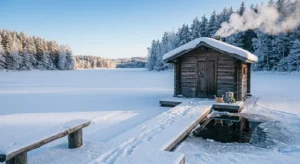
The Lapland atmosphere in February is extraordinary: frozen rivers, snow-laden forests, and skies that seem almost too clear to be real. I remember standing outside a lodge north of Rovaniemi one February night and genuinely checking whether my camera lens had fogged up. It hadn’t. The sky was just that sharp.
- Finland and Lapland: My personal recommendation for the best single month. The wilderness lodges north of Rovaniemi are exceptional.
- Norway: Excellent. The northern fjords are frozen and dramatic.
- Iceland: Good activity, with weather more manageable than autumn.
- Sweden: Abisko at its best, with clear skies for days at a time.
March: The spring equinox surge
Aurora likelihood: Excellent (often elevated around the equinox)
March brings the spring equinox (around 20 to 21 March), which, like its autumnal counterpart, tends to produce a reliable spike in geomagnetic activity. Aurora displays in March can be among the most dramatic of the year. March also has a practical advantage: more hours of daylight makes daytime activities more enjoyable, while the nights are still long enough for serious aurora viewing. Snow conditions are often at their very best.
- Finland and Lapland: Excellent, particularly around the equinox. Snow quality is superb for activities. March is also when guests are hardest to get on the plane home. I’ve noticed that over the years.
- Norway: Strong aurora. The fjords are still frozen but days are getting longer, a beautiful combination.
- Iceland: Often underrated. March can deliver spectacular activity.
- Sweden: Very strong. Abisko’s season runs well into March.
April: The season closes
Aurora likelihood: Low to moderate (early April only)
Early April can still produce aurora, particularly at solar maximum. But by mid-April the nights are too short across most of Scandinavia. The season is effectively over. Every year I feel this slightly.
Where else in the world can you see the Northern Lights?
I’ll be honest with you here. Scandinavia is what I know. I’ve spent over a decade building tours across Finland, Norway, Iceland, and Sweden, and I know these destinations in a way I simply don’t know anywhere else.
When I recommend Abisko in February or a glass igloo outside Rovaniemi in January, I’m speaking from real experience, not from a brochure. I say that because I’ve met too many people who booked somewhere based on a list and arrived to find their operator had never actually been there.
But the Northern Lights are visible across a band that stretches around the entire Arctic, and there are other excellent destinations I’d be doing you a disservice to ignore. If Scandinavia doesn’t work for your trip, here are the main alternatives and when they’re at their best.
Canada (Yukon and Manitoba): The Yukon, particularly around Whitehorse, is one of the world’s premier aurora destinations. Clear, dry air and minimal light pollution make it exceptional. Best months are January to March. Churchill, Manitoba is also famous for aurora viewing alongside polar bears, with October and November being the sweet spot for combining both.
Alaska (USA): Fairbanks sits almost directly under the auroral oval and is consistently one of the most reliable aurora locations on earth. The season runs September to April, with January and February the clear picks for stable skies and long nights.
Greenland: Remote, expensive to reach, and logistically challenging, but genuinely spectacular for aurora. The skies are extraordinarily clear and the landscapes otherworldly. Ilulissat and Kangerlussuaq are the main bases. Best from October to March.
Northwest Territories, Canada: Yellowknife has built a strong reputation as an aurora destination, particularly with Japanese visitors for whom seeing the lights holds deep cultural significance. February and March are the peak months.
Scotland and Northern England: In years of high solar activity (like right now) strong geomagnetic storms can push the aurora as far south as northern England and Scotland. It’s not reliable enough to plan a trip around, but worth watching the KP index if you’re already there between October and March.
The honest truth is that if you want to maximize your chances and combine aurora with a genuinely memorable travel experience (the culture, the food, the Arctic activities) Scandinavia is still where I’d send you. But knowing your options is always a good start.
How many nights do you need?
A minimum of three nights at a dark-sky location, ideally five or more. The aurora is a natural phenomenon. Cloud cover, local weather, and solar activity all play a role. On any given night you might have a spectacular display or a completely overcast sky. More nights means more chances.
Sometimes guests arrive on night one, step outside the igloo, and there they are. They have no idea how lucky they are. Truly.
The numbers back this up. Staying three nights at a location like Abisko gives you a strong chance of at least one clear-sky sighting, according to Swedish Lapland. Extend that to five nights and the probability rises further still. Our 12-day tour allocates three dedicated nights in Lapland, a deliberate decision based on years of experience with what actually delivers results for guests.
One more practical note: the best viewing window on any given night is between 10pm and 2am. That’s when geomagnetic activity tends to peak and the sky is at its darkest. Plan your evenings around it.
The window is open!
You have read the guide. You know the patterns, the equinox effect, the solar maximum, the months that deliver and the months that require patience. Now comes the part only you can decide.
The aurora does not wait for the perfect moment. It arrives on its own schedule, on cold clear nights, over frozen rivers and snow-laden forests, above glass igloos and husky trails and the still surface of Lake Inari at midnight. What you can do is put yourself in the right place when it happens.
Our 12-Day Northern Lights and Scandinavia Tour takes you from Stockholm through Tallinn and Helsinki, then north on the Santa Claus Express into Finnish Lapland: a glass igloo night, a husky safari, reindeer, and three dedicated aurora nights in the heart of the season. For a tailor-made itinerary built around the timing that works for you, contact us. A personal offer within 24 hours.
For everything else you need to plan your trip, including where to go, what the colors mean, and how to photograph what you see, visit our Northern Lights Travel Guide.
Hei hei from me and the team at Scandi Travel.