
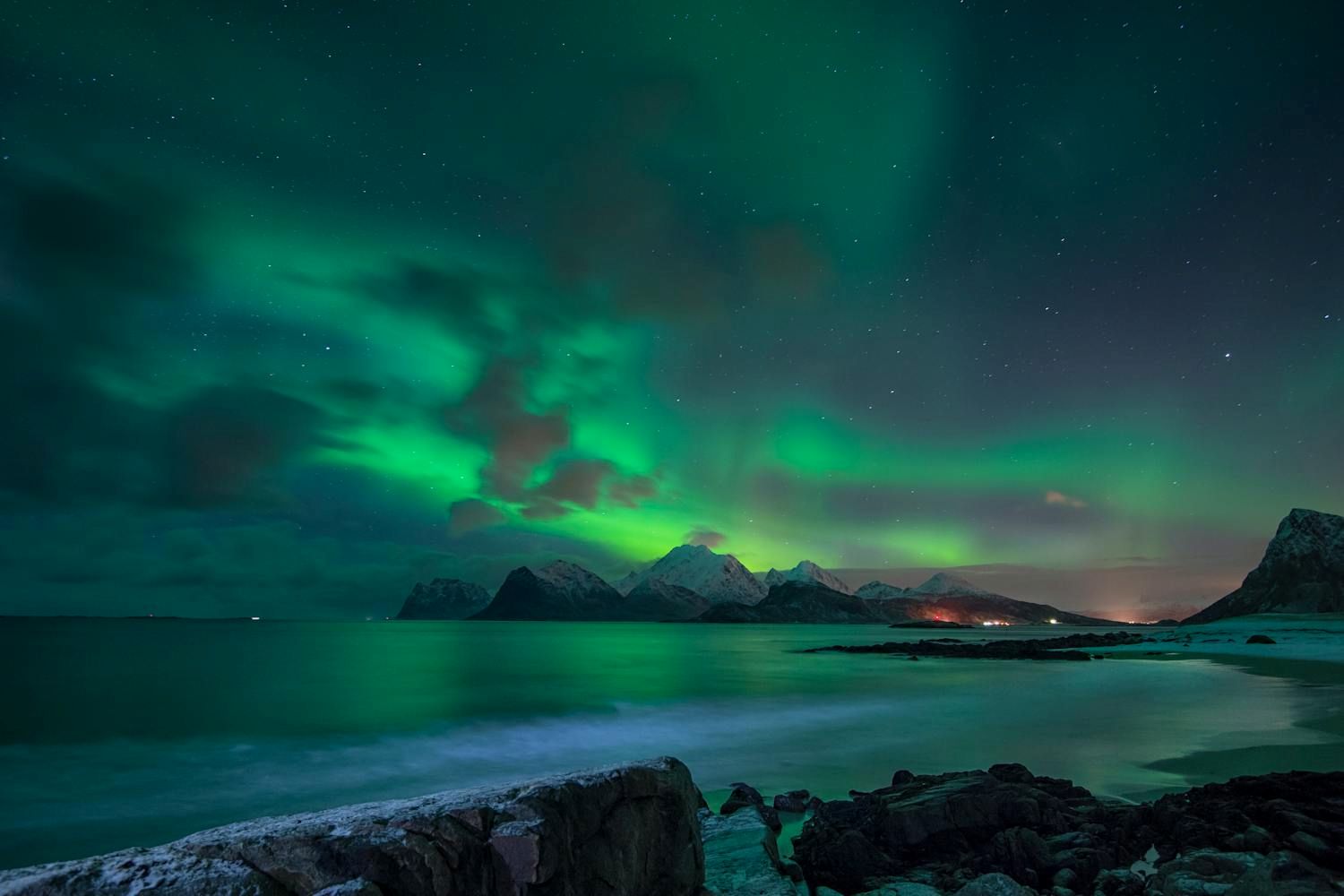
Northern Lights
Travel Guide
Everything you need to plan a Northern Lights trip, from the best destinations and when to go, to what the colors mean and how to see them in style.
The Northern Lights are one of the few natural phenomena that genuinely exceed expectation. No photograph prepares you for the scale of a full display. No forecast guarantees you will see one. What preparation can do is put you in the right place, at the right time, with the right conditions. That is what this guide is for.
Scandi Travel has been running Northern Lights tours across Scandinavia since 2010. This is the complete reference for planning your trip.
What are the Northern Lights?
The Northern Lights, known scientifically as the aurora borealis, occur when charged particles from the sun collide with gases in Earth’s upper atmosphere. These particles, mainly electrons and protons, are carried toward Earth on a constant stream called the solar wind. When they reach our planet, Earth’s magnetic field funnels them toward the poles, where they collide with oxygen and nitrogen atoms at altitudes of 100 to 400 kilometers. Those collisions release energy as light, and that light is the aurora.
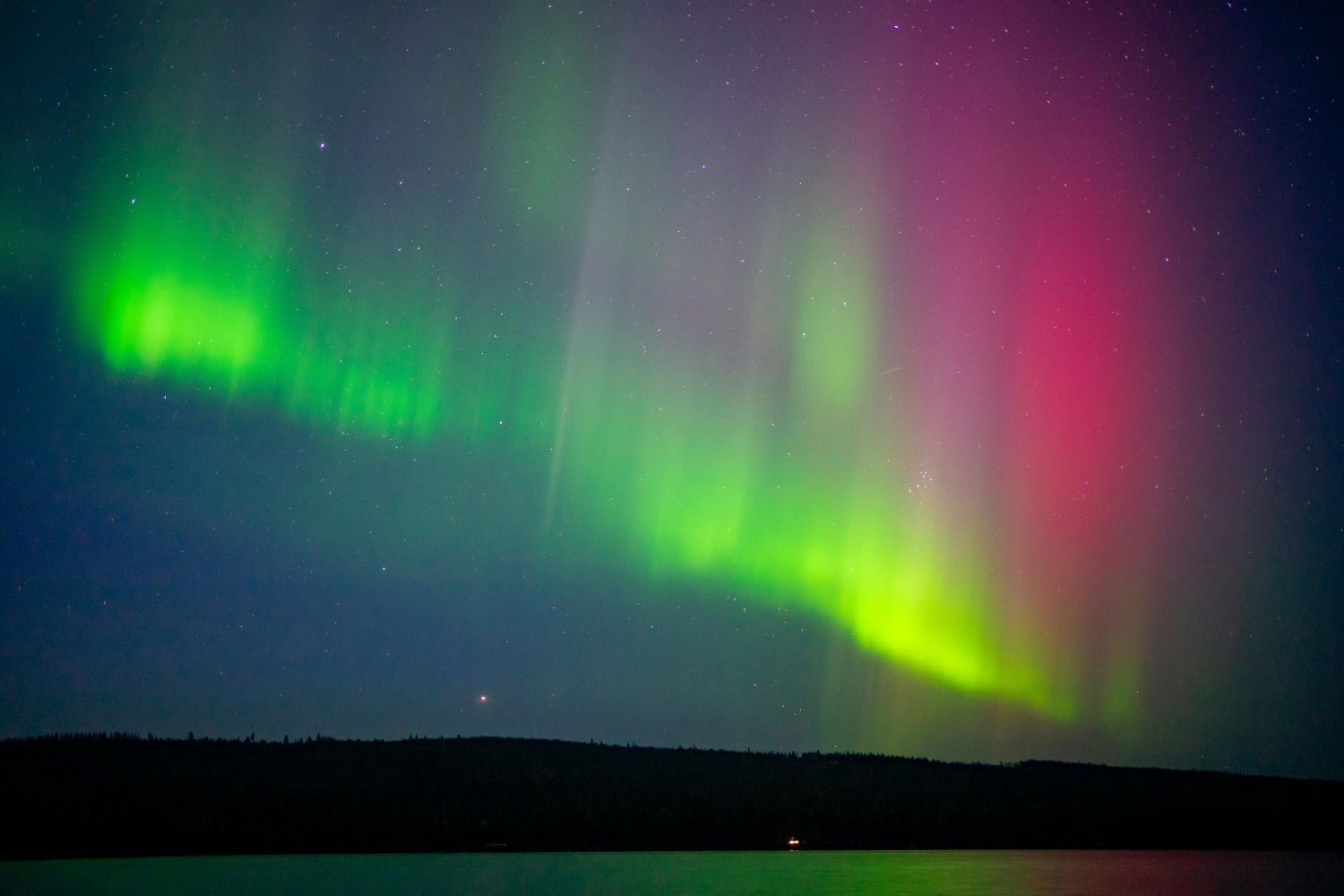
Green is the most common color, produced by oxygen at 100 to 300 kilometers altitude. Red appears at higher altitudes during intense solar activity. Pink, blue, and purple indicate nitrogen reacting at the lower edge of the display. The lights move because the solar wind is constantly shifting, changing the pattern of collisions overhead in real time.
The aurora is always present above the polar regions. What changes from night to night is whether conditions allow you to see it: whether the sky is dark, whether it is clear, and whether solar activity is strong enough to push the display far enough south to be visible from Scandinavia.
More than science
That is the physics. But the physics alone does not quite account for what actually happens when you stand under a full display for the first time. Something about the scale, the movement, and the silence of the Arctic night makes the scientific explanation feel insufficient, not wrong, just incomplete.
People have been watching the Northern Lights from this part of the world for thousands of years. Long before anyone understood charged particles or magnetic fields, they built explanations for what they were seeing. Those explanations are worth knowing, not because they are more accurate, but because they are more honest about how the lights actually feel.
In Finnish, the Northern Lights are revontulet: fox fires. The folk story says a great arctic fox races across the fells at night, its tail sweeping against the snow and the trees, sending sparks up into the sky. When you see the lights ripple and shift, the tail of a fox running along the horizon is not a bad description of what they look like.
The Sami people, who have lived beneath these lights for millennia, named them guovssahas: the light you can hear. They believed you should never whistle at the Northern Lights or speak too loudly while they danced overhead. Disrespect them and you would bring bad luck. They were not wrong that the lights produce sound, Finnish acoustic researcher Unto Laine confirmed this scientifically in 2012, recording faint crackles and pops about 70 meters above the ground during strong displays. The Sami simply noticed it first, and gave it a name.
The Norse saw the lights as the shields and armor of the Valkyries, reflecting the light of the otherworld across the sky. The Inuit believed they were the spirits of the dead playing games overhead. Across cultures and centuries, the Northern Lights have always been understood as something other than a weather event. When you see them for the first time, you will understand why.
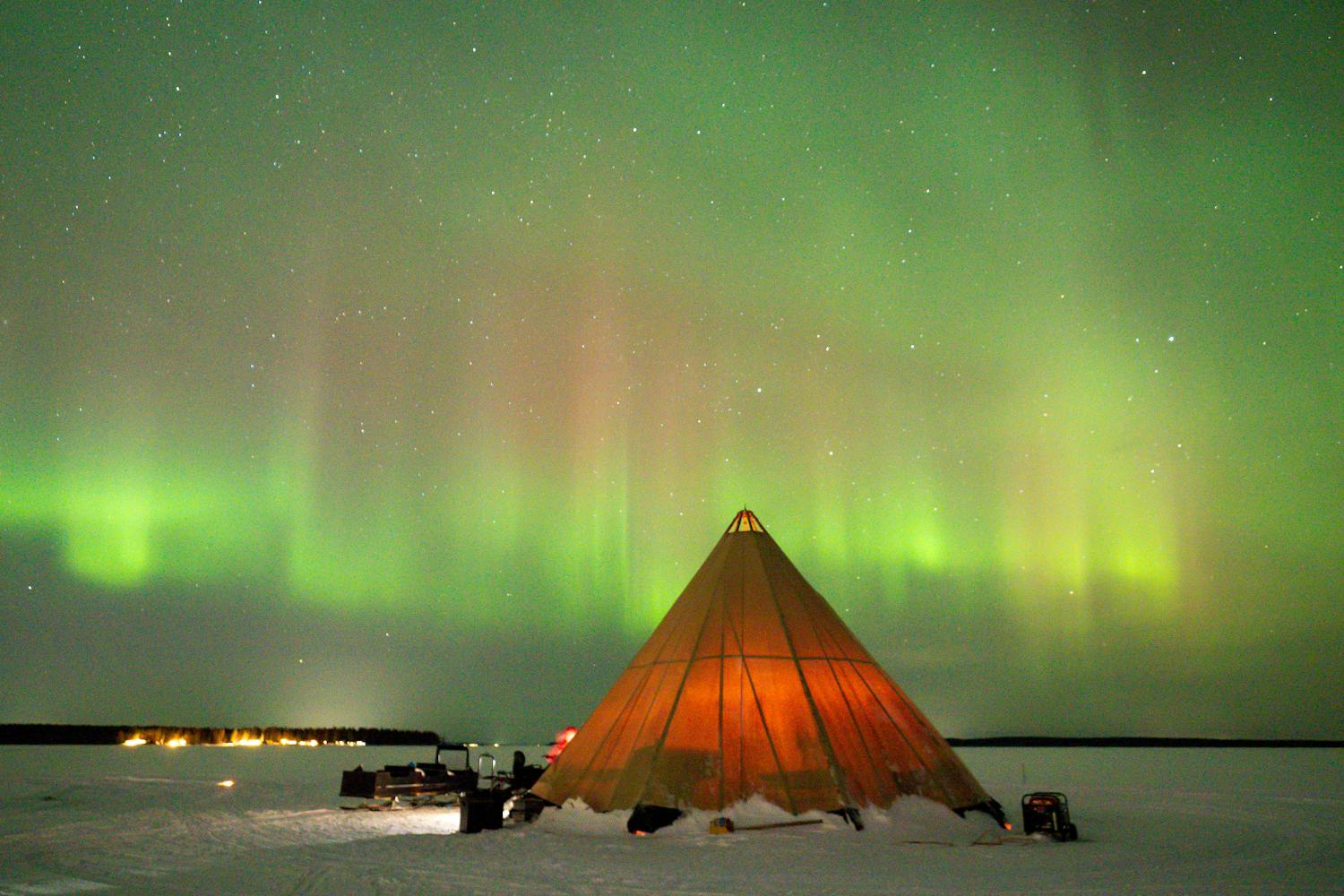
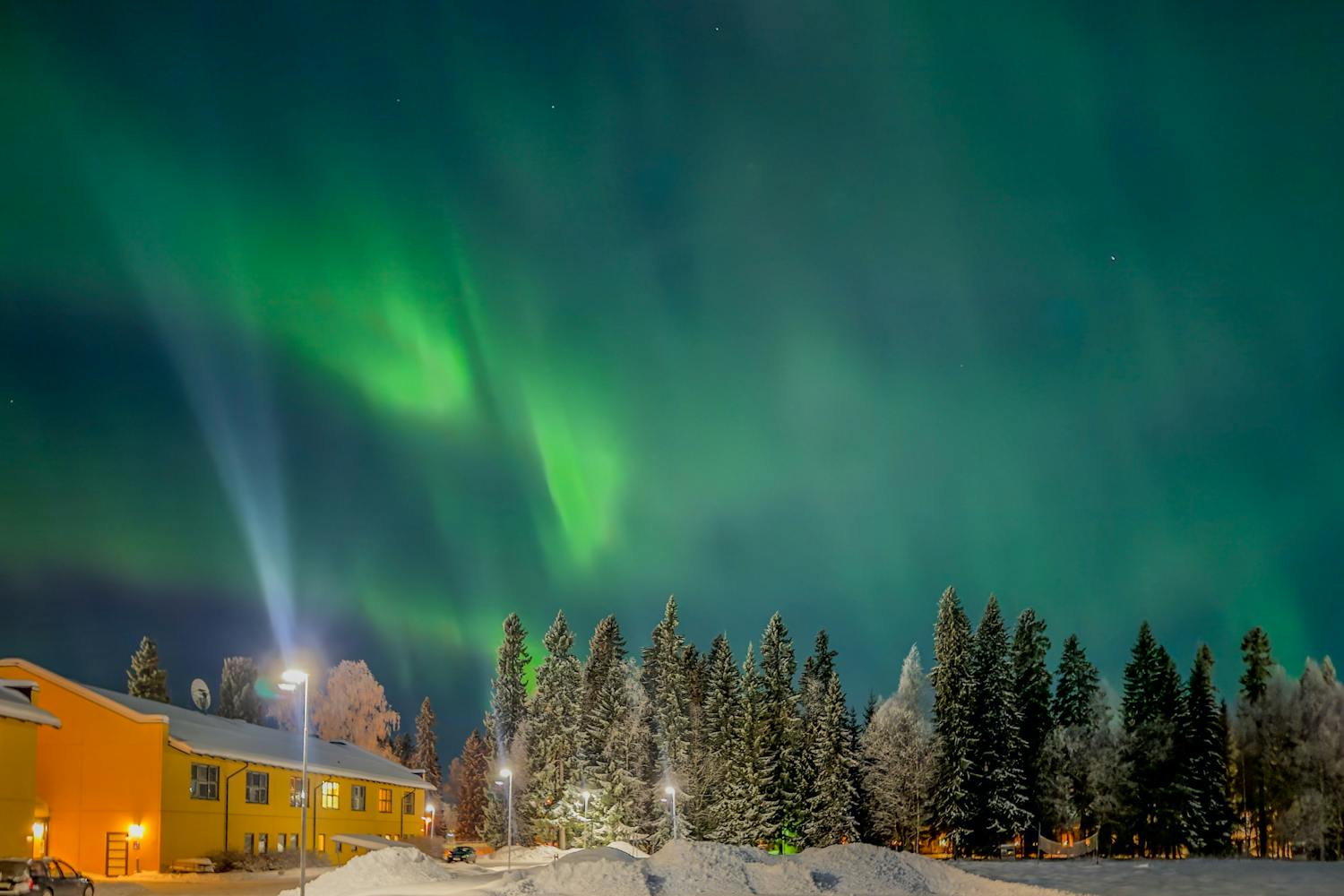
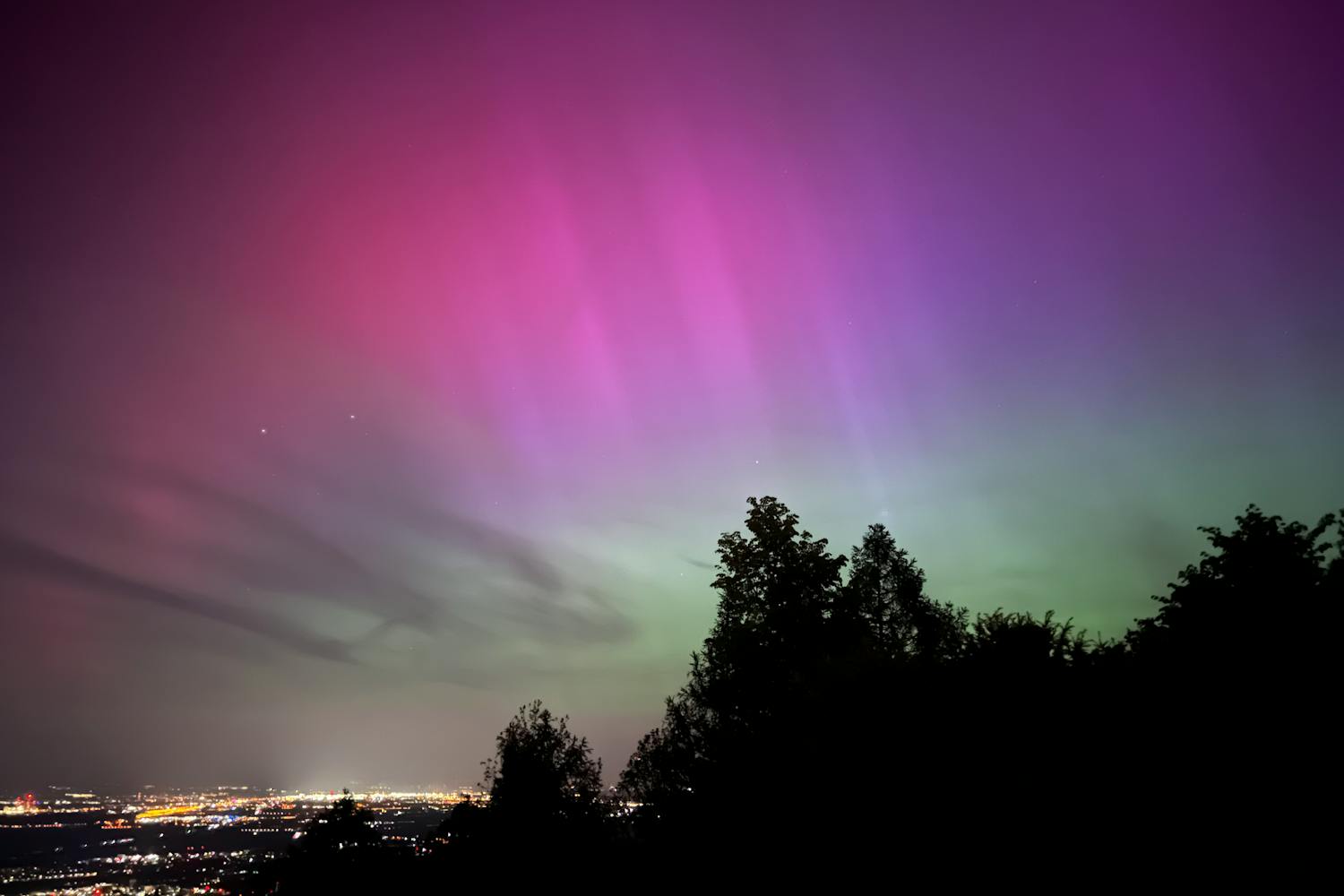
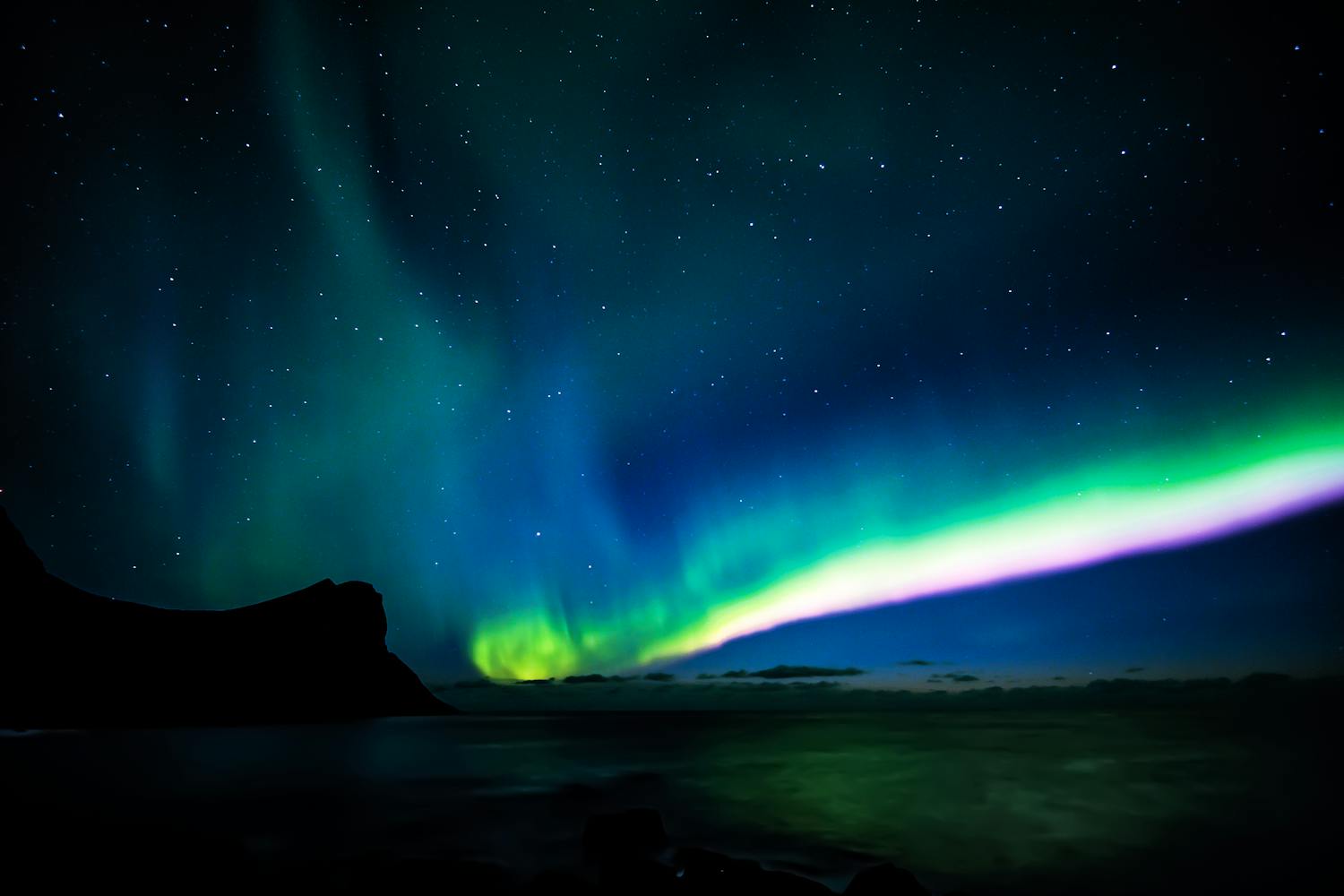
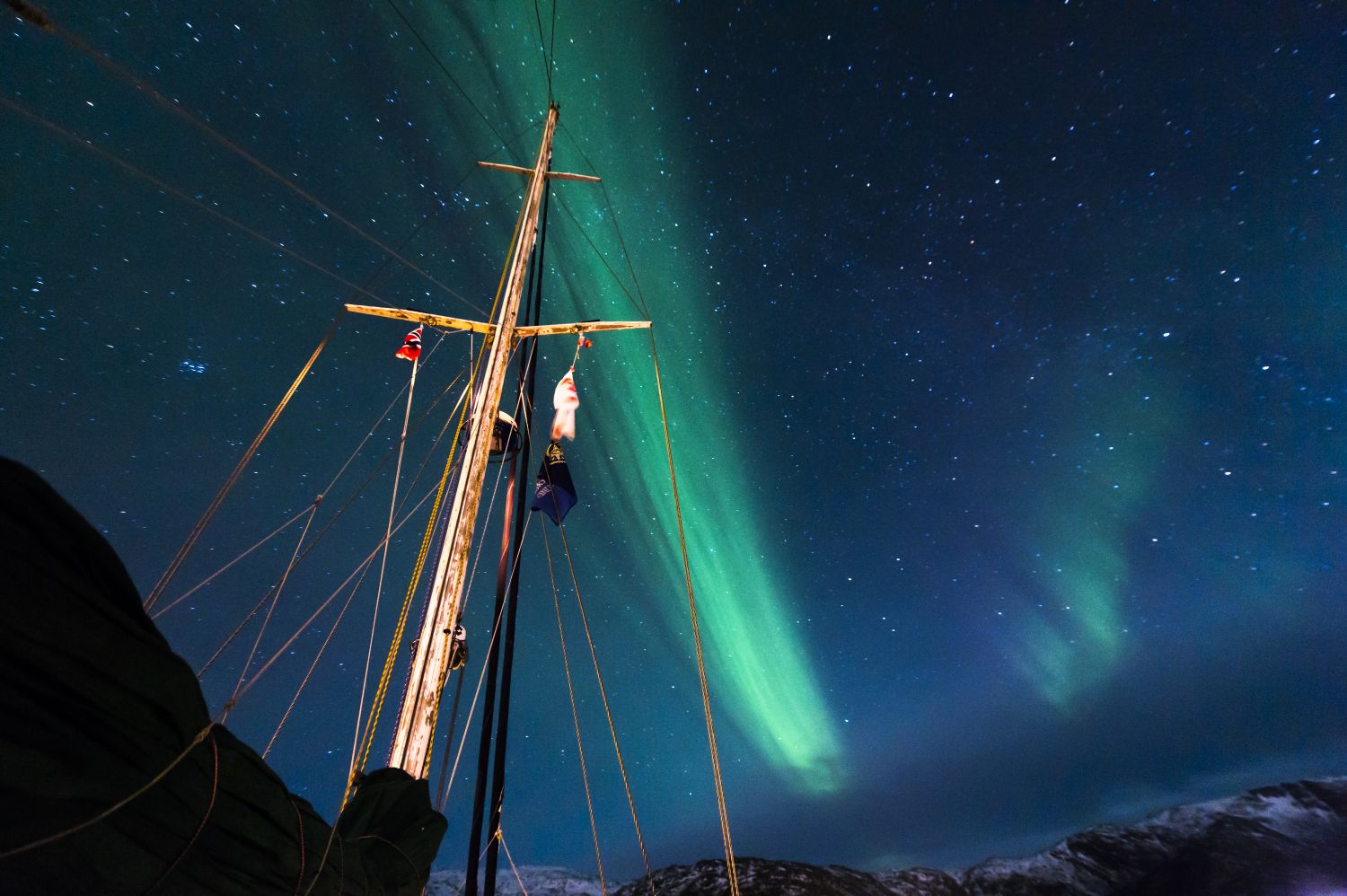
See for yourself:
 |
 |
 |
 |
 |
 |
Why Scandinavia?
The auroral oval is a ring-shaped zone encircling the magnetic poles at roughly 65 to 72 degrees north latitude. Scandinavia sits almost perfectly within this zone. Tromsø in Norway sits at 69.6°N, Abisko in Sweden at 68.3°N, Rovaniemi in Finnish Lapland directly on the Arctic Circle at 66.5°N. All of them fall within or very close to the zone of maximum aurora activity.
Unlike Alaska or Siberia at similar latitudes, northern Scandinavia also benefits from the Gulf Stream, which keeps coastal temperatures surprisingly mild. Tromsø averages around -4°C in January: cold enough for the full Arctic experience, warm enough to stand outside for hours without extreme cold weather gear.
The solar maximum window
The sun operates on an 11-year cycle of activity, alternating between solar minimum (fewer solar flares, quieter aurora) and solar maximum (more solar flares, stronger and more frequent displays). The current solar maximum, running through 2025 and 2026, is producing the strongest aurora displays since 2014. According to Dr Pål Brekke of the Norwegian Space Agency, this is the best window for Northern Lights viewing until around 2035. If you have been thinking about a Northern Lights trip and keep putting it off, this is the moment to stop putting it off.
In Finnish, the Northern Lights are called revontulet: fox fires. The old folk story says a great arctic fox races across the fells at night, its tail sweeping against the snow and sending sparks up into the sky. The Sami people named them guovssahas, the light you can hear. On rare occasions, under cold, still conditions, they genuinely do make sound. Finnish acoustic researcher Unto Laine of Aalto University confirmed this scientifically in 2012.
When to see the Northern Lights
The aurora season runs from late August to early April across all four Scandinavian destinations. The primary requirement is darkness: the midnight sun that makes June and July so extraordinary in Lapland also makes aurora viewing impossible. As nights lengthen from late August onward, conditions develop. By mid-September you have enough dark sky for a serious attempt. The season runs through to early April, when the nights begin to shorten again.
But not all months within the season are equal. Two factors beyond darkness determine quality: clear skies and geomagnetic activity. The equinoxes in September and March consistently produce elevated geomagnetic activity, a well-documented pattern that makes these months punch well above their weight. February delivers the best combination of long nights, strong activity, and the clearest inland skies of the winter. December and January offer maximum darkness but more cloud cover on the coasts.
| Month | Darkness | Aurora Activity | Best Location | Verdict |
|---|---|---|---|---|
| September | Good | High (equinox) | Sweden / Norway | Excellent. Underrated, less crowded, milder weather. |
| October | Very good | High (equinox) | Finland / Sweden | Highly recommended. Strong displays, stable skies. |
| November | Excellent | Moderate | Finland | Good. Coastal cloud cover increases in Norway and Iceland. |
| December | Maximum | Moderate | Finland / Norway | Peak season. Full Lapland experience. Book months ahead. |
| January | Maximum | Moderate-high | All four | Long nights, cold and clear inland. Reliable. |
| February | Excellent | High | Finland / Sweden | Best overall month. Clearest skies and strong activity. |
| March | Very good | High (equinox) | All four | Highly recommended. Equinox surge, improving daylight. |
| April | Declining | Moderate | Norway / Iceland | Last chance. Milder, but nights shortening quickly. |
How many nights do you need? Three nights minimum. Five is the practical recommendation. In northern Finnish Lapland, three nights gives you an 88% chance of at least one clear aurora night. Five nights pushes that to over 90%. In Norway or Iceland, allow more time to account for coastal weather variability. More nights means more chances, and the aurora is never guaranteed.
Where to see the Northern Lights
Scandinavia offers four distinct aurora destinations. Each has a different character, a different meteorological profile, and a different reason to choose it. The honest answer to “which is best?” depends entirely on what kind of experience you want.
| Destination | Best for | Sky reliability | Best months | Signature experience |
|---|---|---|---|---|
| Finland & Lapland | Most reliable overall | Very high inland | Feb, March, Oct | Glass igloo, husky safari, icebreaker |
| Norway | Most dramatic landscape | High (coastal variable) | Oct, Jan, Feb | Fjord reflections, Lyngen Alps |
| Iceland | Most extraordinary backdrop | Moderate (fast-changing) | Feb, March | Glacier lagoon, black sand beaches |
| Sweden / Abisko | Most statistically clear sky | Highest (Blue Hole) | Jan, Feb, March | Aurora Sky Station, ICEHOTEL |
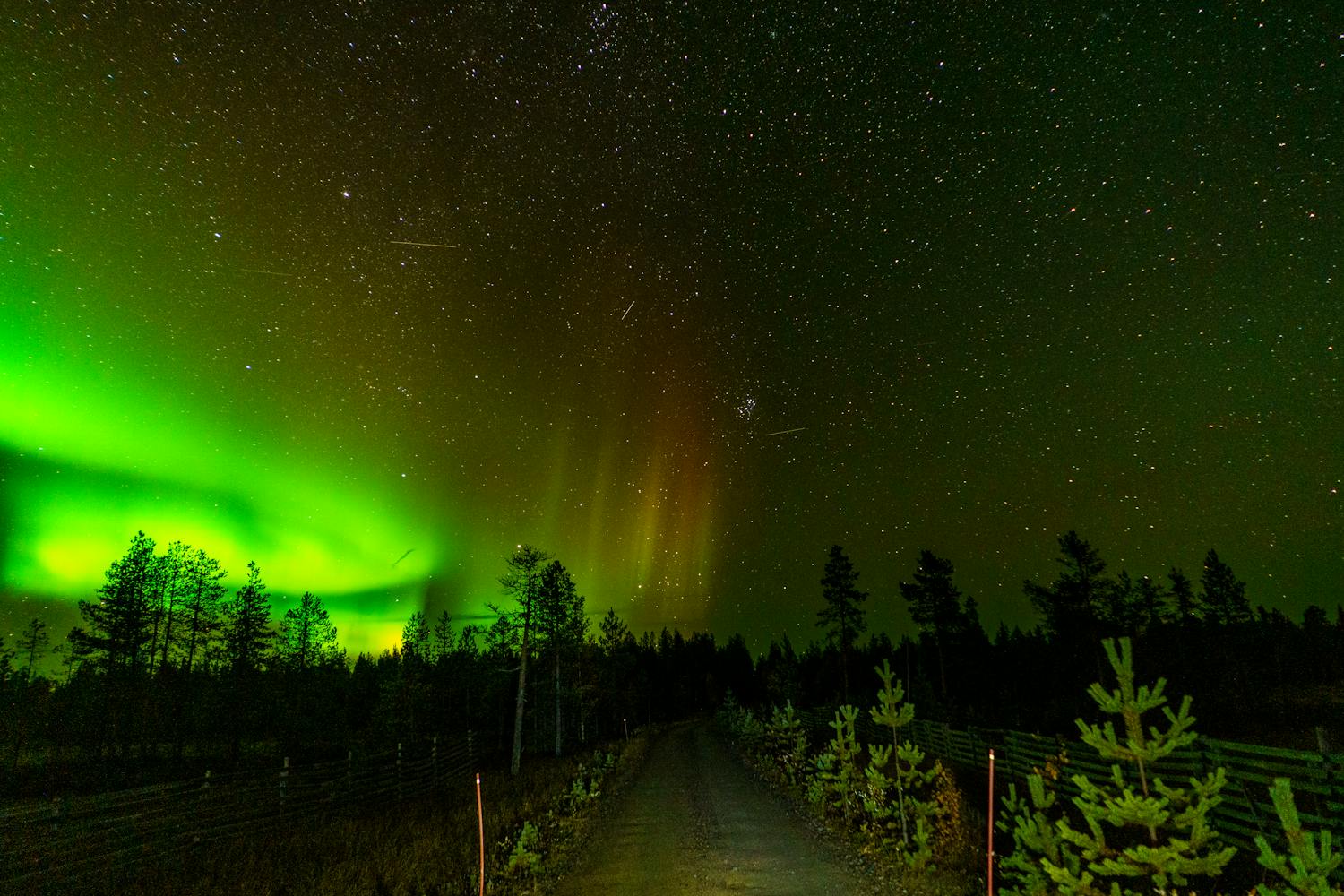 Most Reliable Finland & LaplandThe most statistically reliable aurora destination in Scandinavia. In northern Lapland around Inari and Kilpisjärvi, the aurora is visible on four nights out of five on average, according to the Finnish Meteorological Institute. The landscape is flat, open, and sparsely populated, meaning no coastal weather systems and clear skies more nights than anywhere else. Aurora visible 4 out of 5 nights in northern LaplandComplete Finland guide |
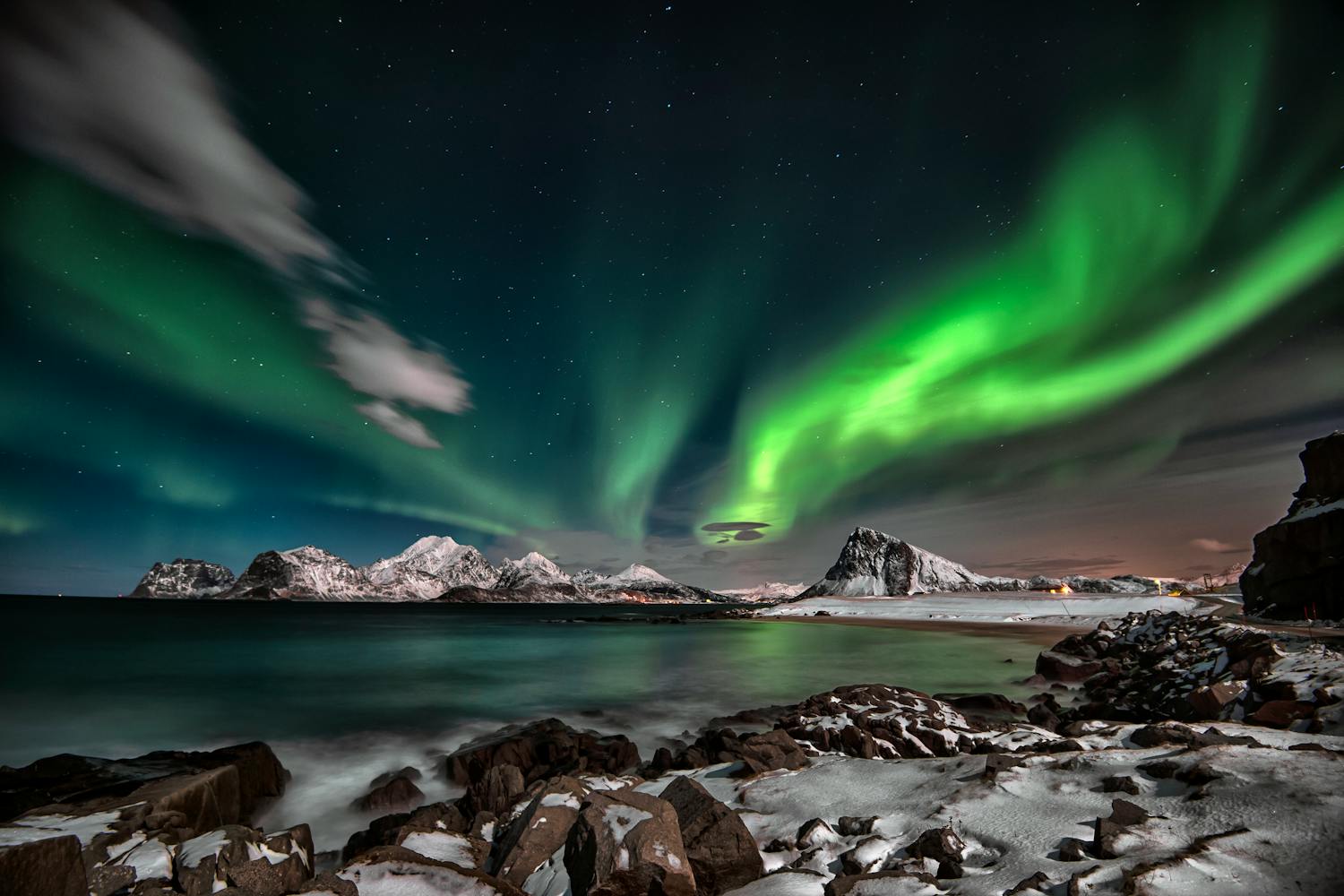 Most Dramatic NorwayNorway sits directly under the auroral oval with the most developed aurora tourism infrastructure in the world. The fjords give the lights a backdrop no other destination can match. Tromsø is the famous hub, but Alta has clearer skies, Senja has fewer crowds, and the Lyngen Alps have one of the driest climates in Europe due to the mountain rain shadow. 300,000+ aurora tourists visit Tromsø each yearComplete Norway guide |
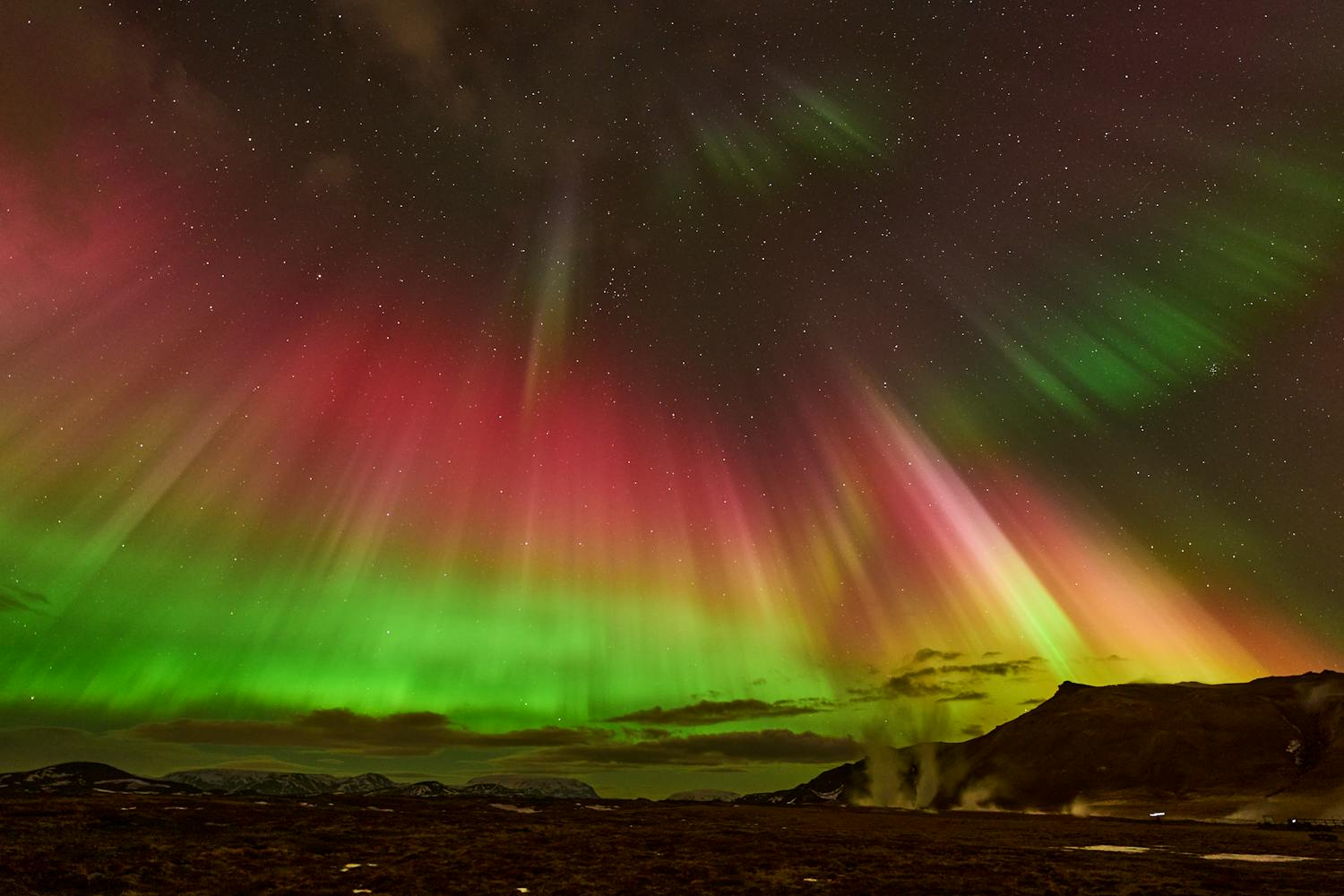 Most Extraordinary IcelandIceland offers what no other destination can: lights above active lava fields, reflecting off floating icebergs at Jökulsárlón Glacier Lagoon, rising above the black volcanic sand of Reynisfjara beach. Tour companies report success rates of 90% or more during peak months for guests staying five or more nights. The island’s fast-changing weather is the honest challenge. 90%+ tour success rates during peak months (5+ nights)Complete Iceland guide |
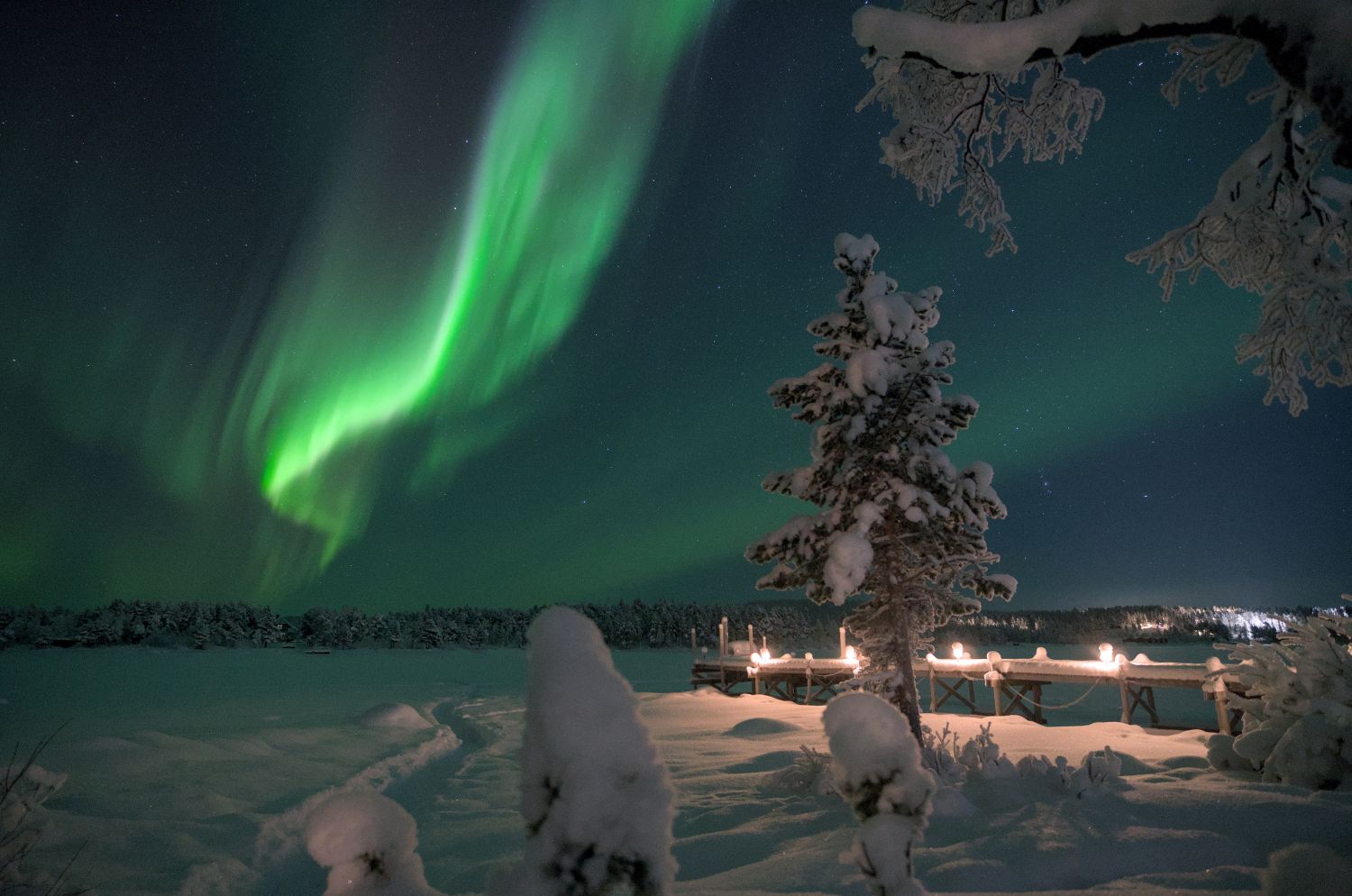 Clearest Skies Sweden & AbiskoAbisko has a single decisive advantage: the Blue Hole. Surrounded by mountains, the Abisko valley sits in a rain shadow that delivers clear skies approximately 70% of the time, even when the rest of Scandinavia is under cloud. Lonely Planet named it the best place in the world for Northern Lights. The Aurora Sky Station, reached by chairlift up Mount Nuolja, offers panoramic views from above the treeline. Clear skies ~70% of the time above AbiskoComplete Sweden guide |
How to see the Northern Lights
The standard aurora experience is a guided safari by minibus: a guide drives you into dark sky, you wait, you watch. This works well and delivers results. But it is far from the only option, and in some respects it is not even the best one. Finnish Lapland offers a range of aurora experiences that are genuinely unlike anything else available anywhere in the world.
|
🏔️ Glass iglooSleep under a thermally heated glass ceiling with an aurora alarm. Original to Finnish Lapland, now available across Scandinavia. Our 12-day tour includes a glass igloo night in Lapland. |
🐕 Husky sledTwelve dogs pull you silently through a forest that has not seen another person in weeks. When the treeline opens, the sky appears and you are already moving through it. |
|
🦌 Reindeer sleighSlower than huskies, with bells. The oldest way to travel through Lapland in winter. The reindeer do not care about the Northern Lights at all, which is rather calming. |
🚢 Icebreaker cruiseThe Sampo icebreaker in Kemi sails through ice up to a metre thick on the Gulf of Bothnia. At some point you put on a dry suit and get into the water. The lights are overhead. |
|
🧊 Ice floatingA dry suit, a hole cut in a frozen lake north of the Arctic Circle, and complete silence. You lie on the surface and look straight up. The most Finnish experience available. |
🚂 Santa Claus ExpressThe overnight train from Helsinki to Rovaniemi passes through some of the darkest aurora-rich skies in Europe. The lights may come to your window at 1am. |
Guided tours vs self-drive
This is one of the most common questions we receive and the answer depends on which destination you are visiting. The principle is simple: the more unpredictable the weather, the more a guide who can move is worth.
|
Guided tour Your guide monitors weather, cloud cover, and the KP-index in real time. They will drive 100 kilometers east if that is what finding clear sky requires that night. They know which direction the weather is moving and which valleys stay clear when the coast clouds in. Guided tours also provide warm clothing, photography help, local knowledge, and, crucially, someone to handle the logistics while you look at the sky. Strongly recommended for Norway, Iceland, and first-time visitors anywhere. |
Self-drive Self-drive works well in Finnish Lapland, where skies are more stable and the inland road network is reliable. If you have experience driving on ice roads, are comfortable reading aurora and weather forecasts yourself, and have a flexible schedule, Lapland rewards independent travelers well. It is considerably more challenging in Norway and Iceland, where weather moves faster, roads are more difficult in winter, and the ability to chase clear sky requires experience to use effectively. |
What to expect on your first aurora night
Most people arrive expecting the lights to appear at a specific time and perform for a predictable duration. The reality is more interesting than that, and knowing what to actually expect will make your experience significantly better.
The aurora is not a scheduled event. On a strong night, a display might begin at 9pm and last several hours with multiple distinct phases: curtains giving way to spirals, then a sudden explosion of color and movement called a corona directly overhead, then quiet. On a weaker night, there might be a faint green shimmer on the horizon for twenty minutes and nothing more. Both are genuine Northern Lights. Both are worth seeing.
The most intense part of a display typically lasts less than ten minutes. This is the moment guides call the guests back outside and photographers curse themselves for being in the wrong position. Being ready when activity starts, rather than running out in response to it, is the single best piece of practical advice for aurora viewing.
Cloud cover is the most common reason for disappointment, and it is the one factor a guide can actively combat. On any given night, the KP-index may be excellent, with strong solar wind and high probability of activity, but if the cloud has rolled in from the coast, the display happens above you and you see nothing. Check both the aurora forecast and the cloud cover forecast together, every evening. The best free tool for this in Scandinavia is the Space Weather Live website, combined with your local meteorological office forecast.
Tip: The best aurora viewing window on any given night is between 10pm and 2am, when geomagnetic activity tends to peak and the sky is at its darkest. Plan your evenings around it. Go out earlier to let your eyes adjust. And put the phone down for the first few minutes, let yourself actually see it before you start photographing it.
Photographing the Northern Lights
The most important thing to know about aurora photography is that your camera will show significantly more color than your eyes. The human eye in low light relies on rod cells, which detect brightness but not color well. Camera sensors do not have this limitation. A display that looks like a faint green shimmer to you may produce a stunning photograph with pink, red, and purple layers clearly visible. Both are accurate. You just have different instruments.
|
DSLR / mirrorless camera ISO: 800 to 3200 depending on display brightness Shutter speed: 2 to 15 seconds, shorter for fast-moving displays Aperture: As wide as possible, f/1.8 to f/2.8 Essential: Tripod, remote shutter release, spare batteries (cold drains them fast) |
Smartphone Use Night Mode if available, most modern iPhones and Android phones have one specifically for low-light conditions. Keep the phone warm inside your jacket and take it out only to shoot, cold kills phone batteries extremely fast. Brace against something solid or use a small tripod, even slight movement will blur a long exposure. |
What the colors mean
Every color in the Northern Lights is produced by a specific gas, at a specific altitude, reacting to solar particles at a specific energy level. The color you are seeing is a readout of atmospheric conditions at that exact moment. Green is standard. Red is rare and significant. Blue and purple at the bottom of a curtain mean something extraordinary is happening.
| Color | Caused by | Solar activity required | Where it appears |
|---|---|---|---|
| Green | Oxygen at 100-300km | Normal | Most common. The standard display. |
| Red | Oxygen at 300-400km | Intense, rare | Top of the display. Something significant is happening. |
| Pink | Nitrogen at ~100km | Above average | Lower edge. Storm is pushing the display down. |
| Blue / Purple | Nitrogen, deep penetration | Very strong | Bottom border. Extraordinary solar energy. |
| Yellow / White | Mixed wavelengths / STEVE | Extreme | Rare. Mid-display ribbon form. |
Planning your trip
-
1
Allow at least five nights. Three is the minimum. Five nights in northern Finnish Lapland gives you a four-in-five statistical chance of at least one clear display night. In Norway or Iceland, allow more time to account for coastal weather variability. The aurora is a natural phenomenon. It rewards patience more than anything else.
-
2
Book early for peak season. Glass igloo stays and guided aurora experiences in December to February sell out months in advance. Tromsø accommodation in January goes in summer. The best experiences book first, if you see something you want, book it immediately.
-
3
Go with a guide who can move. The single most effective thing you can do to improve your chances. Aurora guides monitor weather in real time and will drive two hours to find clear sky if that is what the night requires. In Norway and Iceland especially, this is worth more than any forecast app.
-
4
Dress for -20°C to -30°C. Thermal base layers, mid-layer fleece, windproof outer shell, insulated boots rated to at least -30°C. Most tour operators provide warm suits and boots, confirm what is included when you book. Cold feet end aurora nights early.
-
5
Check the forecast daily. Best tools: NOAA KP-index for solar activity, Finnish Meteorological Institute (en.ilmatieteenlaitos.fi) for Lapland, Vedur (en.vedur.is) for Iceland. Check cloud cover and geomagnetic activity together, a Kp of 6 means nothing under a cloudy sky.
-
6
Getting there. Finnish Lapland: fly into Rovaniemi or Ivalo. Norway: Tromsø has direct international connections. Iceland: Reykjavik Keflavik. Sweden: Kiruna has direct flights from Stockholm, or take the overnight Arctic Circle train, one of the great Nordic journeys in its own right.
Frequently asked questions
Do the Northern Lights move?
Yes. They shift, ripple, and pulse in real time as the solar wind changes. A strong display can move rapidly across the entire sky in minutes. The movement is part of what makes them so extraordinary to watch. No two displays are the same, and no photograph fully captures how they behave in the moment.
Can you see the Northern Lights from a city?
During very strong geomagnetic storms (Kp 5 or above), the aurora can be visible from Tromsø, Reykjavik, and even Rovaniemi town center. On standard nights, light pollution washes out most of what is happening overhead. Getting 20 to 30 minutes outside the city center dramatically improves what you can see.
What if it is cloudy every night?
Cloud cover is the honest challenge of aurora hunting. A guide who can drive toward clear sky significantly improves your odds. If you are based in Finnish Lapland, the inland weather is more stable than the coasts. Swedish Abisko’s Blue Hole is the single most reliable defense against persistent cloud, it stays clear even when the rest of Scandinavia is overcast.
Can you see the Northern Lights with the naked eye?
Yes. On a strong night, the display is unmissable, bright enough to cast faint shadows on the snow. On a weaker night, what you see with your eyes may be a pale green shimmer, while your phone camera captures vivid colors you could not see directly. This is normal. The camera sensor is more sensitive to the red and pink spectrum than the human eye in darkness.
Is the aurora guaranteed?
No. Nothing about a natural phenomenon is guaranteed. What you can do is maximize your chances: go to the right latitude, at the right time of year, stay multiple nights, travel with a guide who can chase clear sky, and check the forecast daily. With five nights in northern Finnish Lapland in February, your statistical chances are excellent. But the aurora will always remain, ultimately, a gift.
What is the KP-index?
The KP-index is a scale from 0 to 9 measuring global geomagnetic activity, how active the aurora is. In Scandinavia, a KP of 1 to 2 is enough for aurora viewing in northern locations. A KP of 5 or above produces displays visible much further south, sometimes as far as Scotland and northern England. You can check the real-time KP-index at spaceweatherlive.com.
See the Northern Lights with Scandi Travel
Independent Finnish tour operator. Running Northern Lights tours across Scandinavia since 2010. Private guides, 4-star hotels, and every experience hand-picked.
|
12 days
Northern Lights and Scandinavia TourStockholm, Tallinn, Helsinki, Finnish Lapland, Turku. Glass igloo, husky safari, reindeer sleigh, Santa Claus Express. December to March. |
7 days
Lapland Northern Lights TourHelsinki to Finnish Lapland, including the Sampo icebreaker cruise from Kemi. December to March. |
8 days
Northern Lights in Lapland: Helsinki to InariEight days from Helsinki to Rovaniemi to the far north at Inari. December to March. |