Written by Mikko Lintunen
In a nutshell
Norway sits directly under the auroral oval and has more Northern Lights infrastructure than anywhere else on earth. Tromsø is the famous hub, brilliant, well-connected, and extremely busy. Alta is quieter and has clearer skies. Senja is where the serious aurora hunters go. The Lyngen Alps have some of the driest skies in Europe. Lofoten offers the most dramatic photography backdrops of any Northern Lights destination in the world. The season runs late September to early April. Cloud cover is the honest challenge. A guide who can move is the honest solution.
For a complete guide, visit our Northern Lights Travel Guide.
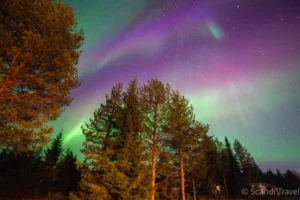
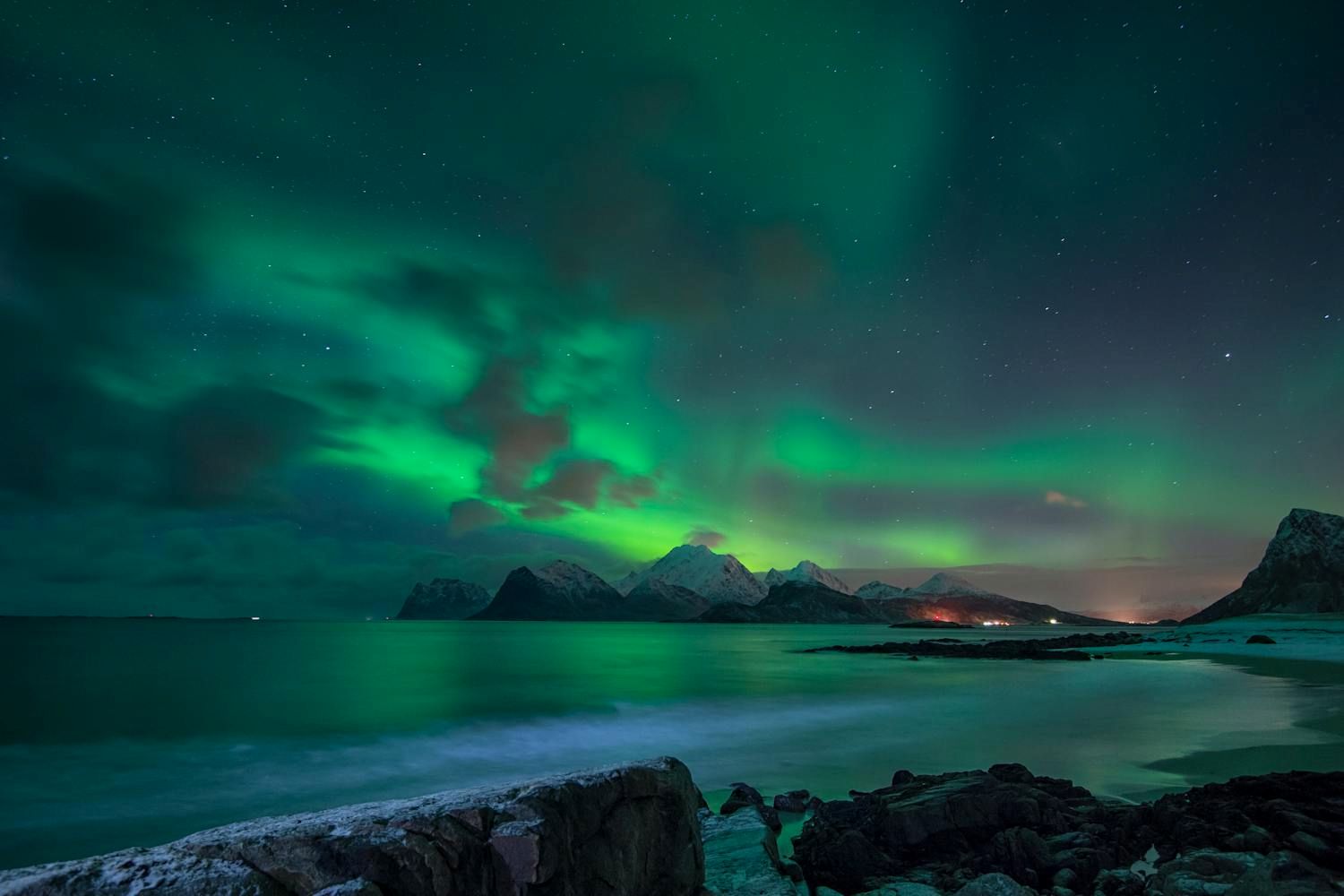
I have watched the Northern Lights from a boat in the Tromsø fjord on a night so still the entire display reflected in the water below us. I have watched them from the Lyngen Alps with the mountains behind me and the Arctic Ocean ahead. I have watched them from Senja, on a road with no other cars and no other lights, with a display so bright it cast faint shadows on the snow.
Norway does something to the Northern Lights that no other country quite manages. It gives them a backdrop.
I have been running tours to Norway since 2010, and while Finland is my home, I will admit that Norway is where the lights sometimes feel most theatrical.
In Norwegian, the Northern Lights are called nordlys. North light. The Finns gave them a mythological fox. The Norse gave them Valkyries and a bridge between worlds. The Norwegians looked at the sky and named what they saw: the light that comes from the north. There is something very Norwegian about that directness.
There is also something very Norwegian about friluftsliv, the concept that outdoor life is not something to endure but something to embrace. The idea that standing outside in the dark, in January, in the cold, watching the sky, is not a sacrifice. It is the point. Friluftsliv is why Norway’s aurora guides are so good. They grew up understanding that the outdoors in winter is where life happens.
For the full picture on timing and what affects your chances across all Scandinavian destinations, see our Northern Lights Travel Guide.
Why Norway for Northern Lights
Norway’s primary aurora destinations, Tromsø at 69.65°N, Alta at 69.97°N, and the Lofoten Islands at 68.23°N, all fall within the optimal auroral oval zone between 65°N and 72°N latitude. This positioning means even during periods of low geomagnetic activity, visitors in these areas have reasonable chances of observing the aurora.
Unlike similar latitudes in Siberia, Canada, or Alaska, Norway’s coast benefits significantly from the Gulf Stream’s warming effect. Winter temperatures in Tromsø average around -4°C in January, remarkably mild for a location 350 kilometers north of the Arctic Circle. You can stand outside for extended periods without the extreme cold gear that Finnish or Alaskan winters require.
Then there is the landscape. Norway’s fjords, mountains, and coastline mean that wherever the aurora appears, there is something extraordinary beneath it. The lights do not simply appear over flat tundra. They appear over water, over peaks, over fishing villages with their lights reflecting in the dark sea.
The challenge, and it is worth being honest about this, is cloud cover. Norway’s coastal position brings weather systems through frequently. The aurora can be blazing overhead and invisible beneath cloud. This is not a reason to avoid Norway. It is a reason to go with a guide who knows how to move.
The locations, one by one
Tromsø: the world capital of Northern Lights tourism
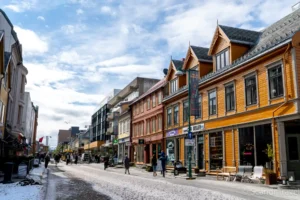
The Tromsø region has the most Northern Lights in the whole world. Its geographical location directly below the Northern Lights oval is the reason. Tromsø receives over 300,000 aurora tourists per year.
I say this upfront because it matters for how you plan. Tromsø in December and January is busy. Very busy. The aurora tours book up months in advance. The best accommodation goes in summer.
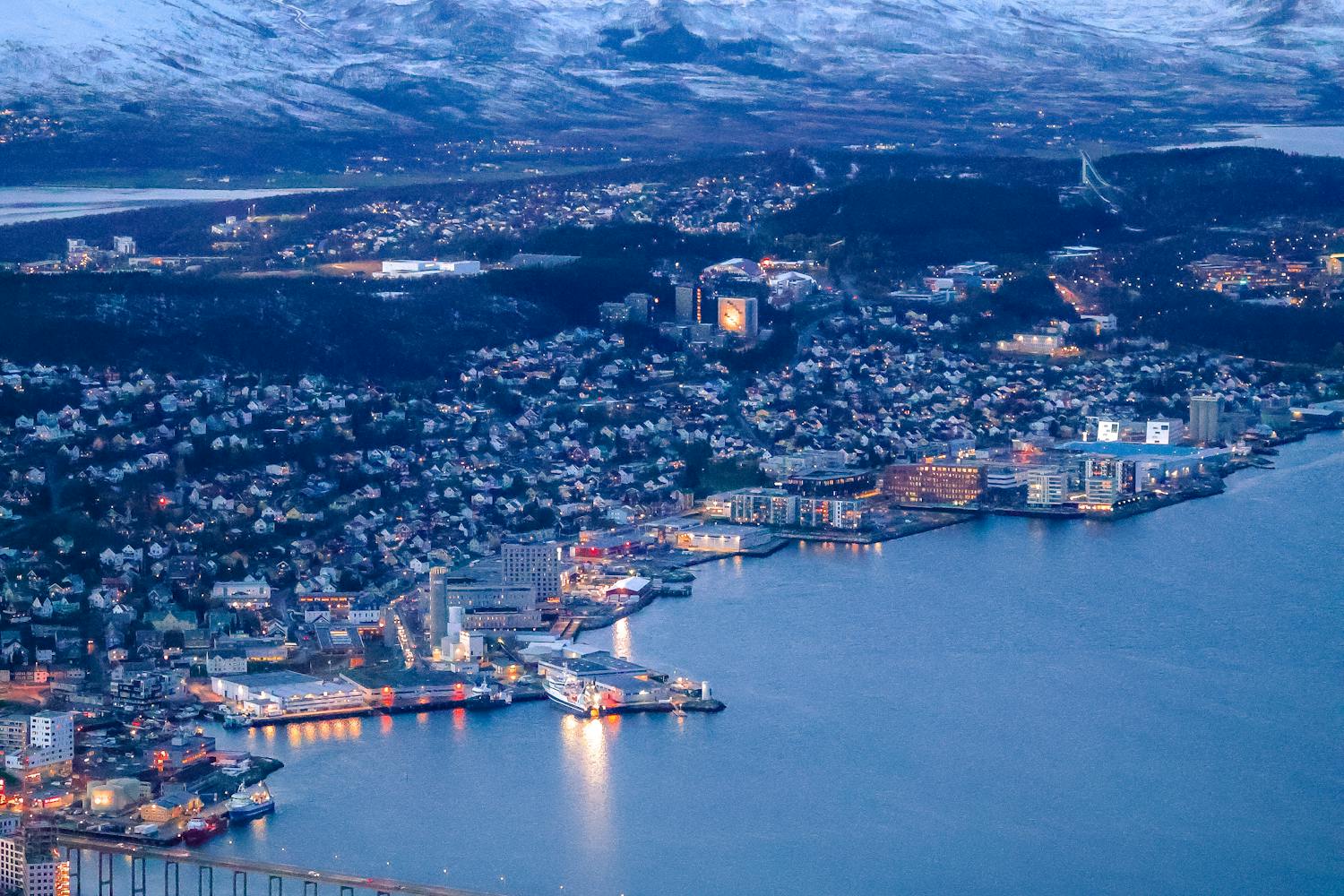
What Tromsø offers in return is unmatched. It is a genuinely excellent city: good restaurants, real culture, the world’s northernmost university, whale watching in the fjord from October to January. The guides here are among the best in the world. They monitor weather, cloud cover, and Northern Lights activity carefully and will drive several hours to find clear sky if that is what the night requires.
The practical thing to know: the city itself creates light pollution. Get out of town. The surrounding areas, Kvaløya island to the west and the mountains to the east, give you the dark sky you need. The best guides know exactly where to go on any given night.
Tromsø in September and October is a different experience from the midwinter rush: less crowded, the equinox effect drives elevated geomagnetic activity, and the weather is milder. If I had to send a first-time visitor to Tromsø, I would send them in October. Fewer people asking the same questions. Better sky.
Alta: Norway’s best-kept open secret
Alta sits 150 kilometers east of Tromsø, inland, and at slightly higher latitude. Alta is known for stable inland weather, making it one of the most reliable places for aurora viewing in Norway, and it is less crowded than Tromsø.
When the guides in Tromsø drive east to find clear sky, they are often heading toward Alta. That single fact tells you more about this place than any brochure.
Alta has its own extraordinary asset: the Northern Lights Cathedral, a remarkable piece of architecture by Snøhetta, its titanium exterior spiraling upward like a wave of the aurora frozen in metal. It is worth seeing in daylight before the night begins.
The Sorrisniva Igloo Hotel outside Alta is one of Norway’s finest aurora experiences: rebuilt entirely from ice and snow each winter, it offers a level of drama that even the finest glass igloos cannot quite match for sheer improbability. You are sleeping inside a structure that will melt in spring.
Senja: the island the aurora hunters keep quiet about
Senja is Norway’s second-largest island, offering dramatic landscapes rivaling Lofoten but with significantly fewer tourists. Located between Tromsø and Lofoten, Senja provides excellent aurora viewing with iconic locations including Ersfjordbotn and Bergsbotn viewpoint.
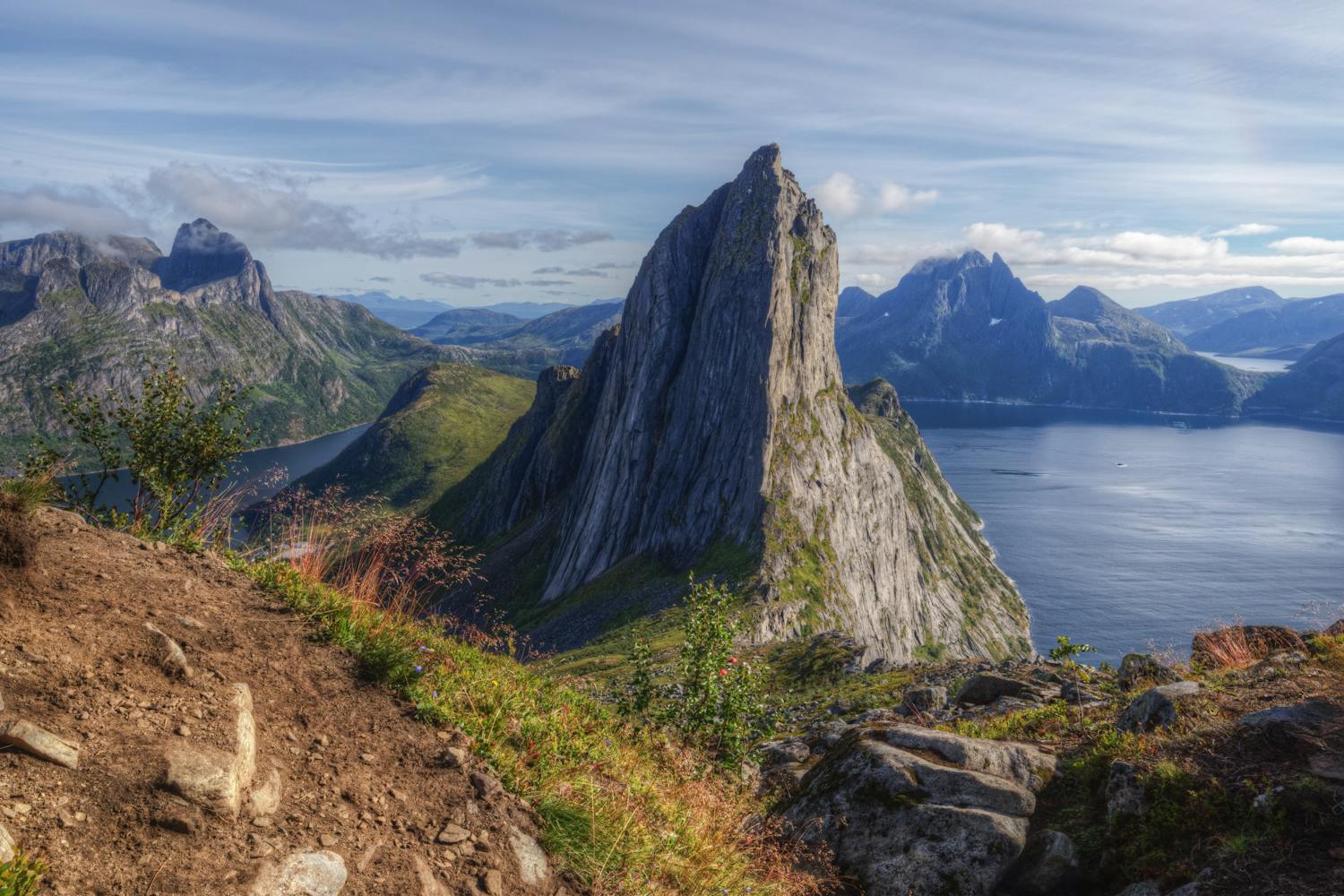
The mountains drop directly into the fjords. The villages are tiny. On a clear night, with the lights over the water and the peaks behind you, there is nothing like it in Norway.
Without a car, it is complicated to get around Senja and find places without light pollution. With a car and three or four nights, it consistently outperforms more famous destinations for what you actually see and the absence of other people seeing it with you.
I have seen guests come to Senja and not want to talk about it afterward. Not because it was disappointing. Because they wanted to keep it for themselves.
The Lyngen Alps: where clear skies are most reliable
Due to the rain shadow of the Lyngen Alps, the area has one of the driest climates in Europe, meaning perfect conditions for starry, clear nights.
The Lyngen Alps sit east of Tromsø across the fjord, and they behave meteorologically in a way that is distinct from the coast. Weather systems that bring cloud to Tromsø frequently break against the mountains and miss the Lyngen valleys entirely.
The scenery is extraordinary even by Norwegian standards: towering Alpine peaks dropping into mirror-still fjords. A crystal lavvu, a Sami-inspired transparent tent, in the Lyngen Alps on a clear night is one of the finest Northern Lights experiences available in Scandinavia. The combination of dramatic landscape and reliable sky is not common. Lyngen has both.
Lofoten: the photographer’s choice
The Lofoten Islands combine dramatic peaks with excellent aurora viewing. It is possible to see the Northern Lights eight months of the year here. The traditional rorbuer, the red fisherman’s cabins built on stilts over the water, have become iconic aurora backdrops. Staying in one and watching the lights reflect off the water below your window is a specific experience that nothing else replicates.
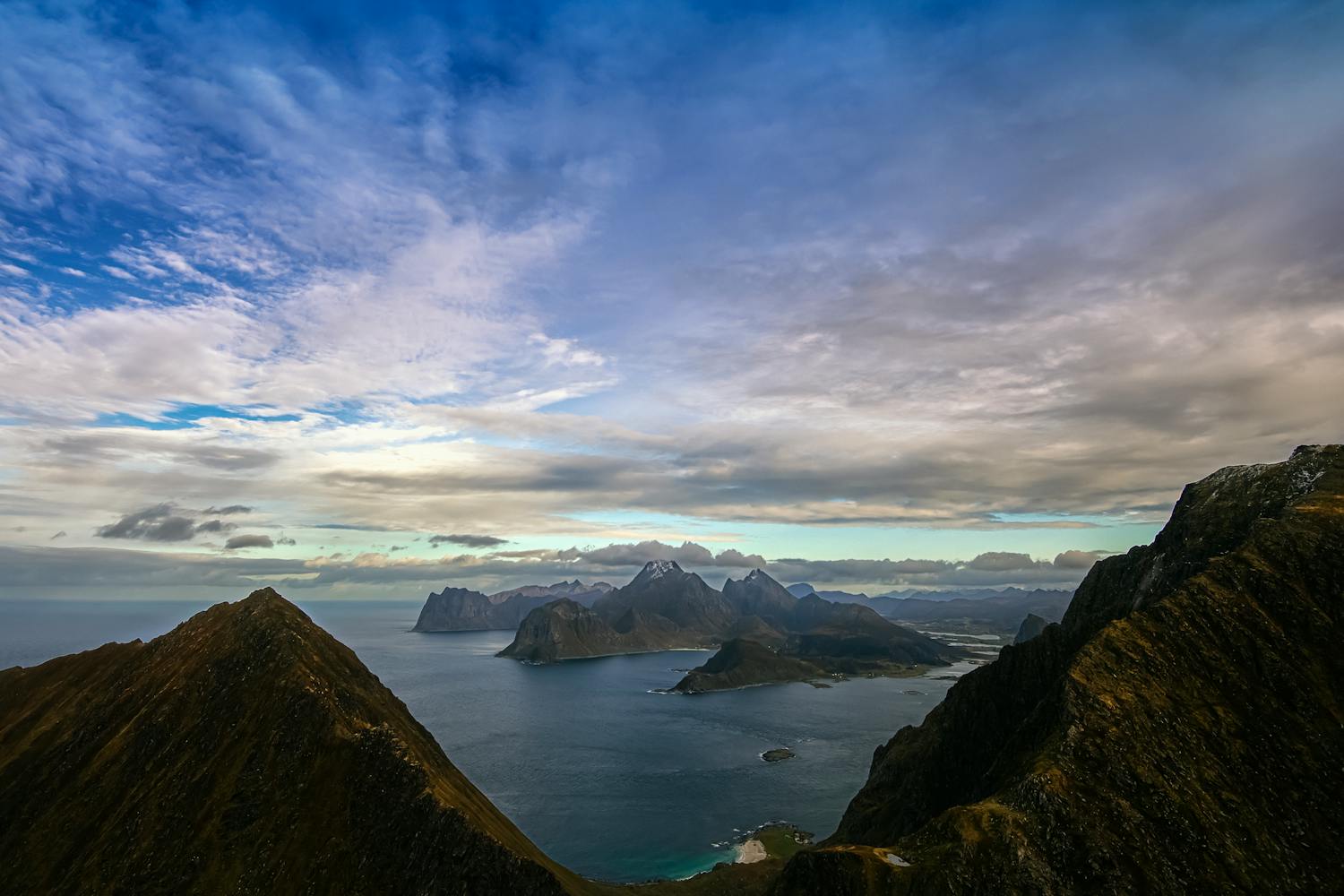
The honest caveat: Lofoten is coastal and exposed. Cloud cover is frequent, particularly from November onward. For someone whose absolute priority is seeing the lights, I would send them to Alta or Senja first. For someone who wants to experience Norway at its most visually extraordinary and can accept that the aurora may or may not cooperate, Lofoten is incomparable.
The two things are not mutually exclusive. Some guests book both.
Svalbard: for those who want to go further
Svalbard is not part of any tour I currently run to Norway. I include it because guests ask, and because it belongs in any honest Norwegian aurora guide.
At 78 degrees north, Svalbard experiences polar night from mid-November to late January. During this time the Northern Lights can occur at any time of day. The polar bear population outnumbers the human population. Every person leaving Longyearbyen must carry a rifle. Svalbard rewards visitors with unparalleled wilderness and the unique experience of around-the-clock aurora potential during polar night.
It is for people who have already seen the lights and want to go somewhere the concept takes on an entirely different dimension.
When to go
Norway’s aurora season runs from late September to early April. Peak viewing months are November through February, when nights are longest and skies darkest.
- September and October are underrated. The equinox effect drives elevated geomagnetic activity, the weather is milder than deep winter, and Tromsø is not yet at full capacity. October is my personal preference for a first Norway trip.
- January and February offer the longest nights and the best conditions for extended viewing sessions. Cold, but reliable. Alta and the Lyngen Alps particularly shine in these months.
- March brings the spring equinox surge and often the strongest individual displays of the year. Snow conditions are still excellent for daytime activities. March is when guests are hardest to get on the plane home. Norway in March does that to people.
The best viewing window each night is between 6pm and 2am, with the peak typically around midnight.
For a full month-by-month breakdown across all Scandinavian destinations, including the solar maximum window and equinox statistics, see our Best Time to See the Northern Lights guide.
The cloud cover question
Cloud cover is the most common reason people are disappointed by Norway, and I want to address it directly.
Norway’s coastal weather is variable and fast-moving. A forecast for clouds at 8pm is not a forecast for clouds at midnight. Conditions change within hours. Guides who know the local microclimates, and who can drive 100 kilometers east to find clear sky, consistently outperform independent travelers who are waiting in one spot.
This is the practical argument for a guided aurora safari over self-drive in Norway specifically. In Finnish Lapland, the skies are more stable and more predictable. Norway is where the guide earns the most.
That said: even in Norway, on a cloudy week, the lights sometimes appear through gaps at 1am when nobody expected them. I have seen this enough times that I no longer tell guests to give up hope.
What to combine with the lights
Norway is not only a Northern Lights destination. In winter, the north offers whale watching, orca and humpback in the fjords off Tromsø from October to January, dog sledding, snowshoeing, reindeer safaris, and fjord cruises. The Hurtigruten coastal route, covering 34 ports, 1,000 mountains, and more than 100 fjords, according to Visit Norway, offers one of the finest ways to experience northern Norway’s coastline while aurora hunting from the deck.
The lights are the headline. Norway has enough beneath them to fill a week regardless of what the sky does.
Northern Lights in the rest of Scandinavia
Norway is one of four destinations where serious aurora hunters go. Each has its own character, its own strengths, and its own reasons to choose it over the others.
- Finland and Lapland offers the most stable skies of any Scandinavian destination, clearer on average than Norway’s coast, with the glass igloo, the husky safari, and the reindeer sleigh all built into the experience. It is where I am based and where I would send someone for whom seeing the lights is the absolute priority. We have a full guide to Northern Lights in Finland and Lapland.
- Iceland is unlike anywhere else on this list. Volcanic, oceanic, and wild in a way that Norway’s fjords are not. Watching the lights above a lava field or reflected in a geothermal lake is its own kind of extraordinary. We have a full guide to Northern Lights in Iceland.
- Sweden has Abisko, which has the Blue Hole: a microclimate above the tree line that delivers clear skies around 70% of the time, statistically the most reliable aurora viewing location in Scandinavia. If the rest of the country is cloudy, Abisko often is not. We have a full guide to Northern Lights in Sweden.
The four destinations are different enough that the choice depends entirely on what kind of trip you want. Norway is the most dramatic. Finland is the most reliable. Iceland is the most otherworldly. Sweden is the best bet when clouds are the enemy. Many guests, given the chance, come back for all four.
Norway is calling!
There is a moment on a still night in the Tromsø fjord when the entire aurora display appears twice: once overhead, once in the water below. The mountains hold it all in place. Nothing moves except the lights.
That is Norway. Theatrical in a way no other destination quite manages.
We build Norway itineraries individually, around the places you most want to see: the fjords above Tromsø, the reliable skies of Alta and the Lyngen Alps, the quiet of Senja, or the rorbuer of Lofoten. Contact us and we will shape the trip around exactly what you are looking for. A personal offer within 24 hours.
If you would rather combine the Nordics more broadly, our 12-Day Northern Lights and Scandinavia Tour covers Stockholm, Tallinn, Helsinki, Finnish Lapland, and Turku, running December through March.
For the complete guide to timing, solar conditions, and how Norway compares to the other three destinations, visit our Northern Lights Travel Guide.