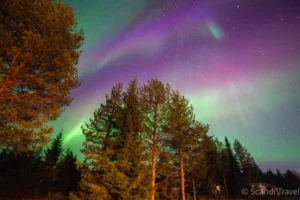
Written by Mikko Lintunen
In a nutshell
The colors of the Northern Lights are not random. Each one tells you something specific: which gas is reacting, at what altitude, and how energetic the solar storm is. Green is the standard. Red means something is happening much higher up. Pink and blue appear at the lower edge when the storm is particularly strong. And cameras, especially phones, will always show you more color than your eyes can see. Here is what each color means.
For a complete guide, visit our Northern Lights Travel Guide.
The first time I saw a red aurora I genuinely did not know what I was looking at. I had been watching the lights for three years by then. I knew green. I had seen hints of pink. But this was different: a deep scarlet fringe at the top of the curtain, above the green, reaching upward. I stood there for a moment wondering if something had gone wrong with my eyes.
Nothing had gone wrong with my eyes. Something extraordinary was happening about 350 kilometers above my head.
I’ve been running Northern Lights tours since 2010, and one of the questions I get asked most on aurora safaris, usually while someone is staring at their phone screen, is: why is my camera showing colors I can’t actually see? The answer to that question opens into a much bigger one. What are the colors trying to tell us?
The answer is: quite a lot.
The colors are a map of the atmosphere
Every color in the Northern Lights is produced by a specific gas, at a specific altitude, reacting to solar particles at a specific energy level. The color you are seeing is essentially a readout of conditions at a precise layer of the atmosphere. According to Wikipedia’s aurora entry, green is the most common color, followed by pink, then pure red, then yellow, and finally pure blue. Each step up that list is rarer, and each step tells you the solar storm is doing something more extreme.
At a glance
| Color | Caused by | Solar activity | Where it appears |
| Green | Oxygen at 100-300km | Normal activity | Most common |
| Red | Oxygen at 300-400km | Intense — rare | Top of the display |
| Pink | Nitrogen at ~100km | Above average | Lower edge |
| Blue | Nitrogen below 100km | Very strong | Lower edge |
| Purple | Nitrogen, deep penetration | Very strong | Bottom border |
| Yellow | Red + green mixed | Extreme | Rare, mid-display |
| White | STEVE / all wavelengths | Unknown | Ribbon form |
Green: the standard display
When solar particles collide with oxygen at altitudes of 100 to 150 kilometers, they produce green light. Because most solar particles crash into the atmosphere at this altitude, and because the human eye is particularly sensitive to shades of green, we are more likely to see a green aurora than any other, according to Aurora Nights.
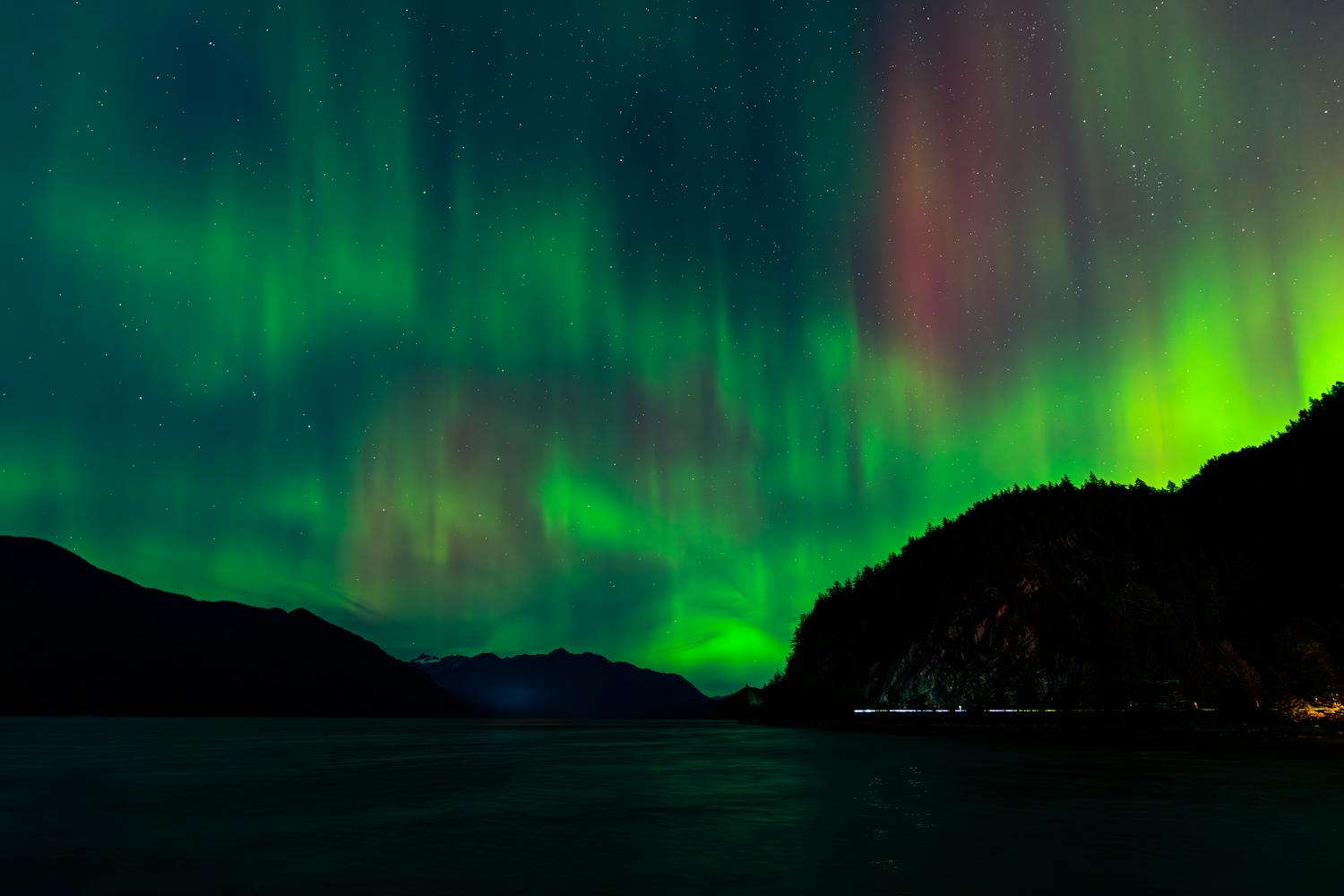
Green means: the aurora is doing exactly what it normally does. Oxygen, standard altitude, standard energy. Beautiful, reliable, the foundation of everything.
If you see only green, you are seeing a healthy aurora. Do not be disappointed. I have watched a pure green display stop guests in their tracks for thirty minutes. Green is not ordinary. We simply see it often enough to think it is.
Red: the rarest and the most significant
Red is where the story gets interesting.
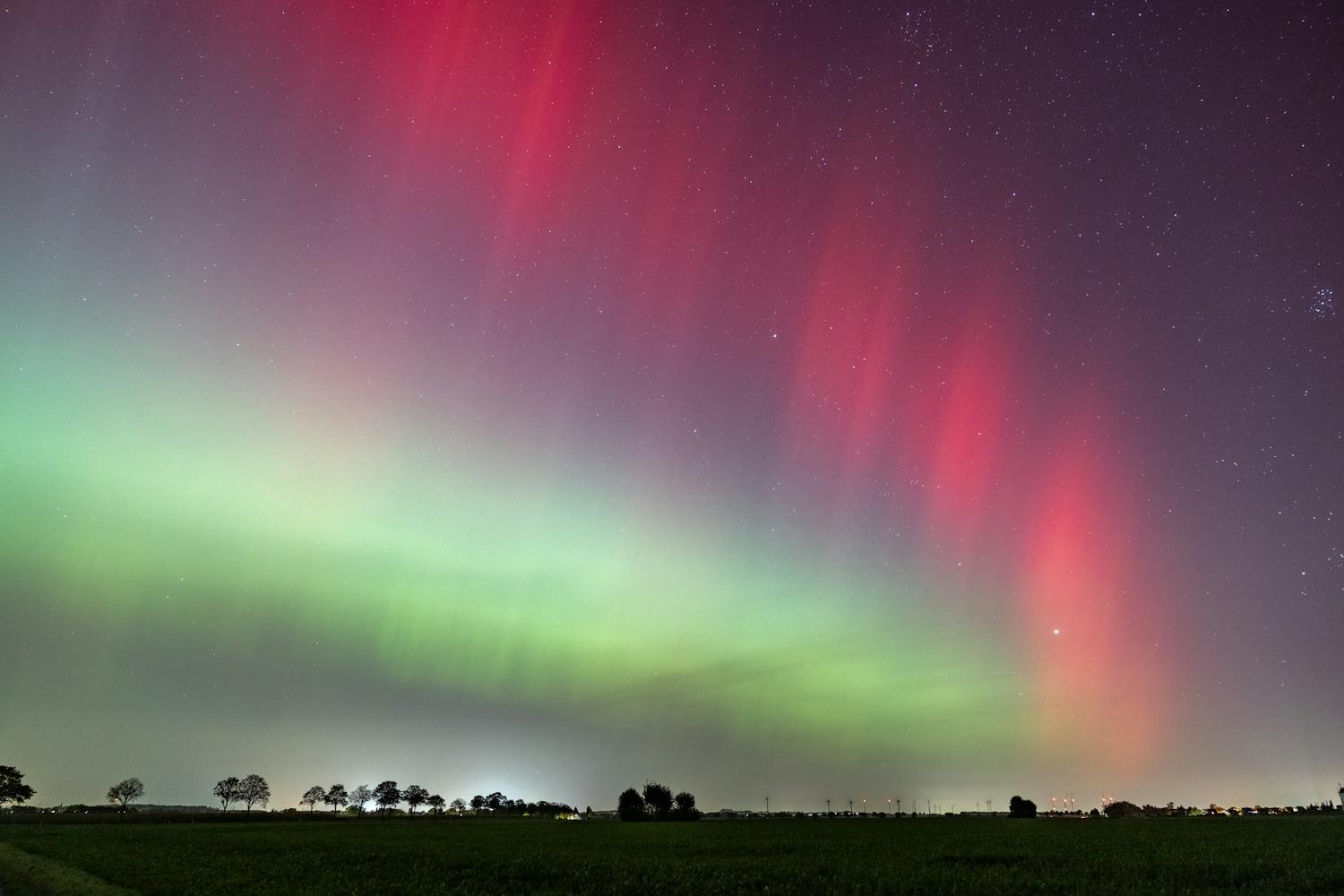
Scarlet red occurs when very high altitude oxygen, at around 300 to 400 kilometers above the earth, interacts with solar particles. This only occurs when the aurora is particularly energetic, according to astronomer Tom Kerss of the Royal Observatory Greenwich. The oxygen at that height is so sparse that an excited atom can take up to 107 seconds to release its energy as light, a remarkably slow process that only completes when nothing interrupts it. Lower in the atmosphere, collisions between particles happen too frequently and the red emission never gets the chance to form.
Red aurora appears at the very top of a display, above the green, reaching toward the edge of space. When you see it, something significant is happening in the solar wind.
The Skolt Sami of northeastern Finland had their own explanation. They believed that a blood-red aurora meant that those who had been murdered were still bleeding in the afterlife. It was something to fear. I do not think they were wrong to treat it with reverence. A red aurora is a message that the sun is doing something extreme. The instinct to pay attention is correct.
I have seen red aurora four times in fifteen years. Each time, the guests who were with me went very quiet. Some things read as significant regardless of whether you know the science.
Pink: the lower edge, the nitrogen fringe
Pink northern lights are relatively rare and only seen on nights with high levels of solar activity. The color appears at the lower edge of the aurora, produced by nitrogen molecules at an altitude of around 100 kilometers. It can also appear as a mixture of red and green at different altitudes producing a blended hue.
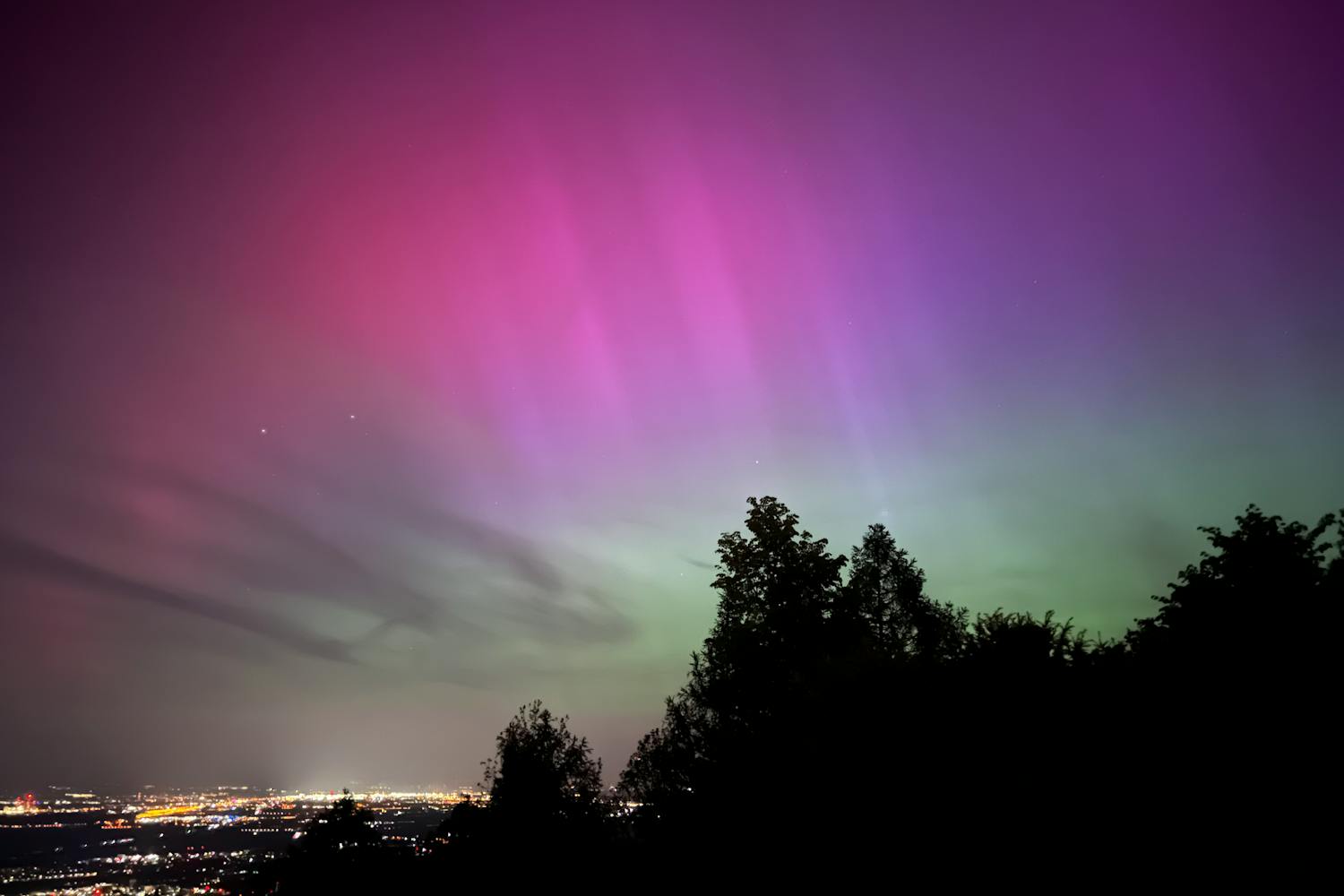
Pink tells you that the storm is energetic enough to push the display lower toward the earth, and that nitrogen is getting involved alongside the oxygen. It appears as a fringe, a border, a hem on the bottom of a green curtain. When you see it, the display is stronger than average.
It is also, in my experience, the color that photographs most unexpectedly. Guests who saw only green with their eyes come to me showing a phone screen with a vivid pink border. They assume the camera is lying. It is not.
Blue and purple: the deepest penetration
Purple appears at the very bottom edge of green curtains when auroral electrons are accelerated to very high energy and penetrate deep into the atmosphere. At these lower altitudes, molecular nitrogen radiates in blue and red, and mixing these together produces purple, according to the US National Park Service.
Blue and purple tell you that the solar particles driving the display have extraordinary energy, enough to punch through multiple atmospheric layers and reach altitudes below 100 kilometers. A blue aurora borealis tends to appear when solar activity is particularly high.
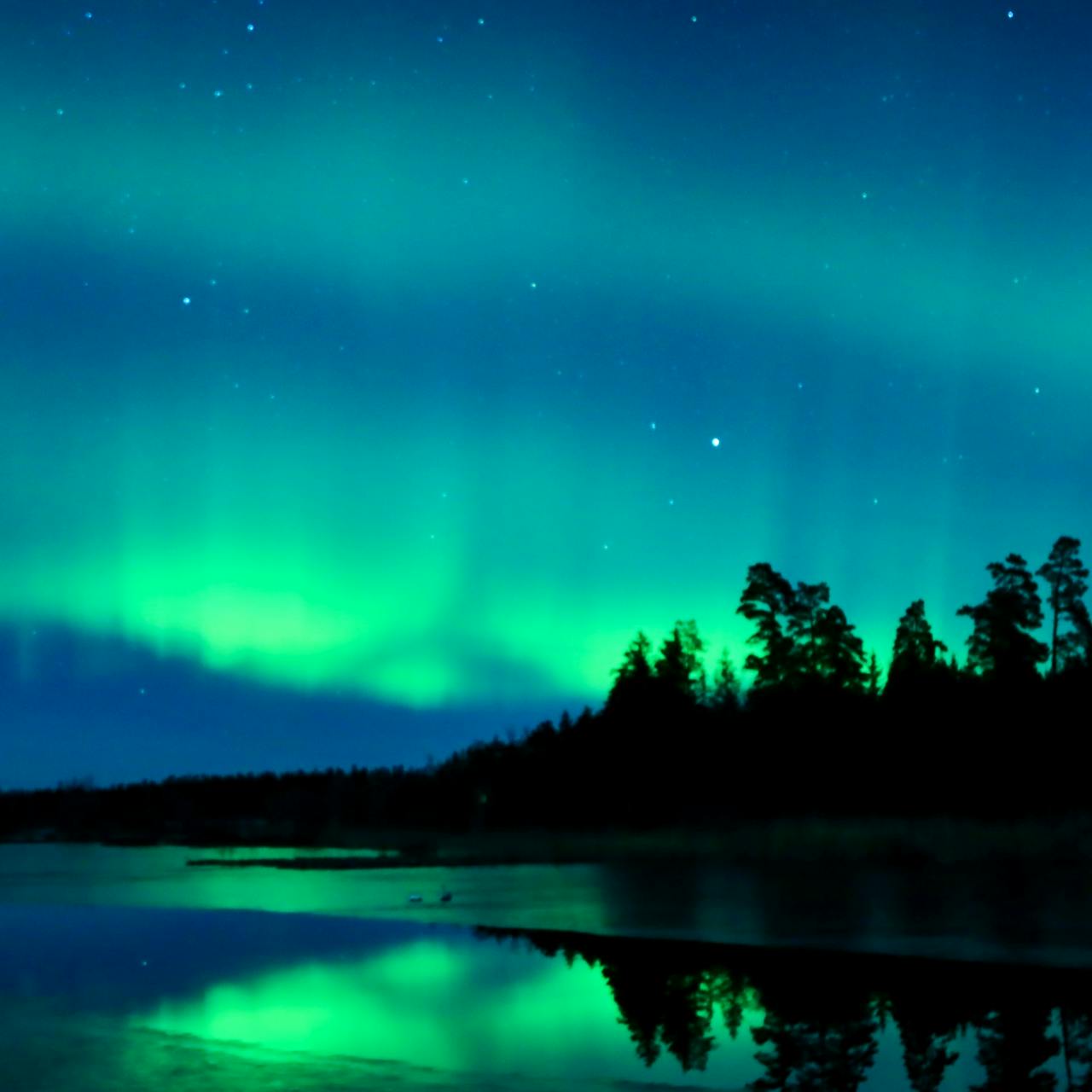
These are the colors that appear at the bottom of the display while red appears at the top. A curtain showing red at the crown and blue or purple at the hem, with green in the middle, is the full range of the atmosphere reading out in one display. It is also, objectively, one of the most spectacular things that can happen in the sky above Finnish Lapland.
I have seen it twice. Both times in February. Both times I forgot to take a photograph.
Yellow and white: the rarest mixtures
Yellow is a combination of red and green produced at different altitudes simultaneously. It is uncommon and usually appears only during the strongest geomagnetic storms.
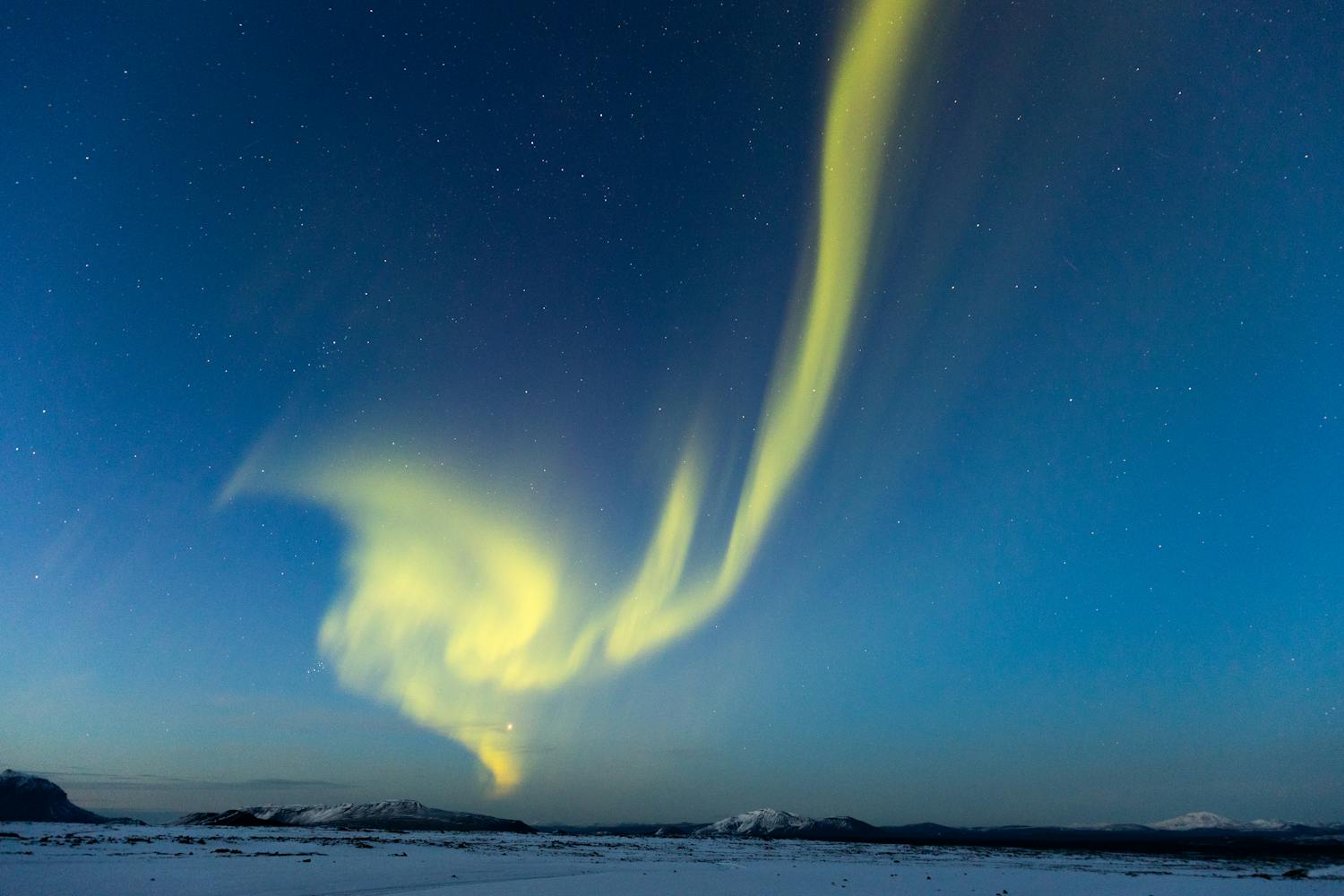
White aurora is associated with a phenomenon called STEVE, a relatively recently documented atmospheric event that produces a ribbon of white or mauve light distinct from the standard aurora. It is caused by different processes entirely and is poorly understood even now. I mention it because guests occasionally see something white and wonder if the camera has washed out the color. If it is genuinely white, it may be something science has not fully explained yet. That, I find, is rather exciting.
Why your phone sees more than your eyes
This comes up on every tour I run, and it is worth explaining properly.
The human eye in low-light conditions relies primarily on rod cells, which are not sensitive to color in the same way as cone cells. Photographic images of the Northern Lights will often show colors that were not visible at the time to the naked eye, according to The Aurora Zone. Phone cameras in particular are sensitive to wavelengths of light that the eye struggles to register in darkness, especially in the red and pink spectrum.
This means that on a night when you see only green, your phone may show pink, red, and purple layers that were genuinely there, in the atmosphere, at that moment. You were not missing them. Your eyes were simply not built for that kind of detection.
It is one of the stranger experiences in aurora watching: looking up at a green sky, then looking down at your phone screen and seeing a completely different display in multiple colors. Both are accurate. You just have different instruments.
What to do when you see color
A green display means the aurora is active and healthy. If you see pink at the lower edge, activity is above average. If you see red at the top, something significant is happening in the solar wind and you are watching something rare. If you see blue or purple at the bottom, the storm is particularly energetic. And if you see all of these at once, with the full vertical range of the atmosphere lit up in layers, you are seeing something that relatively few people on earth have ever witnessed.
The Sami had a word for a display you could hear. I sometimes think we need a word for a display that shows all its colors at once. The closest I can get in Finnish is täydellinen. Complete, whole, perfect. I have stood under that kind of sky twice. Both times it felt like something was being communicated, at enormous scale, across 150 million kilometers of space.
See every color for yourself
Reading about red aurora and seeing it are two entirely different experiences. The scarlet fringe at the top of a green curtain, reaching toward the edge of space, is the kind of thing that makes a group of strangers go completely silent at the same moment. You will understand why when it happens.
Our 12-Day Northern Lights and Scandinavia Tour puts you in Finnish Lapland for three dedicated aurora nights, in a glass igloo, on a husky sled, and deep enough into the wilderness that whatever the sky decides to do, you will see all of it. For a tailor-made itinerary built around your dates, contact us. A personal offer within 24 hours.
For everything you need to know about timing, where to go, and what affects your chances, visit our Northern Lights Travel Guide.
Hei hei from me and the team at Scandi Travel.