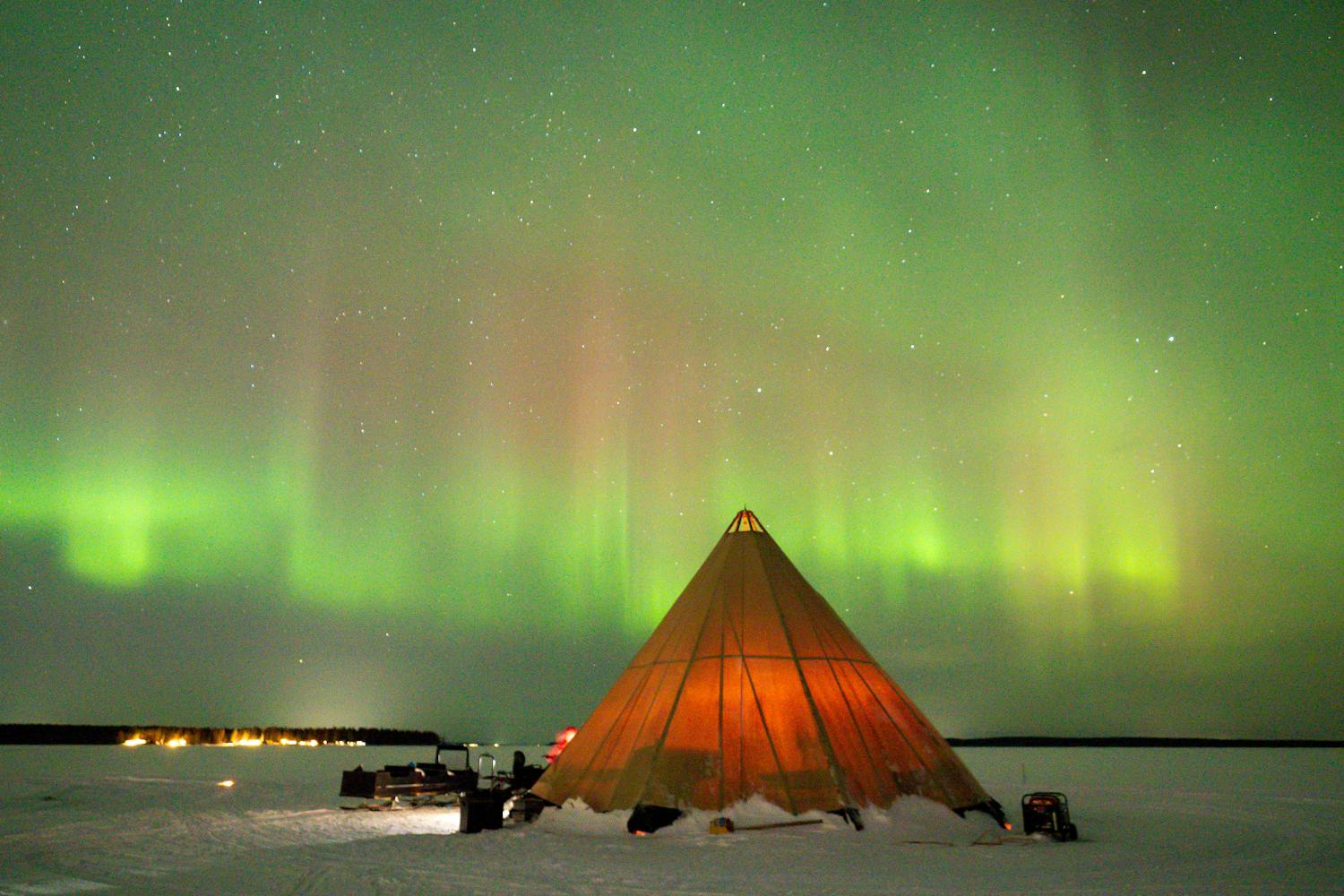
Written by Mikko Lintunen
In a nutshell
Sweden’s single decisive advantage over every other Northern Lights destination is a meteorological phenomenon called the Blue Hole above Abisko in Swedish Lapland. Surrounded by mountains, the Abisko valley sits in a rain shadow that delivers clear skies approximately 70% of the time, even when the rest of Scandinavia is under cloud. Lonely Planet has named Abisko the best place in the world for Northern Lights. The Aurora Sky Station, reached by chairlift up Mount Nuolja, offers panoramic views from above the treeline. The ICEHOTEL in nearby Jukkasjärvi is the most extraordinary accommodation in the Nordic world. The season runs September to early April. When everywhere else is clouded over, come here.
For a complete guide, visit our Northern Lights Travel Guide.
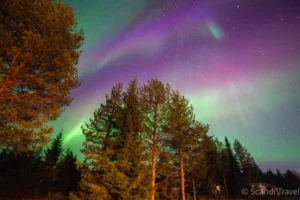
The first time I understood the Blue Hole properly, I was standing at the edge of Lake Torneträsk at around 10pm in January. To the west, over Norway, the sky was completely sealed with cloud. To the south, the same. But directly above the Abisko valley, a clear window of sky. Stars. And building slowly at the horizon, the aurora.
I have been in Lapland in winter conditions for fifteen years. I had read about the Blue Hole. I knew the meteorology. But seeing it perform for the first time, a clear patch holding its position above the valley while cloud moved in on every side, was something else. It looked deliberate. It looked like something the mountain had arranged.
This is the guide to Northern Lights in Sweden, and it is, in many ways, a guide to a single valley and what happens above it on a clear winter night.
There is a Swedish concept worth knowing before we go further: lagom. It means the right amount. Not too much, not too little. Exactly what is needed. It is one of the most specifically Swedish ideas in existence, and it applies to Abisko’s Blue Hole with remarkable precision. Not the extreme kaamos darkness of northern Finland, not the dramatic unpredictability of the Norwegian coast. Abisko delivers exactly the right conditions, reliably, night after night. Lagom.
For the full picture on timing and solar conditions across all four destinations, see our Northern Lights Travel Guide.
Why Sweden: the decisive meteorological advantage
Most aurora hunters default to Norway first. Norway is excellent. But there is a reason experienced aurora photographers know to book Sweden when the forecast looks uncertain everywhere else.
The Blue Hole is the persistent clear-sky microclimate above Abisko, created by the rain shadow effect of the surrounding Scandinavian mountains. Lake Torneträsk’s geography forces incoming weather systems to shed moisture as they descend from the Norwegian coast, leaving a zone of notably drier, clearer air above the Torneträsk basin, according to Aurora Forecast.
Both Abisko and Kiruna see aurora at KP 1, the weakest measurable geomagnetic activity level. This means you do not need a major geomagnetic storm. On most active nights throughout the aurora season, KP 1 to 2 is sufficient for overhead aurora displays.
Abisko has one of the lowest rainfall climates in the Nordic area, which means clearer nights for aurora spotting, sometimes more than two weeks of consecutive Northern Lights nights, according to Swedish Lapland.
When the guides in Tromsø drive east to find clear sky, they are often heading for the Finnish interior. When photographers in Finnish Lapland are waiting out a cloudy week, the ones who know Abisko are already there. The Blue Hole is not a myth. It is the entire reason the Aurora Sky Station was built in this specific location.
The locations
Abisko: the best statistical aurora location in Scandinavia
Abisko is a small village and national park in Swedish Lapland, approximately 100 kilometers west of Kiruna. Lonely Planet has named Abisko the best place in the world for Northern Lights experiences. Its location within the Northern Lights oval, minimal light pollution, and clean dry air, combined with the Blue Hole microclimate, create optimal conditions, according to Kiruna Lapland.
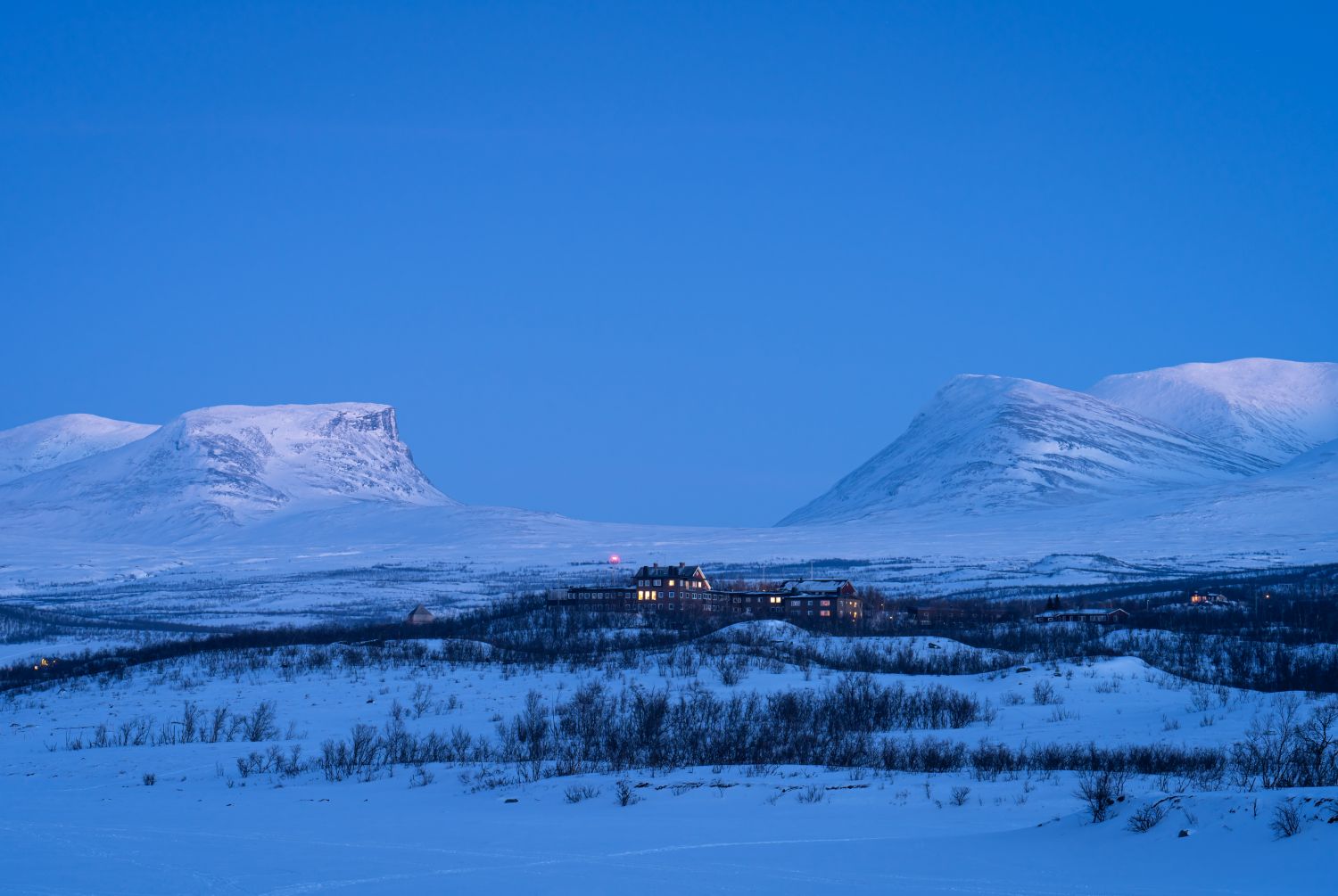
The STF Abisko Tourist Station sits directly at the foot of the chairlift to the Aurora Sky Station and has its own train stop on the Arctic railway from Stockholm. You can take a night train from Stockholm, step off the train at dawn, and be watching the aurora from the same spot twelve hours later.
I have done that journey. It is worth doing for the train alone.
The Aurora Sky Station: above the treeline
The chairlift up to the Aurora Sky Station on Mount Nuolja takes approximately twenty minutes and offers panoramic views from the observation tower, a Northern Lights exhibition, and a café to warm up in between viewings, according to Visit Sweden.
From here the horizon is wider, the sky is larger, and the sense of exposure to the Arctic night is more complete than anything available at valley level. Guided tours from the Abisko Tourist Station include the chairlift, warm clothing rental, and photography assistance.
The café at the Sky Station serves fika while you wait. There is something specifically Swedish about sitting with coffee and a piece of cardamom cake at 900 meters elevation in the Arctic dark, watching for the aurora through a panoramic window.
Kiruna: the practical base
Kiruna is Swedish Lapland’s largest town, sitting at approximately 67.9°N, with direct flights from Stockholm in ninety minutes. The Institute for Space Physics has its headquarters just outside Kiruna city centre, with a Northern Lights all-sky camera that takes images of the entire Kiruna sky in real time, updated every minute and accessible online.
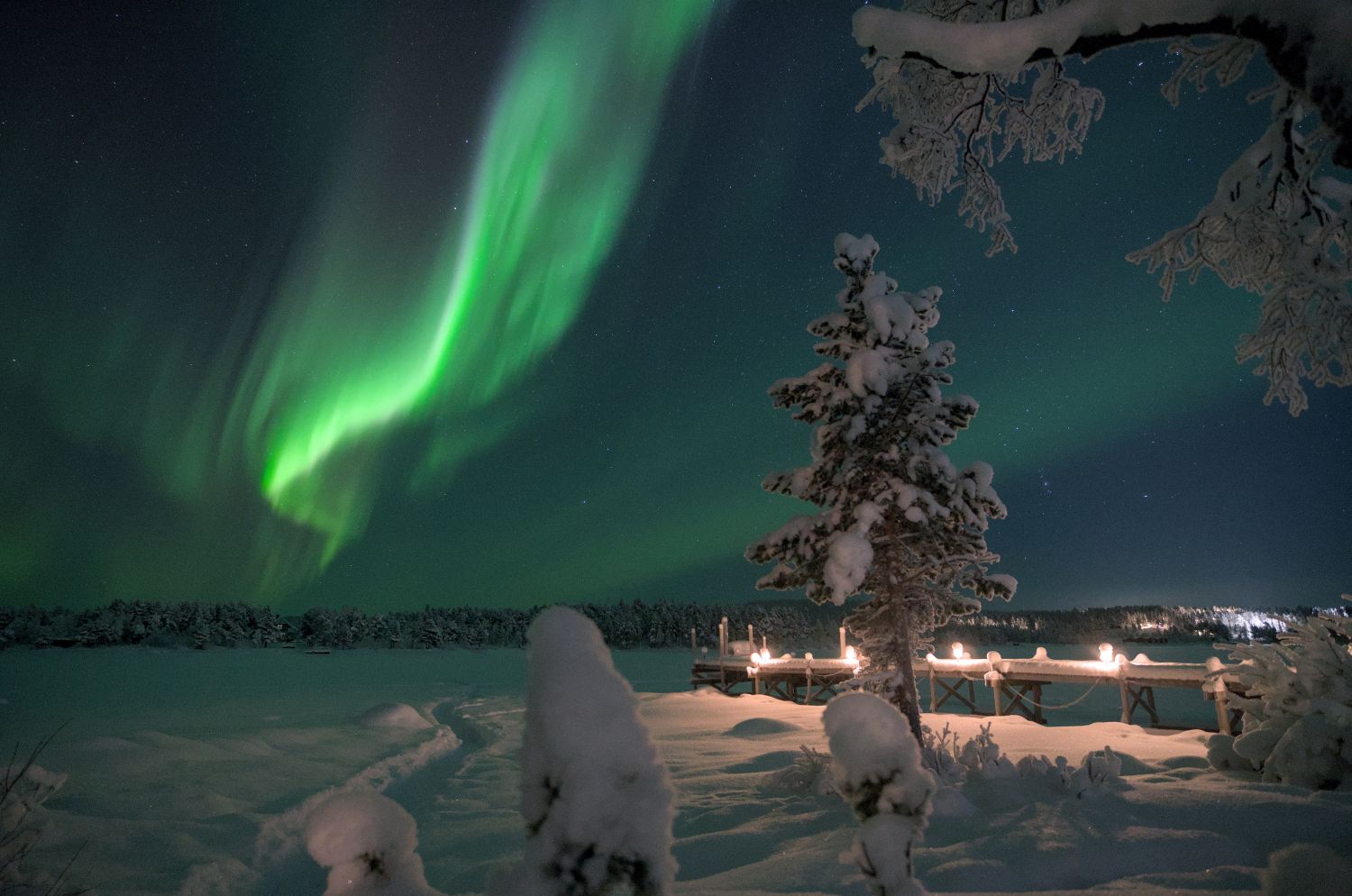
Camp Ripan, on the outskirts of Kiruna, is a spa hotel with an outdoor pool from which guests frequently see the Northern Lights overhead. The combination of warm water, sub-zero air, and aurora above is a Swedish variant of the Finnish hot tub experience, and equally unreasonable in the best possible way.
Jukkasjärvi and the ICEHOTEL
Jukkasjärvi is a village 20 kilometers from Kiruna and the location of the ICEHOTEL, one of the most extraordinary pieces of accommodation in the world. The hotel is constructed entirely from ice each winter and contains hotel rooms, a bar, and art exhibitions. Guests who go outside frequently see the Northern Lights. A permanent warm section adjoins the ice structure for those who want the experience without sleeping at -5°C.
I have stayed in the ICEHOTEL once, in a room designed around the theme of the arctic fox. The aurora appeared at around 1am through the small window above the bed. I am not sure I would describe what followed as sleeping.
When to go
Sweden’s aurora season runs from late September to early April. September, October, and March usually see the strongest and most vivid Northern Lights.
- September and October offer the equinox advantage with geomagnetically active skies and the first proper darkness after the midnight sun. For a full month-by-month breakdown, see our Best Time to See the Northern Lights guide.
- December through February offers the longest nights, the deepest cold, and the best combination of extended darkness and Blue Hole reliability. January and February are the months when Abisko performs most consistently.
- March brings the spring equinox surge and continued strong aurora potential. March is also when the night train south from Abisko to Stockholm carries guests who look noticeably different from when they arrived. Something about the Arctic does that.
The most active viewing window each night is typically between 9pm and 11pm, though displays can run from late afternoon in deep winter through to 2am.
Getting there: the night train
The Arctic Circle train from Stockholm to Kiruna and Abisko is one of the great Nordic journeys. Seventeen hours overnight, through the Swedish interior, arriving in Lapland in the morning. The train stops directly at the STF Abisko Tourist Station.
I recommend the night train over the flight to Kiruna for any trip where schedule allows. It is the slower option. It is also the better one.
What to combine with the lights
Swedish Lapland’s winter programme combines aurora hunting with husky safaris, reindeer experiences, snowmobile tours, Sami cultural encounters around Kiruna, and skiing at Riksgränsen, the most northerly ski resort in Sweden.
Our 12-Day Northern Lights and Scandinavia Tour covers Stockholm, Tallinn, Helsinki, Finnish Lapland, and Turku, running December through March. For a dedicated Swedish Lapland Northern Lights trip focused on Abisko, contact us and we will have a personal offer to you within 24 hours.
Northern Lights in the rest of Scandinavia
Sweden is one of four destinations where serious aurora hunters go. Each has its own character.
- Finland and Lapland offers the most stable overall conditions and the most complete winter activity programme. We have a full guide to Northern Lights in Finland and Lapland.
- Norway offers the most dramatic fjord landscapes, from Tromsø to the Lyngen Alps to Senja. More theatrical than Sweden, less reliably clear. We have a full guide to Northern Lights in Norway.
- Iceland is unlike anywhere else: volcanic, glacial, with lights reflecting off icebergs at Jokulsarlon and rising above black sand beaches. We have a full guide to Northern Lights in Iceland.
The sky is clear above Abisko
While the rest of Scandinavia waits under cloud, the Blue Hole holds. Stars appear above the Torneträsk basin. The chairlift carries you up above the treeline. And then, quietly at first, the aurora begins to build on the northern horizon.
That is Abisko in winter. Statistically the clearest aurora sky in Scandinavia. And one of the most beautiful places on earth to spend a night looking up.
Our 12-Day Northern Lights and Scandinavia Tour passes through Stockholm, the starting point for the overnight Arctic train north into Swedish Lapland. For a dedicated Abisko experience, with more nights under the Blue Hole, the Aurora Sky Station, and the ICEHOTEL at Jukkasjärvi, contact us and we will build the itinerary around you. A personal offer within 24 hours.
For the complete guide to timing, solar conditions, and how Sweden compares to the other three destinations, visit our Northern Lights Travel Guide.