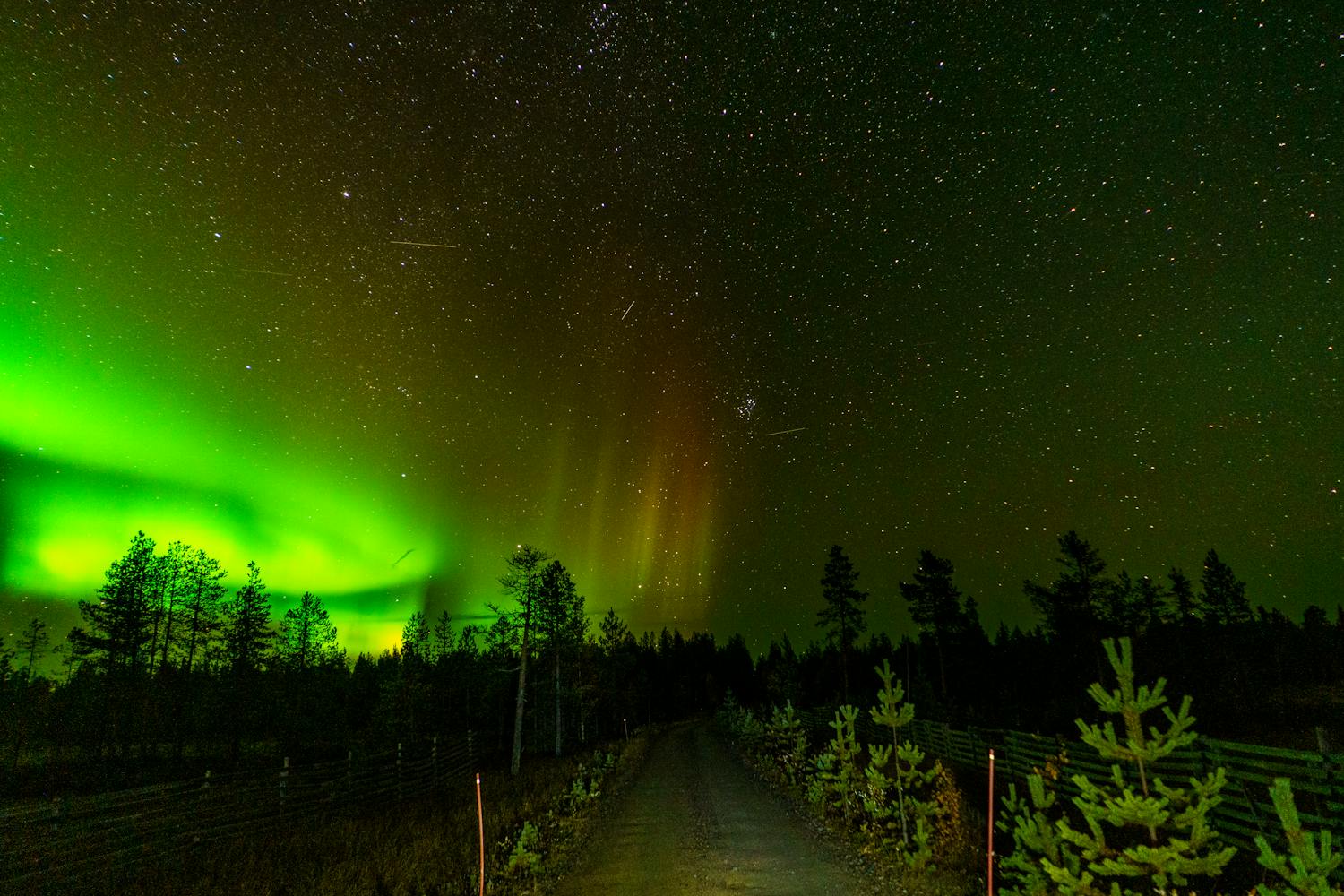
Written by Mikko Lintunen
In a nutshell
Finnish Lapland offers the most statistically reliable Northern Lights viewing of any Scandinavian destination. In northern Lapland around Inari and Kilpisjärvi, the aurora is visible on four nights out of five on average, according to the Finnish Meteorological Institute. The landscape is vast, flat, and dark, with no mountains to create unpredictable coastal weather. The glass igloo experience began here. The husky safari began here. The reindeer farm, the icebreaker, the Santa Claus Express overnight train: all of it is here. The season runs September to March. This is my home. Here is how to see it properly.
For a complete guide, visit our Northern Lights Travel Guide.
There is a Finnish concept I have been thinking about for a while and never quite found the right place to introduce: hiljaisuus. It means silence. Not the absence of something, not a gap between sounds, but silence as a thing in itself. A quality. A presence. Finns treat silence the way other cultures treat conversation: as something worth seeking, worth protecting, worth sharing.
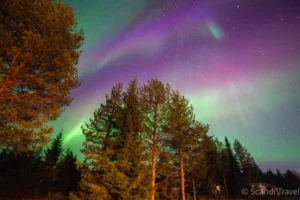
I was standing on the ice of Lake Inari at around 11pm last February when I understood exactly why that word exists. No wind. No road noise. No other people within several kilometers. The temperature was -22°C. The aurora had been building for twenty minutes and was now filling the sky overhead, and the only sound was the occasional settle of the ice beneath my feet. That was hiljaisuus. That was Finnish Lapland being exactly what it is.
Hei. I’m Mikko Lintunen and I work for Scandi Travel. I have been running Northern Lights tours across Scandinavia since 2010. Finland is where I am based. It is the destination I know better than anywhere else, and the one I am most honest about, precisely because I know it so well. Here is everything you need to know.
For the full picture on timing, solar conditions, and the current solar maximum window, see our Northern Lights Travel Guide.
Why Finland for Northern Lights
The case for Finnish Lapland starts with a single practical advantage: the sky.
Norway is more dramatic. Iceland is more extraordinary. Finland is more reliable. The landscape is flat, open, heavily forested, and sparsely populated. There are no coastal mountain ranges creating unpredictable weather systems. The aurora oval passes directly over the northern part of the country. In Finnish Lapland, the auroras can appear on roughly 200 nights a year, according to Finland Trains.
Finland sits on the southern rim of the auroral oval. The probability of seeing auroras is best in the northernmost part of the country, in Lapland. During geomagnetic storms the auroral oval expands southward and then auroras are seen also in Central and Southern Finland, according to the Finnish Meteorological Institute.
The practical consequence of this geography: when Norwegian guides drive east to find clear sky, they are often heading toward Finland. When the coast is clouded in, the interior of Lapland frequently is not.
Finland also offers something the other three destinations cannot match for sheer completeness of winter experience. The glass igloo. The husky sled. The reindeer farm. The icebreaker. The overnight train through the Arctic. These are not add-ons. In Lapland, they are the structure of the trip, with the Northern Lights arriving as the natural centrepiece.
The locations
Rovaniemi: the gateway to Lapland
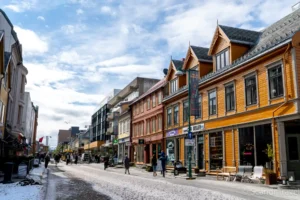
Rovaniemi sits directly on the Arctic Circle at 66.5°N. It is the capital of Finnish Lapland, the home of Santa Claus Village, and the starting point for most Northern Lights trips in Finland. In Rovaniemi, the aurora appears on every third night on average. That is a good baseline for a short trip. With five nights in Rovaniemi, your chances of at least one sighting are strong. With a week, they are very good indeed.
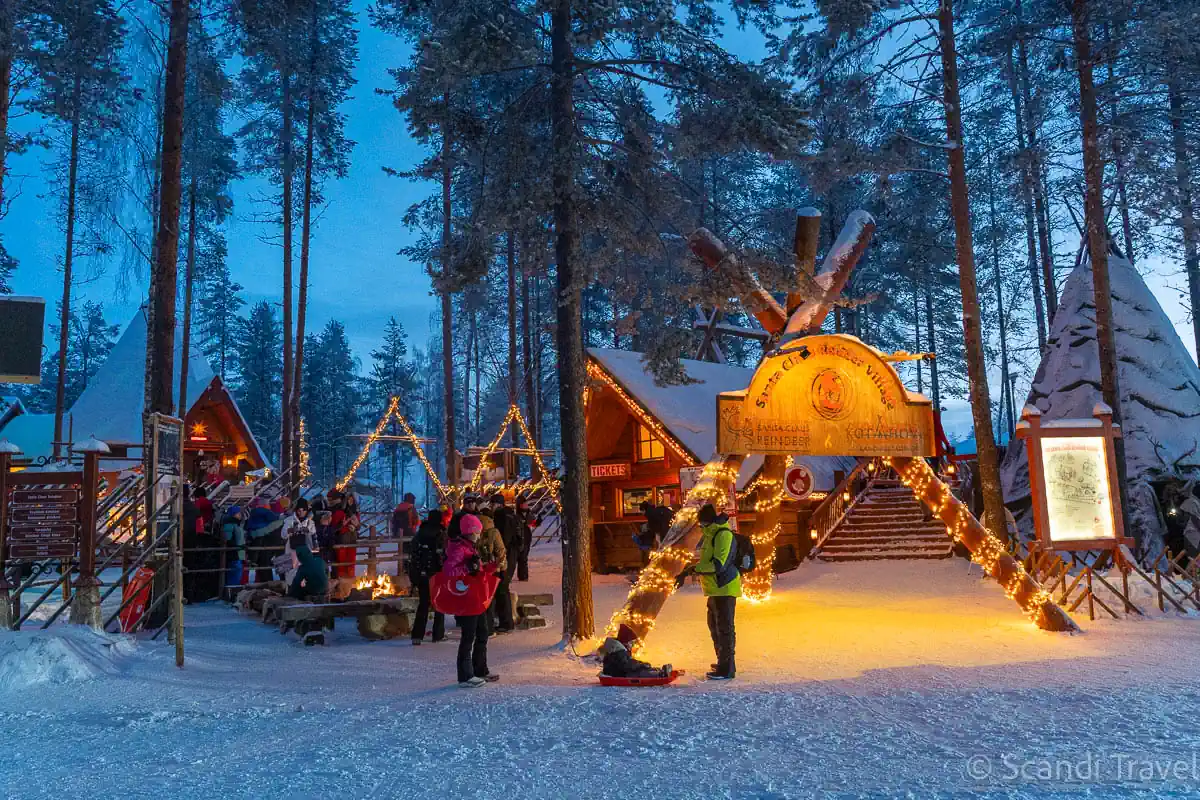
What Rovaniemi offers beyond the lights: the Arctic TreeHouse Hotel with floor-to-ceiling windows facing the northern sky. The Santa Claus Express overnight train from Helsinki, arriving in the morning after travelling the length of Finland through the night. The husky safari into the forest. The reindeer farm. The Arctic Circle crossing with its certificate. And, for those arriving in December, the complete theatre of a Finnish Lapland Christmas.
The practical advice about Rovaniemi: drive or walk ten minutes north of the town centre and the light pollution drops away. The city is small enough that escaping it is easy. Most guided aurora tours from Rovaniemi take you into the wilderness within thirty minutes.
Saariselkä and Kakslauttanen: the glass igloo heartland
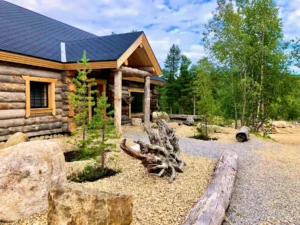
Saariselkä is a resort village in northern Lapland, roughly two hours by road north of Rovaniemi. It is where the glass igloo experience, now replicated across all of Scandinavia, was first developed. The Kakslauttanen Arctic Resort at Saariselkä has little to no light pollution, according to Drone and DSLR. The glass igloos sit in the forest. You lie in bed looking up through a thermally heated glass ceiling at whatever the sky is doing. When the aurora appears, the alarm calls you.
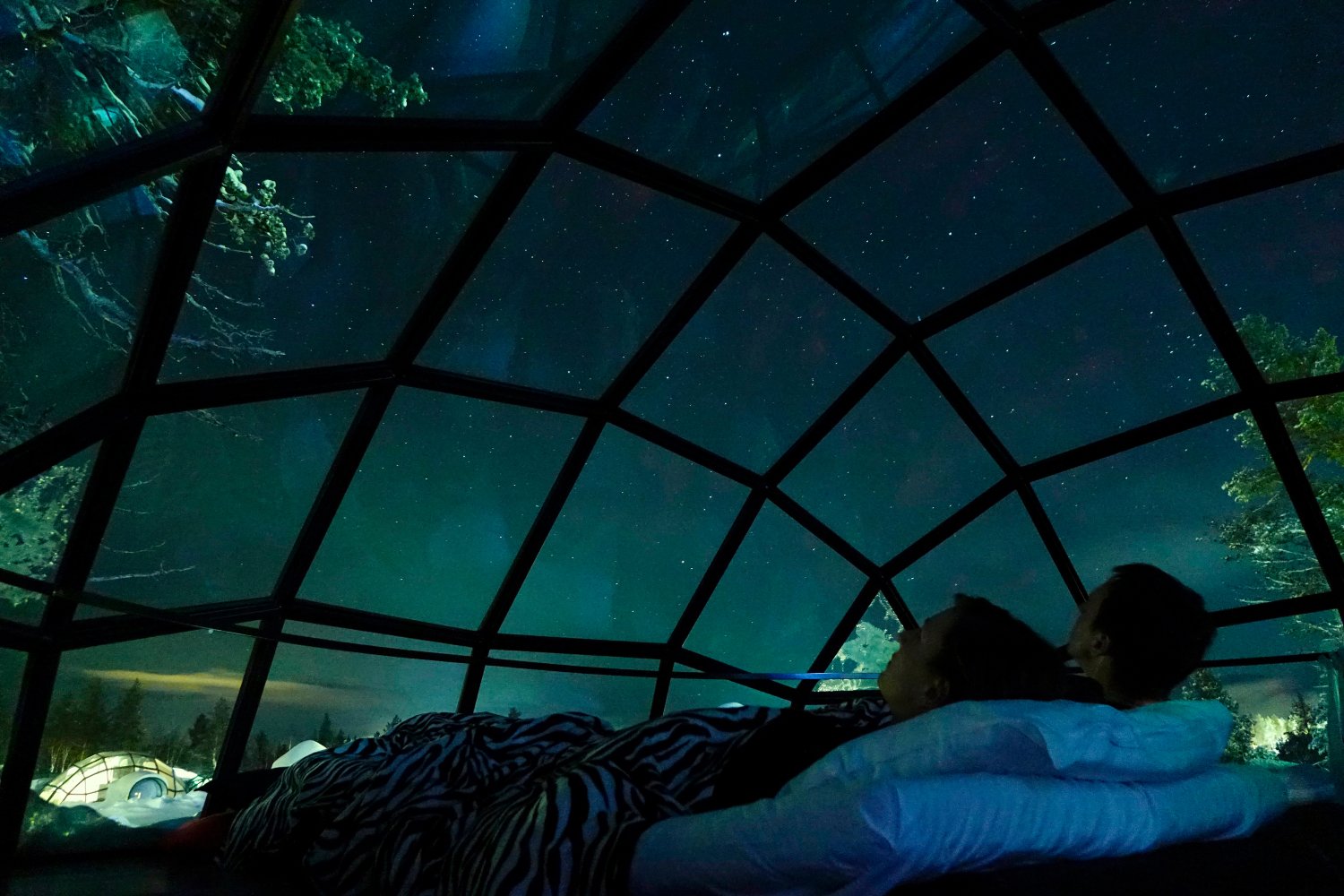
I have been asked many times whether the glass igloo is worth it compared to simply going outside. My honest answer: they are different experiences. Outside in the cold, you feel the full weight of the Arctic night. In the igloo, warm, looking up through glass, you feel something else: the sense that the sky is performing specifically for you. Both are worth having.
Glass igloo stays in Finnish Lapland sell out months in advance, particularly between December and March. Book early.
Inari and Lake Inari: the best statistics in Finland
Inari sits at 68.9°N in the very north of Finnish Lapland, around 45 minutes by road north of Ivalo. Inari, Kilpisjärvi, and Utsjoki are the areas of best opportunity in Finland, with the aurora visible on four nights out of five on average.
Lake Inari is Finland’s third largest lake and one of the finest Northern Lights viewing locations in the country. Standing on the frozen surface in February with open sky in every direction and no light source for kilometers is the experience I described at the beginning of this guide. The silence there is complete. The view is unobstructed. When the aurora is active, the reflection on the ice adds a second display below your feet.
Inari is also the cultural heart of the Sami people in Finland. The Siida museum, which documents Sami life and culture, is worth a full afternoon. The connection between the Sami and the Northern Lights runs deep: they named them guovssahas, the light you can hear. They understood something about the aurora that science only confirmed a century later.
Kilpisjärvi: Finland’s northwestern corner
Kilpisjärvi sits at 69°N on Finland’s northwestern tip, on the border with Norway. It is the highest point in Finnish Lapland and one of the most reliably clear-sky locations in the country.
When weather systems push cloud into northern Norway, they frequently stall against the fell country around Kilpisjärvi. The aurora guides who know this region say something I have heard many times and believe completely: when it is overcast in Tromsø, they drive to Kilpisjärvi.
The village itself is tiny and remote. Accommodation is limited and must be booked well in advance. The reward is a sky that clears more reliably than anywhere else at comparable latitude in Finland.
Levi: for skiing and the lights together
Levi is Finland’s most popular ski resort, located at around 68°N in northwestern Lapland. The likelihood of seeing the aurora at Levi and the surrounding area is approximately 65 to 75%, according to Spend Life Traveling. The town of Ylläs near Levi even dims its streetlights during aurora season to reduce light pollution, according to Finland Trains. The Levi Igloos sit on Utsuvaara fell, ten kilometers from the resort, with glass-roofed cabins and a Northern Lights House with a private outdoor hot tub.
I send guests to Levi when they say they want skiing by day and the lights by night and do not want to choose between them. Most come back saying the aurora was the part they remember most. I find this satisfying.
Kemi: the icebreaker experience
Kemi is on the Gulf of Bothnia in southern Lapland. I include it because of one experience it offers that exists nowhere else in the world: the Sampo icebreaker.
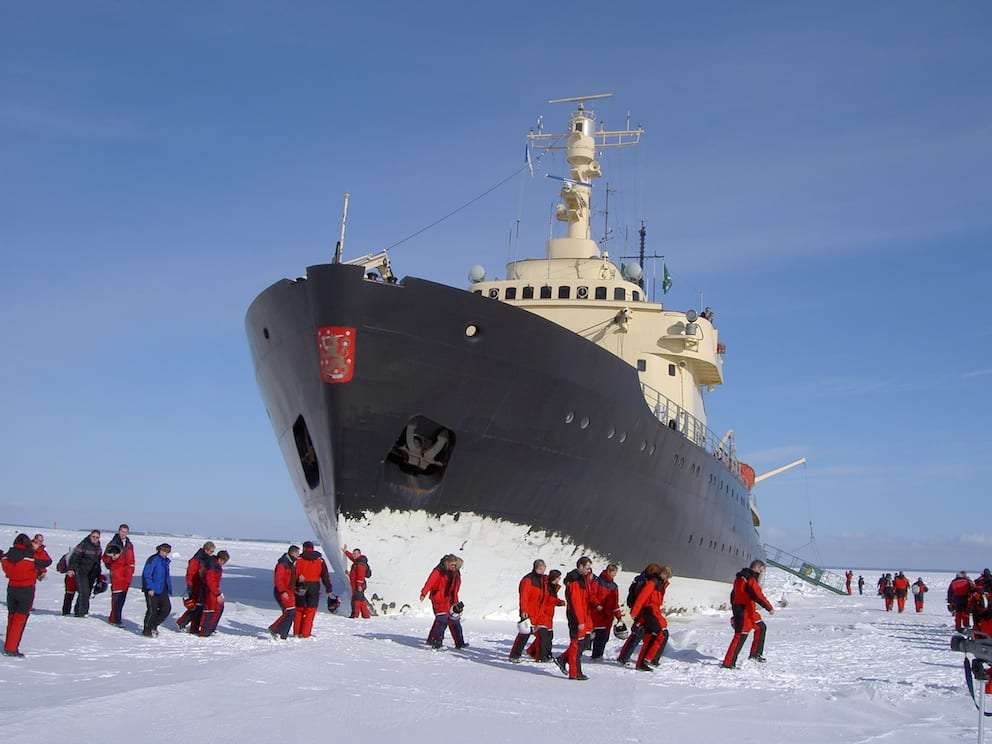
The Sampo is a working Finnish state vessel turned tourism experience. It sails out into the Gulf of Bothnia through ice up to a meter thick, and at some point during the voyage you are invited to put on a thermal dry suit and get into the water. The broken ice floats around you. When the conditions cooperate, the Northern Lights are overhead.
Our 7-Day Lapland Northern Lights Tour includes the icebreaker cruise from Kemi. It is the most specifically extraordinary single experience in Finnish Lapland.
When to go
Finland’s aurora season runs from late September to mid-March, when nights are dark enough for viewing.
- September and October bring the first proper darkness after the midnight sun, the equinox effect driving elevated geomagnetic activity, and the colors of the ruska, the Finnish autumn, still visible on the landscape. The combination of autumn color by day and Northern Lights by night is something specific to early-season Lapland. For a full breakdown of the equinox advantage and solar maximum window, see our Best Time to See the Northern Lights guide.
- November through January offers the deepest kaamos, the Finnish polar twilight, when in the very north the sun does not rise for weeks at a time. Only four to five hours of twilight each day. The darkness is comprehensive and the aurora season is at its most intense.
- February and March are my personal recommendation for a first trip. Skies tend to be clearer than December and January in inland Lapland, temperatures are still properly Arctic, the snow is deep, and the days are beginning to lengthen in a way that makes the combination of daylight activities and evening aurora hunting feel well-balanced.
The optimal viewing window each night is from around 9pm to 2am, with midnight the most statistically active period.
The Finnish advantage: what the statistics mean in practice
I want to address a question guests often ask: is it really worth going further north than Rovaniemi?
The answer is yes, clearly. In Rovaniemi the aurora appears on every third night on average. In Inari, Kilpisjärvi and Utsjoki, that rises to four nights out of five. On a five-night trip, the difference between one-in-three odds and four-in-five odds is the difference between hoping and expecting.
The other Finnish advantage is the weather pattern. Finnish Lapland’s inland position means it does not receive the rapid, complex weather systems that hit the Norwegian and Icelandic coasts. Cloud cover comes and goes, but it tends to move more predictably than it does near the sea. Aurora guides in Lapland will often know by mid-afternoon whether that evening looks promising.
This is the reason I call Finland the most reliable destination. Not because the lights are guaranteed: nothing about the aurora is guaranteed. But because the conditions for seeing them are more consistently available here than anywhere else in Scandinavia.
What to combine with the lights
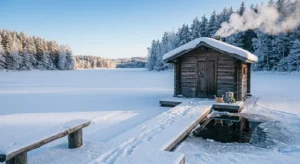
Finnish Lapland’s winter programme is the most complete of any aurora destination. Husky safaris, reindeer sleigh rides, snowmobile tours, the Santa Claus Village in Rovaniemi, the icebreaker in Kemi, the Sami cultural experiences in Inari, cross-country skiing through forests that have not been disturbed in decades. And the Finnish sauna, always the Finnish sauna: the specific warmth of it after standing outside in -20°C watching the sky is something I cannot adequately describe to anyone who has not experienced it.
Our 12-Day Northern Lights and Scandinavia Tour builds Finnish Lapland into a wider Scandinavian itinerary covering Stockholm, Tallinn, Helsinki, Rovaniemi, and Turku, running December through March. From €4,915 per person. The glass igloo night in Lapland and the husky safari are both included.
Northern Lights in the rest of Scandinavia
Finland is one of four destinations where serious aurora hunters go. Each has its own character and reasons to choose it.
- Norway offers the most dramatic fjord landscapes, from Tromsø to the Lyngen Alps to Senja. More theatrical than Finland, less reliably clear. We have a full guide to Northern Lights in Norway.
- Iceland is unlike anywhere else: volcanic, glacial, with lights reflecting off icebergs at Jokulsarlon and rising above black sand beaches at Reynisfjara. We have a full guide to Northern Lights in Iceland.
- Sweden has Abisko and the Blue Hole, a microclimate that delivers clear skies around 70% of the time, making it the single most statistically reliable viewing spot in all of Scandinavia. We have a full guide to Northern Lights in Sweden.
The lights are waiting!
Imagine waking to an alarm that means one thing only. You step outside the glass igloo into Arctic silence and the sky is moving. Green curtains ripple from horizon to horizon. The snow glows.
That is Finnish Lapland in winter. That is what we have been building for you.
Our 12-Day Northern Lights and Scandinavia Tour takes you from the medieval streets of Stockholm and Tallinn through Helsinki, then north on the Santa Claus Express overnight train into the Arctic. Husky safaris, reindeer sleigh rides, an Arctic Circle crossing, and a glass igloo night under the Lapland sky await.
For something more immersive, our 7-Day Lapland Northern Lights Tour includes the Sampo icebreaker: you, a dry suit, and the Gulf of Bothnia breaking open around you while the lights appear overhead.
For a complete guide to timing, solar conditions, and what makes Finnish Lapland the most reliable aurora destination in Scandinavia, visit our Northern Lights Travel Guide.
For a tailor-made Finnish Lapland itinerary built around your dates, contact us. We will have a personal offer to you within 24 hours.