Written by Mikko Lintunen
In a nutshell
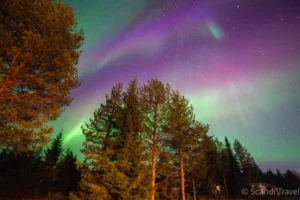
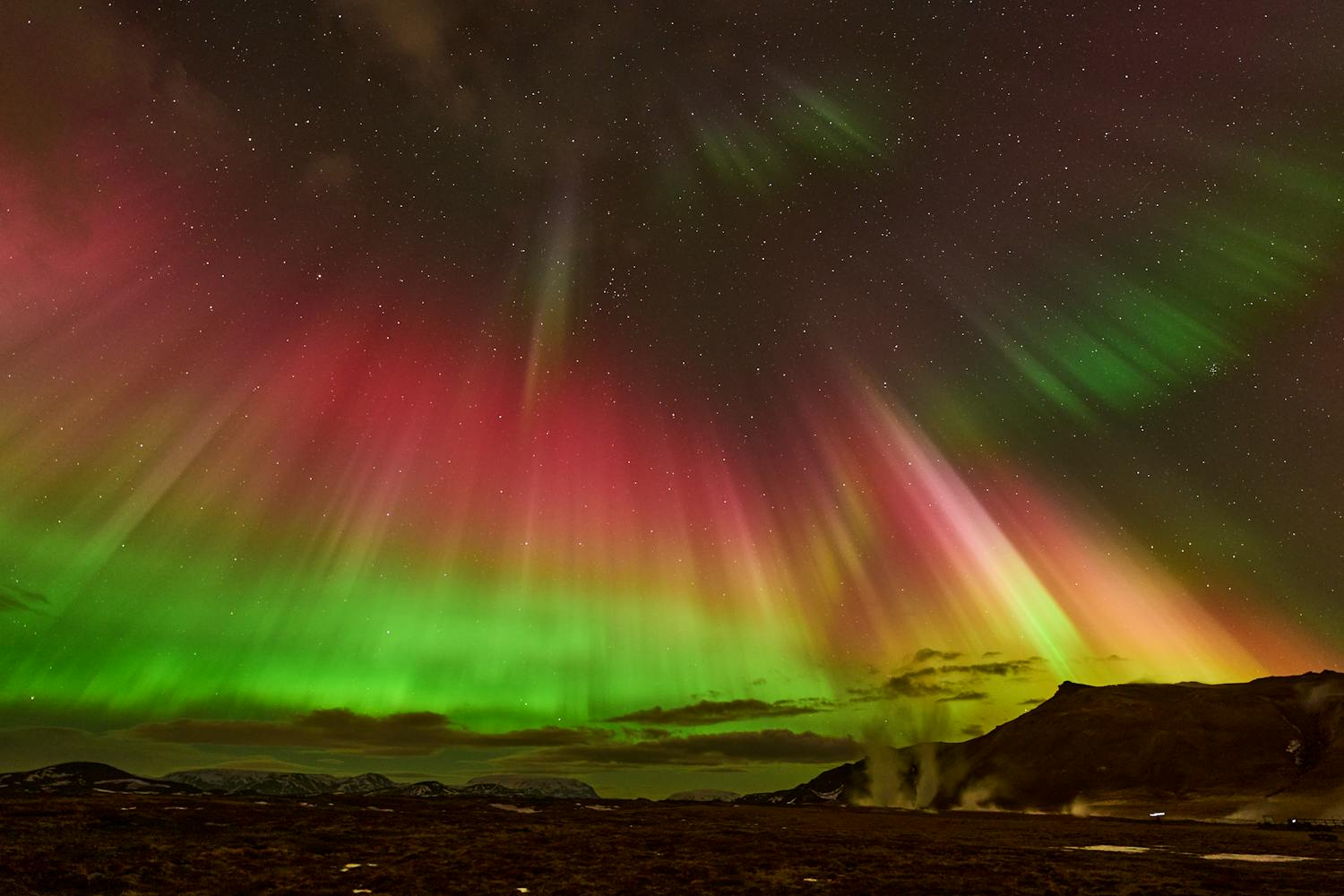
Iceland sits directly beneath the auroral oval and offers the most visually dramatic Northern Lights backdrops on earth: lights over lava fields, reflected in glacier lagoons off floating icebergs, above black sand beaches with sea stacks rising from the surf. The season runs September to April, with February consistently delivering the best combination of aurora activity and stable weather. Tour companies in Iceland often report 90% success rates during peak months with 5 to 7 nights. The weather is unpredictable and fast-changing. The Icelandic approach to this is one word: þetta reddast. It will all work out.
For a complete guide, visit our Northern Lights Travel Guide.
I have watched the Northern Lights from the edge of the Jokulsarlon Glacier Lagoon in southern Iceland at midnight, with a full display overhead and its reflection shimmering in the water below, broken up and rearranged by the slow drift of the icebergs. I spent about fifteen minutes just standing there before I remembered I had a camera.
Iceland does something to aurora viewing that no other destination manages. It gives the lights impossible things to land on.
I have been taking guests to Iceland since 2010, and the question I hear most often after a Northern Lights night in Iceland is not “can we go again tomorrow?” It is “why does it look different here than everywhere else?” The answer is the landscape. Iceland is volcanic, glacial, oceanic, and black-sanded. It is unlike anywhere in the Nordic world. And so, consequently, is the aurora.
In Icelandic, the Northern Lights are called norðurljós: north lights, the same directness as the Norwegian nordlys. But there is a phrase Icelanders use more broadly that I think applies perfectly to aurora hunting: þetta reddast, which translates roughly as “it will all work out.” It is a national outlook, a cultural comfort, a deep belief that things have a way of resolving themselves. I have met guides in Iceland who say it about the weather every evening before a tour. Most of the time they are right.
For the full picture on solar conditions and timing across all four Scandinavian destinations, see our Northern Lights Travel Guide.
What Iceland does differently
Every Northern Lights destination offers dark sky and latitude. Iceland offers those things plus a landscape so geologically active and visually extreme that the aurora looks different here than anywhere else.
At the Jokulsarlon Glacier Lagoon, the Northern Lights reflect off glowing blue icebergs and black sand, making it one of the most photogenic aurora spots in the world. At Reynisfjara, the lights appear above black volcanic sand and the Reynisdrangar sea stacks, columns of basalt rising from the Atlantic. At Thingvellir, you are standing on the actual boundary between the North American and Eurasian tectonic plates, watching the sky move above a geological feature so significant it has its own UNESCO designation.
Iceland also has something no other aurora destination on earth offers: the chance to wait for the lights in a geothermal pool at 38 degrees Celsius while the temperature outside drops below freezing. The Blue Lagoon, the Myvatn Nature Baths, the hot pots of Reykjavik’s public pools. Wherever you are in Iceland, there is almost always warm water nearby.
And in very strong displays, the lights can appear from Reykjavik itself, a capital city of 200,000 people. That does not happen often, and the city light pollution limits what you see. But it happens. I have seen it.
The locations
Thingvellir National Park: the closest and the most significant
Thingvellir National Park sits just 28 miles from Reykjavik and offers dark skies and easy access. The open rift valley and surrounding lakes create stunning reflections of the aurora. It is also one of the three main stops on the Golden Circle route, which means you have already seen the landscape in daylight and can appreciate the scale of it at night.
Thingvellir is where Iceland’s parliament, the Althing, met from 930 AD onward: one of the oldest parliamentary traditions in the world, conducted in the open air, in a rift valley between two continents. Standing there at night with the lights above and the history beneath is something specific to Iceland and nowhere else.
Jokulsarlon Glacier Lagoon: the most extraordinary backdrop on earth
This glacial lagoon in southern Iceland is often cited as one of the best places to see the Northern Lights. The lights in the sky reflect in the glacial waters, doubling the display. The adjacent black sand beach of Breidamerkursandur is also brilliant: the lights bounce off the icebergs on the sand, creating a unique kaleidoscopic effect. The lagoon is five hours from Reykjavik, which means either a very long drive or an overnight stop in the south. It is worth the overnight stop.
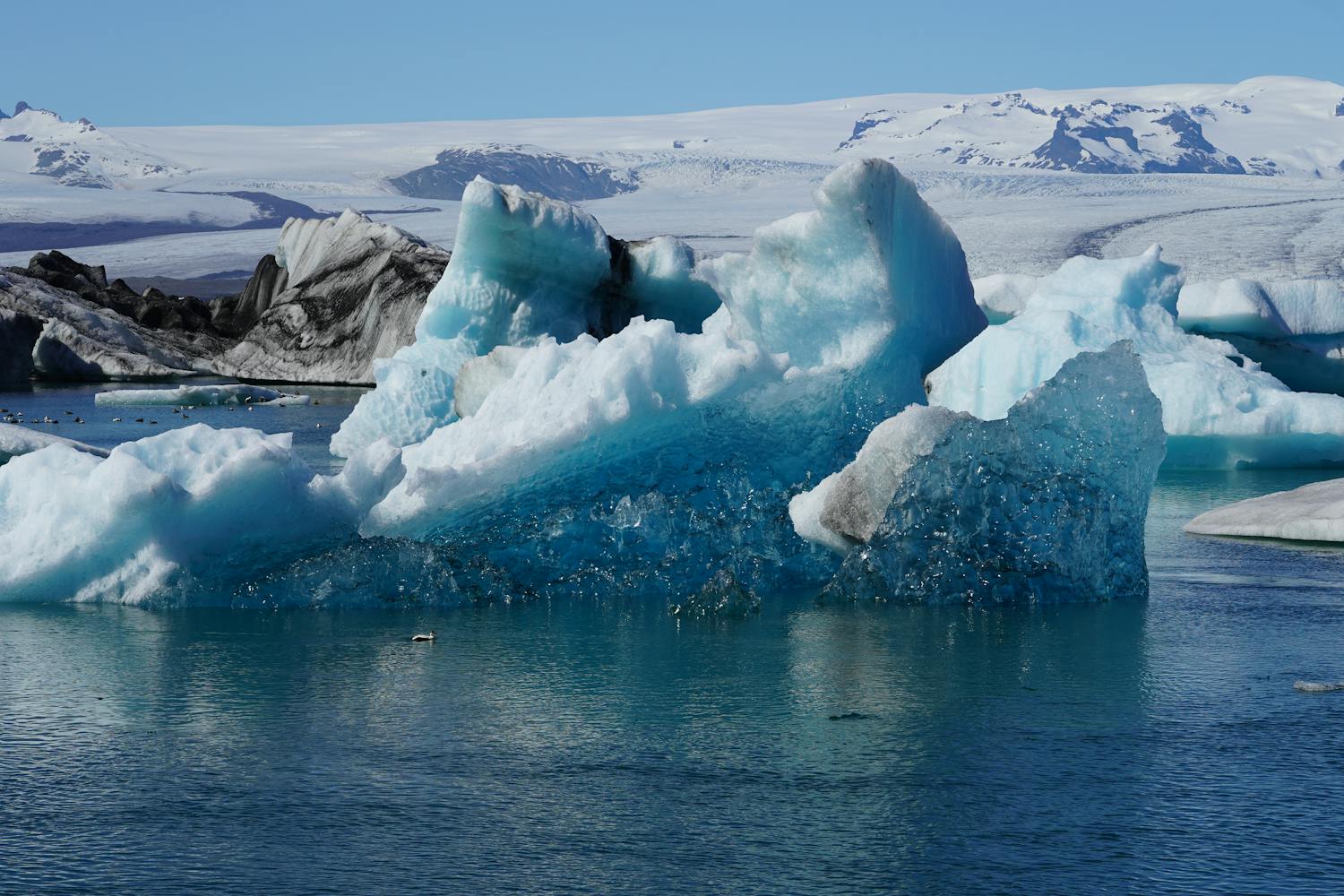
I have been to Jokulsarlon four times. Once with no lights at all. Once with a faint green shimmer I would not have seen without my camera. And twice with displays that were, genuinely, the most visually complete aurora experiences I have had anywhere in the world. The icebergs move slowly as you watch. The lights move quickly above them. The combination is unreasonable.
The Snaefellsnes Peninsula: Iceland in miniature
Often called “Iceland in miniature,” the Snaefellsnes Peninsula has lava fields, glaciers, and rugged coastlines with little light pollution, making it one of the best areas for aurora hunting. The iconic Kirkjufell mountain is the most photographed mountain in Iceland. On a clear night with aurora, the image of the lights arching above the distinctive peak has been shared millions of times. Every photographer who visits has the same plan. Which means you will have company at the usual viewpoints.
I mention this not to discourage a visit to Kirkjufell, which is genuinely extraordinary, but to suggest exploring the rest of the peninsula rather than simply joining the queue at the most famous spot. The coastline west of Grundarfjordur is darker, quieter, and often equally spectacular.
Vik and Reynisfjara: the south coast
Vik, with its black sand beaches and basalt columns, provides Northern Lights hunters with a stunning backdrop, just a few hours drive south from Reykjavik via the Ring Road. The Reynisdrangar sea stacks, three columns of basalt that Icelandic legend says are trolls turned to stone by the sunrise, rise from the water directly offshore.
The south coast combines two things that work well together: a Ring Road that lets you drive east or west to find clear sky, and a series of landscapes so dramatic that waiting for the aurora is its own reward regardless of what the sky does.
The Westfjords: the most remote option
The Westfjords and North Iceland regions sit slightly further north than Reykjavik, which means slightly longer hours of darkness and smaller urban populations, reducing light pollution. The Westfjords are Iceland’s least-visited region. The roads are mountainous, the infrastructure is sparse, and the reward is some of the darkest skies in the country.
I would not recommend the Westfjords for a first Iceland trip unless you are a confident winter driver and comfortable with genuine remoteness. For a second or third visit, it is the answer.
Reykjavik: for when the display is strong enough
Grotta Lighthouse, located at the tip of the Seltjarnarnes peninsula, is one of the darkest areas of Iceland’s capital. It also has a geothermal hot tub, so you can bask in the warmth while you wait for the lights. Aurora from Reykjavik requires a strong KP index: a genuinely powerful geomagnetic storm rather than a standard display. On those nights, even the city parks and the waterfront offer views. On standard nights, the city light pollution washes out most of what is happening overhead.
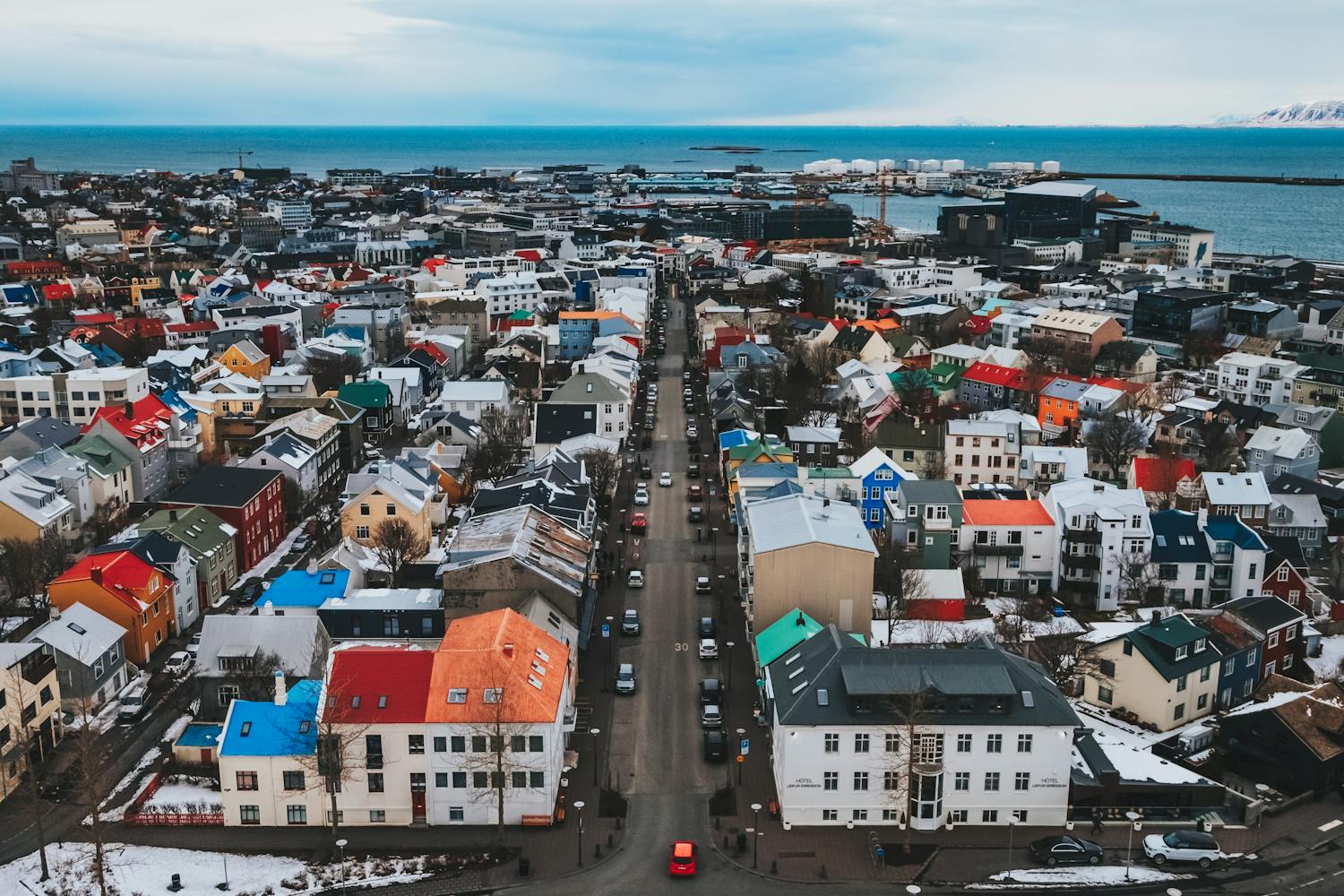
The practical advice: plan to leave the city for dark sky, and treat any Reykjavik sighting as a welcome bonus rather than the plan.
When to go
Iceland’s aurora season runs from late August to mid-April. February is consistently the strongest month for combining aurora activity with clearer weather: nights are still very long, but Iceland’s weather tends to be more stable than December or January, with more high-pressure systems and better odds of the sky cooperating, according to Penguin Trampoline.
September and October offer the equinox advantage that brings elevated geomagnetic activity, milder weather, and genuinely dark nights after the midnight sun. For a full month-by-month breakdown, see our Best Time to See the Northern Lights guide.
November through January brings the longest nights, with only four to five hours of daylight in midwinter. Powerful displays are possible. Weather is the variable.
February and March are my personal recommendation for Iceland. The combination of strong solar activity, improving weather patterns, and long nights makes these the months that most reliably deliver.
With a five to seven night stay during peak season, your chances are good. Tour companies in Iceland often report 90% or higher success rates during peak months. The best forecast tool is Vedur, the Icelandic Meteorological Office, at en.vedur.is. It updates daily and covers both cloud cover and aurora activity in a single view.
The weather question
Iceland’s weather is the honest challenge. It is faster-changing and less predictable than Finland, and more complex than Norway because of the island’s position in the middle of the North Atlantic, exposed to systems from every direction simultaneously.
The practical response is the same as in Norway: stay mobile, trust your guide, and do not make fixed plans for any specific night.
The Icelandic response is þetta reddast. It will all work out. I have been in Iceland on nights where the forecast said cloud and the sky cleared for two hours at midnight. I have been there on nights where the forecast said clear and the cloud came in by 9pm. Both happen with enough regularity that the only rational strategy is patience and flexibility.
The guides who run aurora tours from Reykjavik will drive two or three hours if that is what finding clear sky requires. On a small island, that flexibility matters more than it does anywhere on the continental mainland.
What to combine with the lights
Iceland is the only aurora destination where the daytime programme genuinely competes with the night one. The Golden Circle, the Blue Lagoon, ice caving beneath Vatnajokull glacier, the south coast waterfalls, whale watching from Reykjavik harbor. The island packs more distinct experiences per square kilometer than anywhere else in the Nordic world.
Our 10-Day Scandinavia and Iceland Tour includes Iceland as part of a wider itinerary covering Denmark, Norway, and Iceland, with the Golden Circle and geothermal spa built into the programme. For a dedicated Iceland Northern Lights trip, we can build a tailor-made itinerary around your preferred dates and locations: contact us and we will have a personal offer to you within 24 hours.
Northern Lights in the rest of Scandinavia
Iceland is one of four destinations where serious aurora hunters go. Each has its own character and its own reasons to choose it over the others.
- Norway offers the most dramatic fjord landscapes and the most developed aurora tourism infrastructure, from Tromsø to the Lyngen Alps to Senja. We have a full guide to Northern Lights in Norway.
- Finland and Lapland offers the most stable skies, the glass igloo, the husky safari, and the reindeer sleigh in a landscape that is quieter and more consistently clear than Iceland or Norway’s coasts. We have a full guide to Northern Lights in Finland and Lapland.
- Sweden has Abisko and the Blue Hole, statistically the most reliable clear-sky location in all of Scandinavia. When everywhere else is cloud-covered, Abisko often is not. We have a full guide to Northern Lights in Sweden.
Where the sky meets the impossible
Picture this: you are standing at the edge of Jokulsarlon at midnight. Above you, the aurora ripples in green and pink. Below you, those same lights shimmer across the water, fractured and rearranged by the slow drift of glowing blue icebergs. Nowhere else on earth does the aurora have something like this to land on.
Iceland is not just a Northern Lights destination. It is a place where every hour of the day competes for your attention: the Golden Circle at dawn, geothermal pools at dusk, and the sky doing something extraordinary after dark.
Our 10-Day Scandinavia and Iceland Tour weaves Iceland into a wider journey through Copenhagen, Oslo, and Bergen before ending in Reykjavik, with the Golden Circle and a geothermal spa built into the itinerary. For a dedicated Iceland Northern Lights trip, shaped around your preferred locations and travel dates, contact us and we will have a personal offer to you within 24 hours.
For everything you need to know about timing, solar conditions, and where the lights are most reliable across all four destinations, visit our Northern Lights Travel Guide.
Hei hei from me and the team at Scandi Travel.