Written by Mikko Lintunen
In a nutshell
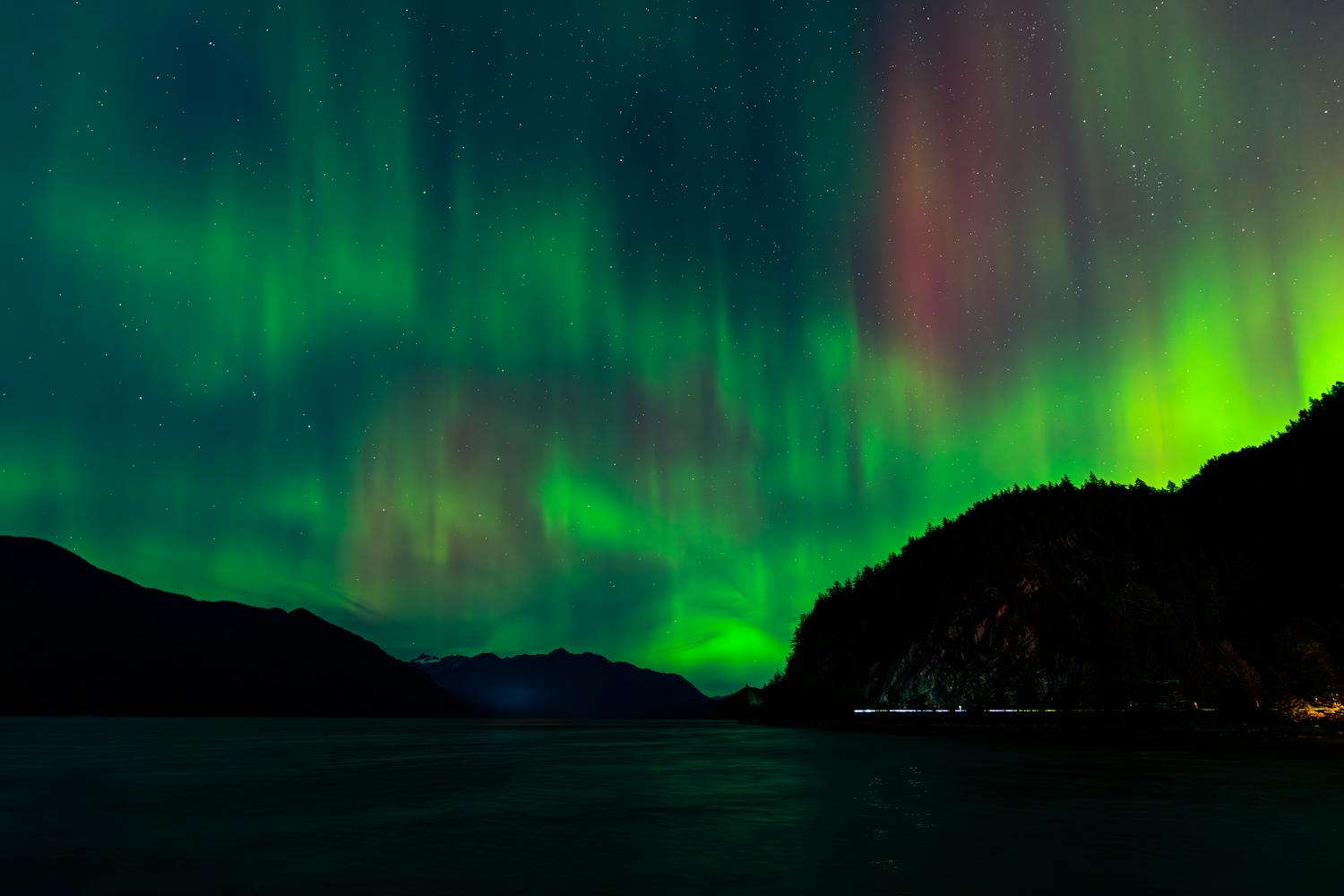
The Northern Lights are caused by charged particles from the sun colliding with gases in the earth’s atmosphere. Green is the most common color, caused by oxygen. But the people who have lived beneath these lights for thousands of years had more interesting answers. This article covers both: the science, briefly, and the stories, at length. The stories are better.
For a complete guide, visit our Northern Lights Travel Guide.
I have been watching the Northern Lights for most of my life and running tours to see them for fifteen years. I know the science. I can explain solar wind, magnetic fields, the composition of the atmosphere. And yet, every time the lights appear overhead in Finnish Lapland, something happens to me that the science does not quite cover.
I grew up in a country that has its own word for the Northern Lights, its own stories about what they are, and its own very specific set of rules about how to behave when they appear. I want to tell you all of it.
Only around 2% of the world’s population lives in a place where the Northern Lights can be seen regularly, according to the Finnish Meteorological Institute. If you are reading this, you are probably thinking about joining them. I think you should.
The science
The name Aurora Borealis comes from Aurora, the Roman goddess of the dawn, and Boreas, the Greek personification of the north wind. Galileo Galilei used the term in 1619, believing at the time that the lights were sunlight reflecting off the atmosphere. He was wrong about the cause. The name stuck anyway.
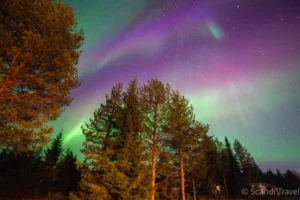
The sun is not a quiet place. It constantly releases streams of charged particles into space, what scientists call the solar wind. When those particles reach the earth, our planet’s magnetic field guides them toward the poles, where the field is weakest. There, the particles collide with gases in the upper atmosphere, between roughly 100 and 300 kilometers above the earth’s surface. Oxygen produces the green we know so well, and at higher altitudes, a deep and rare red. Nitrogen produces blue and violet. Each color is a collision. Each display is the sun and the earth in conversation, 150 million kilometers of distance crossed in minutes.
The lights move because the collision is constant and changing. The curtains, the ripples, the sudden flare of brightness overhead: all of it is live, real-time physics. The display you see tonight has never existed before and will never exist again in exactly that form.
And if you needed the lights to feel larger still: Jupiter and Saturn have auroras too, in their own colors, produced by their own atmospheric gases. This is not a phenomenon unique to earth. It is something the solar system does.
That, reduced to its simplest, is what the Northern Lights are. But it is not what they feel like. And for the people who lived under them for centuries without telescopes or satellites or solar physics, it was not what they looked like either.
What people believed before they knew
For most of human history, the Northern Lights were inexplicable. Imagine standing in the Arctic darkness, in a small settlement, with no electric light and no scientific framework, watching the sky turn green and begin to move. What would you think? What would you tell your children?
In 1859, the largest solar storm ever recorded sent the Northern Lights as far south as Cuba, Hawaii, and Colombia. People who had never seen anything like it wrote in their journals that it appeared as if “a colossal fire on earth… reflected its flames on the heavens.” Those who had seen the lights all their lives understood what was happening. Those who had not thought the world was ending.
The answers that came before the science are some of the most beautiful things I have ever read.
The oldest written record: Norway, AD 1230
The first written Scandinavian account of the Northern Lights appears in the Norwegian chronicle Konungs Skuggsjá (The King’s Mirror), written in 1230. The chronicler had heard about the phenomenon from compatriots returning from Greenland and offered three possible explanations: that the ocean was surrounded by vast fires, that the sun’s flares could reach around the world to its night side, or that glaciers could store energy so that they eventually became fluorescent.
Three theories, all completely reasonable for someone thinking carefully in 1230 without the tools to test them. What moves me about this passage is not the theories themselves, but the effort. Someone sat down and tried to understand. That instinct has not changed.
Finland: the fox, the fox fires, the gates of the north
Have you heard of revontulet, the fox fires? The great arctic fox, racing across the fells, its tail sweeping against the snow and the trees, sending sparks into the sky. It is the story every Finnish child learns.
But there is another version, older and slightly stranger. In this telling, the fire fox does not just brush the snow. It runs so fast across the sky itself that its fur catches the mountains as it passes, and the friction sets the air alight. The lights are the speed of something that cannot be caught. Legend has it that a person who catches the firefox would be rich and famous beyond belief. It was the ultimate prize for a hunter. Unattainable by definition.
In the Kalevala, Finland’s national epic, the Northern Lights are referred to as the gates of the north. In some Karelian dialects, the aurora is still called “fiery pillars,” referring to those gates. The north in the Kalevala is a place of power and danger. These were not gentle lights. They were the entrance to somewhere you were not sure you wanted to go.
The Sami: light you can hear
The Sami people are the indigenous people of Lapland, and they have lived beneath the Northern Lights for longer than almost any culture on earth. Their beliefs about the aurora are the most detailed, the most varied, and the ones I find most extraordinary.
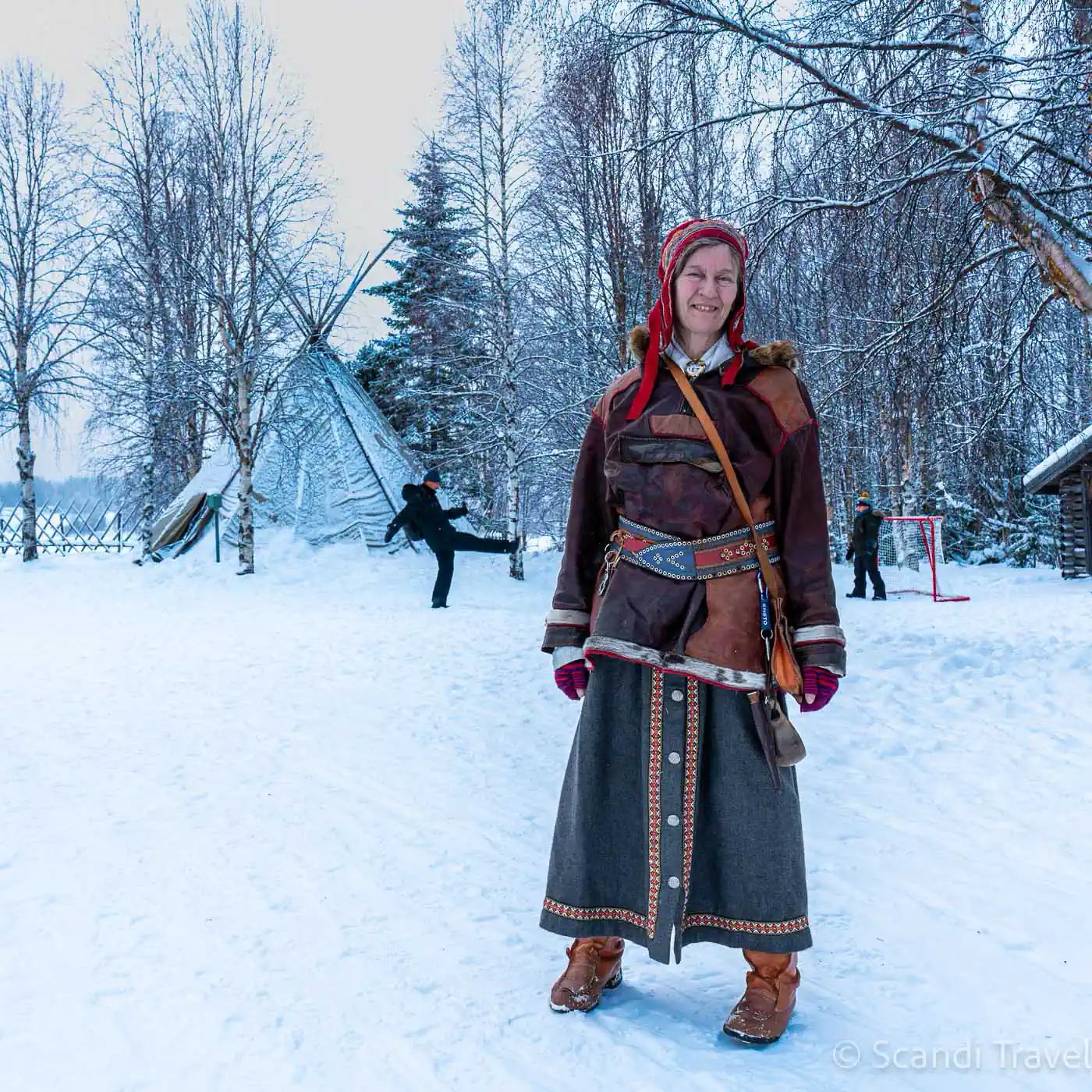
The most widespread Sami belief was that the lights were the souls of the dead. Not threatening souls, not necessarily, but present ones. Ancestors, returned to the sky. The Sami believed you should never talk about the Northern Lights. It was dangerous to wave, whistle, or sing beneath them, as this would alert the lights to your presence. If they became aware of you, they could reach down and carry you into the sky. To this day, some Sami elders would rather stay indoors when the Northern Lights are glowing, just to be on the safe side.
This is where I tell guests to be quiet when the lights appear. I am not superstitious. But these are people who observed the aurora every winter for thousands of years before anyone else was paying attention. Something in their response to it deserves respect.
One of the Sami words for the aurora is guovssahas, which means, remarkably, “light you can hear.” On rare occasions, the aurora is accompanied by faint crackling and hissing sounds, now understood to be electrostatic processes close to the ground. The Sami named the lights for this quality centuries before science could explain it. They were listening as well as watching.
The Northern Sami word for auroras, guovssahasat, is derived from the same word as guovssu, meaning morning or evening glow, but also the Siberian jay, a bird with colorful feathers and a lively character. Ancient Finns believed that the soul of a hunter passes on to a Siberian jay after death, and killing one would bring bad fortune. The aurora, the soul bird, the spirit of the departed: all connected through language in ways that suggest something much older than any individual story.
The Skolt Sami, a distinct group from northeastern Finland, had a darker interpretation of the red aurora. They believed that those who had been murdered were still bleeding or cutting themselves in the afterlife, causing the red lights in the sky. This is why a blood-red aurora was something to fear. It meant violence somewhere, in some other realm, that had not yet been resolved.
Sami shaman drums often had symbols depicting the aurora. The lights were not just a natural phenomenon to observe from a safe distance. They were part of the spiritual structure of the world, painted on the instruments used to communicate with it.
The Norse: Valkyries, bridges, fallen warriors
The Vikings saw the lights differently. For them, the aurora was evidence of the epic scale of things.
Some believed the aurora was the breath of brave soldiers who died in combat, or the reflections from the shields of the Valkyries, powerful female warriors who guided the souls of fallen Vikings to Valhalla. The lights shimmered because the shields moved. The curtains and ripples overhead were armour in motion.
Others saw the Northern Lights as the Bifrost Bridge, a glowing pathway connecting the world of the living to the world of the gods. You were not watching a light show. You were watching the road that the dead travelled. That changes how you stand under it.
Sweden: the herring and the wedding
Swedish fishermen along the coast had a more immediately practical interpretation. The traditional Swedish word for the Northern Lights was sillblixt, which translates literally as “herring flash.” The lights were reflections from enormous schools of herring swimming close to the surface. When the aurora blazed, it meant a great catch was coming. This was not superstition so much as a working hypothesis, one that made the lights useful rather than terrifying.
But there is another Swedish story I love more. In some Swedish traditions, a bright aurora display indicated a magical wedding ceremony occurring in the sky, with flying horse-drawn carriages taking guests to an exclusive celestial party, leaving shimmering trails behind them. A wedding in the sky. I find this irresistible.
Estonia: the whales
Estonia is one of the countries on our Baltic cruise route, and its interpretation of the aurora is unique. In Estonian folklore, the creatures responsible for the display were humpback whales.
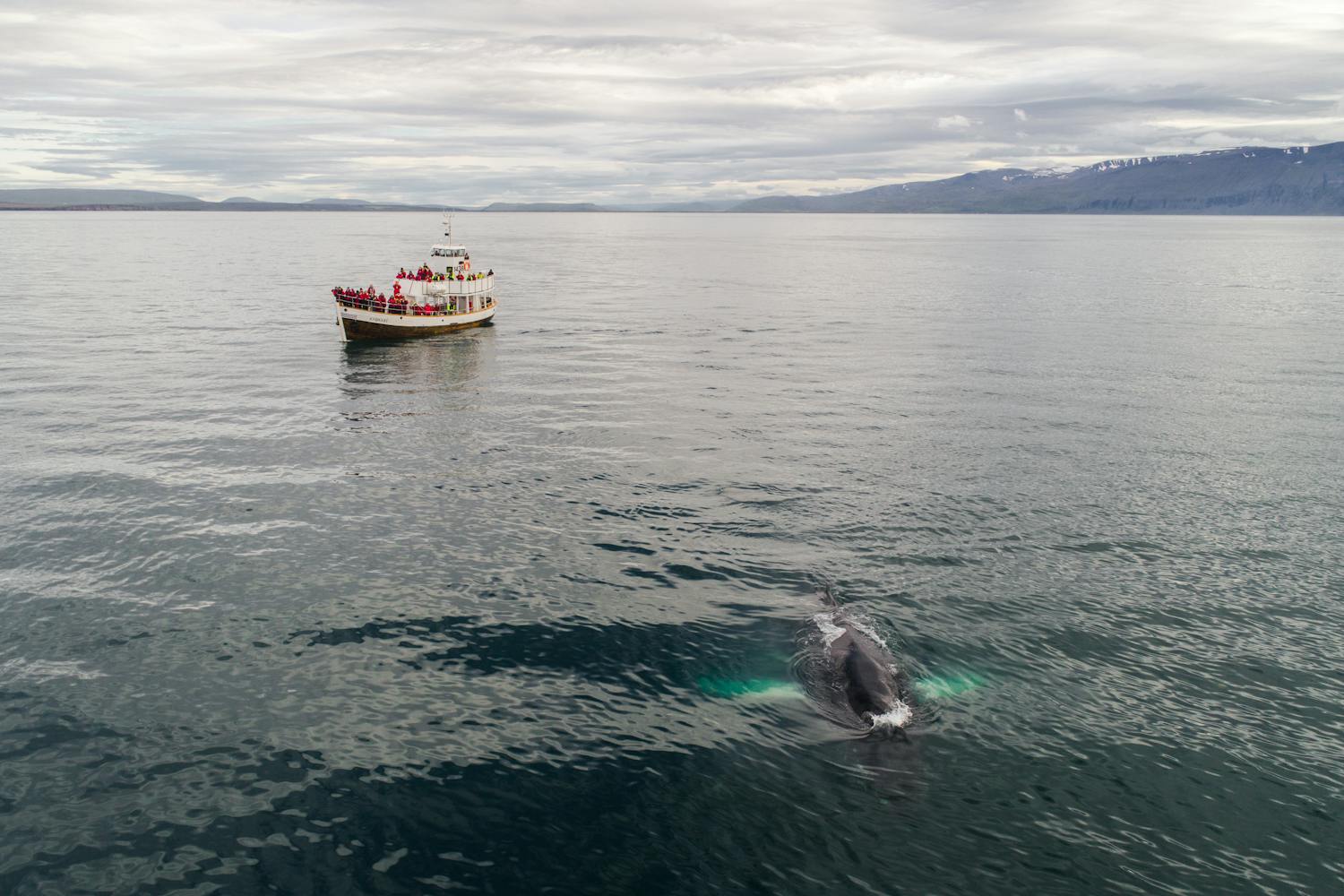
The idea was that when the animals gathered en masse and breached, their skin would shine off the sky, creating the aurora. Estonia is not an Arctic country. The Northern Lights are rare there. Perhaps rarity made the explanation more vivid.
Iceland: the lights of birth
In Iceland, the Northern Lights were thought to ease the pain of childbirth, but only if the mother did not look directly at them. If she did, the child would be born cross-eyed. A blessing with a condition attached. This feels very Icelandic to me.
The Inuit: a game of football
Across the Arctic, from Greenland to Alaska, the most widespread Indigenous belief was that the Northern Lights were the spirits of the dead at play. A popular belief in the far north held that the spirits of the departed were feasting and playing football with a walrus skull. The whistling, crackling noise that sometimes accompanies the aurora was the voices of those spirits trying to communicate with the people of the earth.
There is something about that image that I cannot shake. Not terrifying ancestors or divine warriors. Just the departed, carrying on, playing games overhead, occasionally trying to get a message through.
What all of these stories have in common
Every culture, independently, looked at the same lights and reached for something vast to explain them. Souls, warriors, gods, animals of enormous size, a bridge between worlds. Nobody looked at the aurora and thought: that is probably something small.
They were right. The Northern Lights are caused by the sun. The sun is a million times the size of the earth. The particles that create the display have travelled 150 million kilometers to get here. The magnetic field that guides them has protected this planet for four and a half billion years.
Now go and see them
Every culture that ever watched the Northern Lights reached for something vast to explain them. Souls, warriors, fire foxes, wedding carriages, a bridge between worlds. They were not wrong. The lights are caused by the sun, which is a million times the size of the earth, sending particles across 150 million kilometers of space to collide with our atmosphere in real time, right above your head.
No story quite prepares you. Neither does this article. The only thing that does is standing underneath them.
Our 12-Day Northern Lights and Scandinavia Tour takes you through Stockholm, Tallinn, and Helsinki before the Santa Claus Express carries you north into Finnish Lapland: three nights in the wilderness, a guided aurora safari, a glass igloo, and a husky team pulling you through a forest that has not seen another person in weeks. For a tailor-made itinerary, contact us. A personal offer within 24 hours.
For the complete guide to timing, locations, and what affects your chances, visit our Northern Lights Travel Guide.
Hei hei from me and the team at Scandi Travel.